


Pu Luong is best explored on foot. Trekking here takes you beyond the main roads and into a landscape of rice terraces, Thai villages, limestone hills, bamboo groves and forest paths. Some trails are gentle, following village lanes and the edges of rice fields. Others climb through forest or connect remote villages across the valleys.
Pu Luong Trekking: The Quick Answer
At Pu Luong Excursions, we have been exploring these mountains and designing journeys here since 2016. We believe a good trek is not about counting attractions. It is about choosing the right trail, walking at a sensible pace and leaving enough time to notice the place around you.
| Question | A quick answer |
| Where is Pu Luong? | In Thanh Hoa Province, northern Vietnam, around 180 km from Hanoi and 130 km from Ninh Binh. |
| How long does it take to get there? | Around 4 hours from Hanoi and around 3 hours from Ninh Binh by road. Traffic and pick-up points can affect the journey. |
| How long should I stay? | 2 days / 1 night is a good introduction. 3 days / 2 nights gives you more time for longer trails and village life. |
| Is trekking difficult? | There are easy village walks, moderate village-to-village routes and harder forest and mountain treks. |
| When is the best time? | Pu Luong has two rice-growing seasons. The landscape changes through the year, so each season offers a different experience. |
| Do I need a guide? | A local guide is strongly recommended for longer, unfamiliar or forest routes. |
Why Explore Pu Luong on Foot?
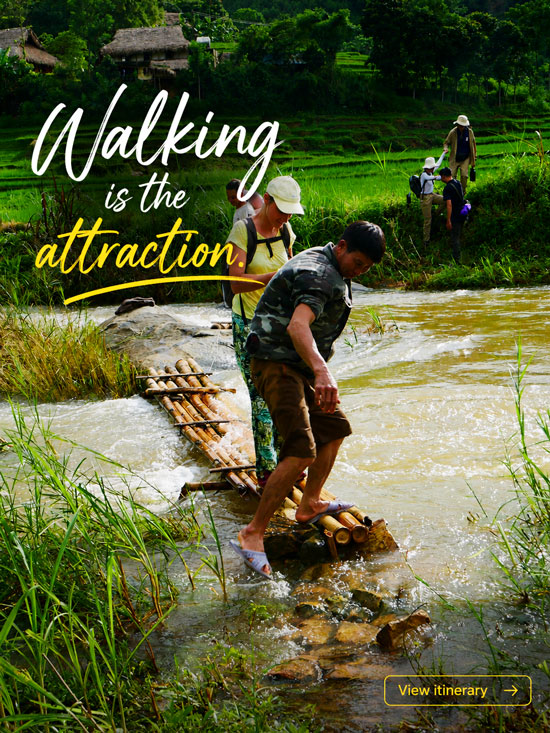
A road can take you to a village. A trail lets you understand how the village belongs to the valley. You notice the water running beside the path, the shape of the rice terraces, the sound of work in the fields and the way houses sit along the hillsides. You may cross a bamboo bridge, pass a water wheel or stop where a family is working in their garden. These are ordinary parts of life in Pu Luong. We do not arrange them as performances for visitors.
Pu Luong Nature Reserve covers around 17,662 hectares in Thanh Hoa Province. Limestone mountains rise above the valleys, and rice terraces follow the slopes. Thai communities live in many of the villages. Their paths connect homes, fields and neighbouring settlements, creating a network of routes that is best understood slowly.
This is why we put walking before sightseeing. Rather than drive from one viewpoint to another, we use the trails to connect the landscape. Sometimes the best part of a day is not a named attraction. It is the stretch of path between two villages, when the valley opens in front of you and there is no need to hurry.
Is Pu Luong the right place for your trek?
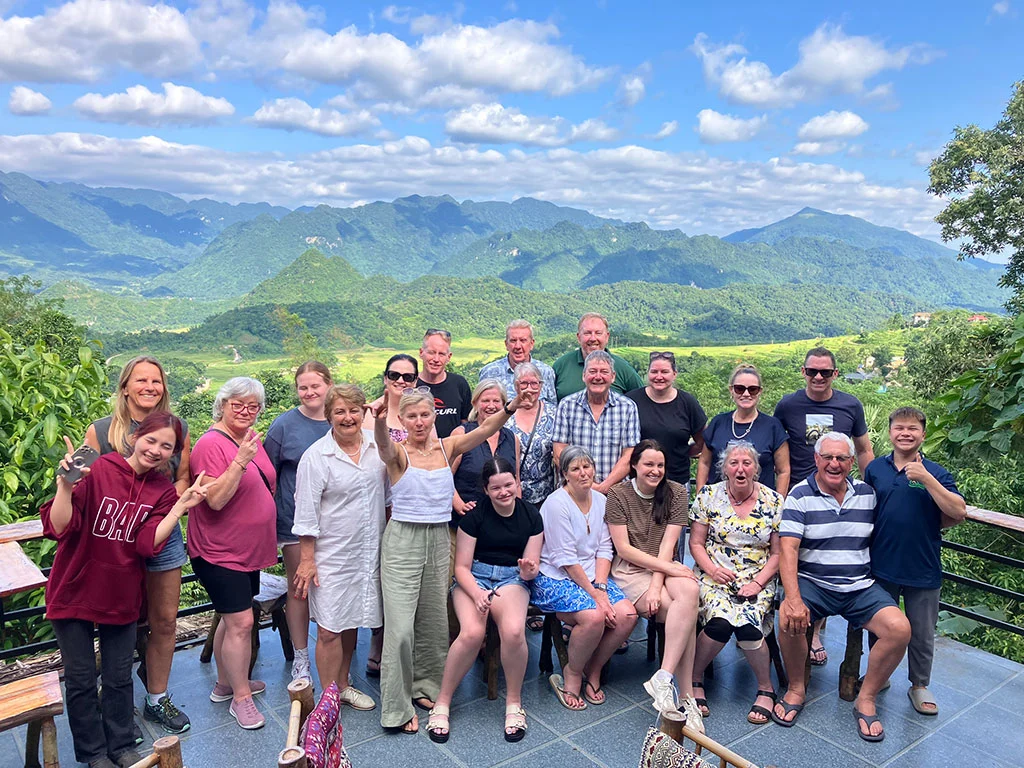
Pu Luong suits travellers who enjoy being outdoors and want to experience rural northern Vietnam at walking pace. You do not need to be an experienced trekker. A short village walk can be a good introduction, while active travellers can spend several hours on the trails or choose a more demanding forest route.
The highest point in Pu Luong is around 1,700 metres, but this is not what makes the area special for trekking. The summit route climbs for a little over 6 km each way, much of it through dense jungle. It is a forest trek rather than a ridge walk with continuous mountain panoramas. There is little to see along the way, and it lacks the village paths, hidden trails, rice terraces and everyday local life that make trekking in Pu Luong distinctive. For most visitors, these are the experiences that make a trek here worthwhile.
If your main goal is dramatic high-mountain scenery, a large nightlife scene or a different kind of summit challenge, another destination may suit you better. If you would rather walk between villages, spend time in the countryside and see how the landscape changes from one valley to the next, Pu Luong is a good place to slow down.
Pu Luong Trekking Routes: Choosing the Right Trail
There is no single route that represents Pu Luong. Trails can be linked in different ways, and the same village may be part of a short walk or a full day on foot. The right route depends on your fitness, the weather, how much time you have and what you want to experience. At Pu Luong Excursions, we look at the whole day: where the walk begins, how the paths connect, how much climbing is involved and how much time the group will spend on the road.
| Route or area | Level | Distance / time | What to expect |
| Don Village and nearby paths | Easy | Around 2–4 km; 1–2 hours, depending on the path. | Village lanes, rice-field edges and views across the valley. A gentle introduction. |
| Don to Bang | Easy–moderate | Depends on the selected route. | A valley walk with changing views across the terraces. |
| Don – Uoi – Lan | Moderate | Depends on the selected route. | Village paths, terraced fields and traditional houses. |
| Don to Kho Muong / Bat Cave | Moderate | Allow around 6–8 hours for the excursion; walking time depends on access and transfers. | A limestone valley, village setting and Bat Cave. |
| Don to Hieu Village / waterfall | Moderate | Allow time for the walk and a stop at the waterfall. | Village scenery, streams and the waterfall. |
| Don to Eo Ken / Ban Hang | Moderate | A full-day outing with a transfer. | Village paths, terraced fields and traditional houses. |
| Challenging full-day treks | Hard | Full day; distance and elevation gain vary by route. | Longer distances, significant climbing and descending, steep or uneven terrain, and sections through dense forest. Best suited to experienced walkers and led by a local guide. |
Elevation is another part of choosing a route. Many villages and trekking areas sit around 300–600 metres above sea level, while the reserve’s highest point is around 1,700 metres. On some longer or more demanding routes, the total ascent can reach up to 800 metres in a day. That is a substantial amount of climbing, even when the trail does not reach the highest point in the reserve.
Distance alone does not tell you how difficult a trek will be. A shorter route with a steep climb or slippery descent can feel harder than a longer walk along a valley path. When you compare tours, ask about the walking distance, total ascent and descent, trail surface and expected time on foot. These details matter more than a route name.

Easy village walks
The paths around Don Village and the nearby valley are a good starting point for beginners, families and travellers who want a relaxed day. The walk can include village lanes, dirt paths and narrow footpaths along the rice fields. You see the terraces from different levels, pass houses and gardens and begin to understand how the villages sit within the valley.
Moderate village-to-village treks
For a longer walk, the areas around Kho Muong, Uoi, Lan and Hieu offer a mix of village paths, terraces and natural terrain. Kho Muong sits in a limestone valley and is known for Bat Cave. Hieu is associated with its waterfall and the village around it. These routes are not simply transfers between attractions. The walking in between is what connects the places and gives the day its shape.
Harder treks for experienced walkers
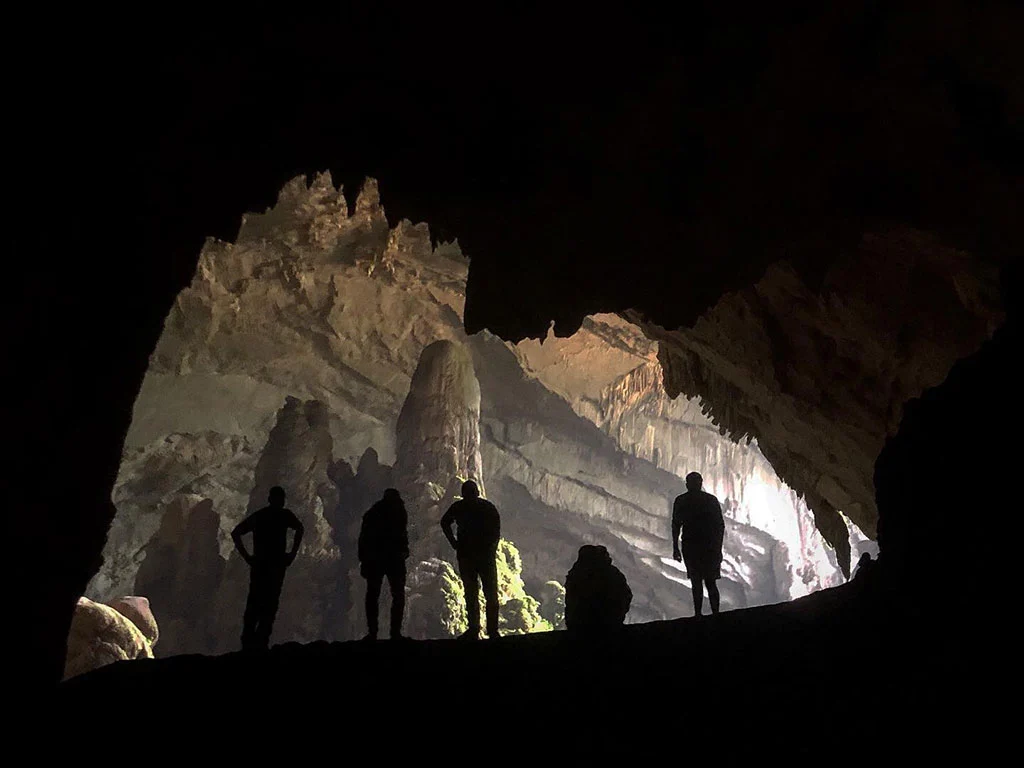
Pu Luong also offers more demanding trekking routes for those who are used to spending long hours on the trail. Even a single-day trek can be challenging when the route covers a longer distance, includes significant elevation gain and loss, or follows steep and uneven terrain.
Rather than focusing on reaching a particular summit, we look at the overall walking experience: how far you walk, how much you climb and descend, and how long you spend on your feet. Some sections may pass through dense forest, where views are limited, while others follow village paths and mountain slopes.
These routes require good fitness, sensible pacing and a local guide who understands the terrain. After heavy rain, some slopes and paths can become slippery, so the route should always take current conditions into account.
Which Pu Luong Trekking Tour Should You Choose?
We design different journeys for different kinds of travellers. The aim is not to make every tour harder or longer. It is to match the route to the people walking it.
Hidden Trails Trek
Hidden Trails Trek is for travellers who want to go beyond the usual road stops. The route follows village paths, forest trails and rice terraces, using transfers between selected trailheads so that more of the day is spent walking and less time is spent on the main roads. It is a good choice if you want an active introduction to the quieter side of Pu Luong.
Hidden Trails Trek Plus
Hidden Trails Trek Plus takes the idea further. It is designed for more active travellers who want a longer and deeper trekking experience, with more time on trails through remote villages, forest and rice-growing valleys. The extra time allows the journey to move at a steadier pace instead of trying to fit everything into one day.
Village Discovery
Village Discovery is a more relaxed way to explore the countryside. The walks are easier, with time for village visits, rice terraces and places such as the hidden cave or waterfall, depending on the itinerary. It suits travellers who want to walk and learn about the area without committing to a demanding trek.
A good itinerary is not simply a list of villages and activities. We consider the order of the trails, the distance between trailheads, the amount of climbing, the time spent in a vehicle and the time guests have to rest after walking. The mountains set the pace. We leave room for a proper lunch, a conversation or a quiet moment overlooking the valley.
How Many Days Do You Need for Pu Luong Trekking?
Pu Luong One Day
A one-day trek works well if you are already staying in Pu Luong or coming from nearby Mai Chau. You can focus on one valley or link a few villages without changing accommodation. Travelling from Hanoi for a full trekking day and returning on the same day leaves little time for walking, as the road journey takes around four hours each way.
Two days and one night
Two days and one night is a good introduction. After arriving by bus in the late morning, you can settle in, have lunch and enjoy a little time around your accommodation. If you prefer to explore further, an afternoon walk or a short tour can take you to nearby villages, rice terraces or other parts of the valley. The following morning, join a half-day tour to discover village life, walk along local paths and see the countryside at a slower pace. Depending on the program, you may stay in a traditional Thai stilt-house homestay or a resort. Meals can introduce you to local dishes, and some itineraries include a waterfall visit or bamboo rafting.

Three days and two nights
Three days gives you more room to explore. You can walk in different parts of the reserve, take on a longer Hidden Trails trek or spend more time in the villages. It also means you do not need to fill every day with transfers and stops. If you love mountains and local life, staying longer than two nights gives you more time to move beyond the best-known areas and settle into the rhythm of the valley.
At Pu Luong Excursions, we pay attention to the time before and after the trek, too. On arrival, having your room ready means you can rest and freshen up after the long bus journey before heading out on the trails. On the final day, we avoid an unnecessarily early check-out. Where the itinerary allows, you can return to your accommodation after trekking, freshen up and have lunch before the journey onwards. These details may seem small, but they make a real difference to how comfortably you experience Pu Luong.
When Is the Best Time to Go Trekking in Pu Luong?
Pu Luong is a mountain area with a relatively cool climate and a good supply of water. Local rice farming follows two growing seasons, so the landscape changes through much of the year. Fields may be green, turning yellow, recently harvested or waiting for the next planting. There is no single month that suits every traveller. The best time depends on whether you are coming for the rice terraces, comfortable walking weather or a quieter stay.
| Period | What the landscape can look like | What to know before trekking |
| February – April | Green rice terraces during the growing season. Cooler weather and occasional mist. | A comfortable period for walking. The exact field colour depends on the crop stage. |
| Late May – early June | Rice ripens and the area becomes lively, with more Vietnamese visitors at popular viewpoints, especially at weekends. | Days can be hot and humid. In hot periods, midday temperatures may exceed 40°C. Start early and plan longer walks for cooler hours. |
| July – August | Green hillsides and fuller streams are part of the summer landscape. | Heavy rain can affect trails and mountain roads. Paths may be muddy or slippery. |
| September – October | Another rice season, with ripening fields and harvest activity. Weekends can be busy. | Harvest timing varies between villages and from year to year. |
| November – January | Much of the rice has been harvested. Fields rest before water is prepared for the next planting towards the end of January. | Often quieter for walking, but the terraces may not be green or golden. Mornings can be cool. |
The rainy season is not automatically a bad time to visit. Streams and waterfalls may carry more water, and the terraces can look intensely green. The trade-off is underfoot: trails may be muddy; stones can be slippery and leeches are more active after rain. In hotter periods, start early, carry enough water and avoid pushing the group through exposed sections at midday. We check local conditions and adjust the route when needed.
HOW MUCH DOES PU LUONG TREKKING COST?
The cost of a Pu Luong trekking tour depends on the length of the trip, group size, transport, accommodation, meals and the route itself. As a general guide, here are the typical price ranges:
| Tour type | Typical price per person |
| Half-day village walk | 30 – 33 USD |
| Full-day trekking tour | 59 – 73 USD |
| 2 days / 1 night | 131 – 156 USD |
| 3 days / 2 nights | 201 – 269 USD |
| Private trekking tour | Depends on group size and itinerary |
Prices can vary depending on what is included. A short village walk with a shared transfer is very different from a full-day trek with a local guide, transfers between trailheads and a longer route through the mountains.
When comparing Pu Luong trekking tours, look beyond the headline price. Start with the location of your accommodation. Is it in Don Village, the central, scenic area of Pu Luong, or further away? Think of it like staying in Hanoi’s Old Quarter: being in the right location makes it easier to explore, saves travel time and gives you more time on the ground.
Some lower-priced tours use accommodation far from the main trekking areas. Even if transfers are included, you may spend quite a lot of time travelling between your hotel and the trails. This can mean longer drives, less time walking and, in some cases, an early check-out on the final day because returning to the accommodation after trekking is not practical.
Room names and hotel descriptions can also be misleading. Accommodation in Pu Luong varies widely, so look at the actual property, its location and the setting rather than relying on impressive-sounding names or star labels.
Meals are also worth considering, as the quality and variety can differ between tours. Pay attention to how the day is planned, too. A good trekking tour should leave enough time to walk, rest and enjoy each place, rather than squeezing too many villages and activities into one morning. Otherwise, it can feel more like a sightseeing checklist than a real trekking experience.
A clearly planned tour makes it easier to understand what you are paying for, how much time you will spend travelling and walking, and what kind of experience to expect each day.


DO YOU NEED A GUIDE FOR PU LUONG TREKKING?
For longer or unfamiliar routes, we recommend walking with a local guide. Some paths are not clearly marked. A route that looks simple on a phone map may have several junctions or cross farmland and village land. A guide helps with navigation and pace, but also knows when a path has become difficult after rain or when a planned section needs to change.
A short walk close to your accommodation may be manageable on your own if the route is clear and you are comfortable finding your way. For a village-to-village trek, a forest path or a summit route, do not rely only on a phone map. A good local guide does more than lead the way. They understand the terrain, know the villages and can help the group move at a pace that suits the day.
WHICH SHOULD I CHOOSE?
Pu Luong, Mai Chau, Sapa or Ninh Binh
These destinations are often combined in a northern Vietnam itinerary, but they offer different ways to spend time outdoors. Pu Luong and Mai Chau share a Thai cultural background and rice-growing valleys, although Mai Chau is generally flatter and well suited to gentle cycling. Pu Luong has more varied village trails and forested slopes for walking. Sapa is higher and cooler, with more dramatic high-mountain terrain and longer mountain treks. Ninh Binh is a lowland landscape of limestone karsts, rivers and wetlands, best known for boat trips, cycling and shorter countryside walks.


| Place | Landscape | A good fit for |
| Pu Luong | Terraced valleys, limestone hills, forest and Thai villages. | Village-to-village walks, forest trails and a slower rural trekking stay. |
| Mai Chau | A broad, flatter valley, Thai villages and rice paddies. | Gentle cycling, easy walks and a relaxed countryside stay. |
| Sapa | High mountains, steep valleys and varied ethnic communities. | Higher-altitude scenery and longer mountain treks. |
| Ninh Binh | Limestone karsts, rivers, caves and wetlands. | Boat trips, cycling and shorter countryside walks. |
FREQUENTLY ASKED QUESTIONS
Answers to the questions we hear most about travelling, trekking and experiencing Pu Luong.
TRIP PLANNING
Where is Pu Luong and how far is it from Hanoi?
Pu Luong Nature Reserve is in Thanh Hoa Province, northern Vietnam, around 180 km from Hanoi and 130 km from Ninh Binh. It is a natural stop for travellers connecting Mai Chau and Ninh Binh. Allow about four hours by road from Hanoi and around three hours from Ninh Binh.
What is the best time for Pu Luong trekking?
Pu Luong has two rice-growing seasons. Late May to early June and September to October are popular for ripening rice. February to April is generally cooler, with green terraces. In the rainy months, streams and waterfalls may be fuller, but trails can be muddy or slippery.
How many days do you need for Pu Luong trekking?
Two days and one night gives you a good introduction. Three days and two nights allows more time for different trails and villages. If you enjoy walking and local life, staying longer gives you more time to explore beyond the main routes.
How do I get to Pu Luong from Hanoi or Ninh Binh?
Most visitors travel by shared bus or limousine, private car or an organised tour transfer. Allow around four hours from Hanoi and around three hours from Ninh Binh, then confirm your pick-up and drop-off points.
Where should I stay in Pu Luong?
A Thai stilt-house homestay offers a communal village stay, while a resort or eco-lodge usually gives you more privacy and facilities. Don Village is a practical base for one- or two-night stays focused on trekking tours.
How much does a Pu Luong trekking tour cost?
Prices depend on group size, transport, accommodation, meals, guide services and route difficulty. Compare the inclusions and check how much time you will spend on the trails.
What should I pack for Pu Luong trekking?
Bring walking shoes with good grip, rain protection, water, sun protection and a small daypack. In wet months, consider leech protection and insect repellent.
Is there an entry fee for Pu Luong Nature Reserve?
Entry arrangements can vary by area and activity. Check with your accommodation or tour operator before travelling.
TREKKING GUIDE
Is Pu Luong trekking difficult?
There are short, gentle village walks as well as demanding full-day routes. Difficulty depends on distance, elevation gain, trail surface, weather and your fitness. Ask about the actual route rather than judging by the tour name.
Do I need a guide for Pu Luong trekking?
A local guide is recommended for longer or unfamiliar trails, especially forest and summit routes. Short walks close to your accommodation may be manageable independently if the route is clear.
Is Pu Luong better than Mai Chau or Sapa for trekking?
It depends on the experience you want. Pu Luong offers village trails, terraced valleys and forest paths. Mai Chau is flatter and better suited to gentle cycling and walks. Sapa has higher mountain terrain and more demanding highland treks.
Is Pu Luong trekking safe?
Choose a route that matches your fitness and the weather. Trails can become slippery after rain, so follow local advice and use a guide on longer or unfamiliar routes.
Can beginners or families with children trek in Pu Luong?
Yes. Choose a short village walk with manageable terrain and enough time for breaks. Confirm the distance, surface and age suitability before booking.
Can I trek Pu Luong in the rainy season?
Yes, but paths may be muddy or slippery and leeches are more active after rain. Some routes may need to change in heavy weather, so check local trail conditions.
Need Some Help?
A Note from Jason
I first came to Pu Luong because I wanted to spend time in the mountains. Over the years, I have kept returning to its valleys and trails, exploring new paths and learning from the people who live here. That experience shapes the way we design our tours.
At Pu Luong Excursions, we do not try to fit as many attractions as possible into a day. We choose trails that suit the group, keep the walking at the centre of the journey and leave room for the moments that happen along the way. Our small groups create space to stop, ask questions, take photographs or simply enjoy the quiet.
If you are not sure which trek is right for you, tell us how much you enjoy walking, how many days you have and where you are travelling from. We will help you choose a route that fits. I hope to see you on the trail.