


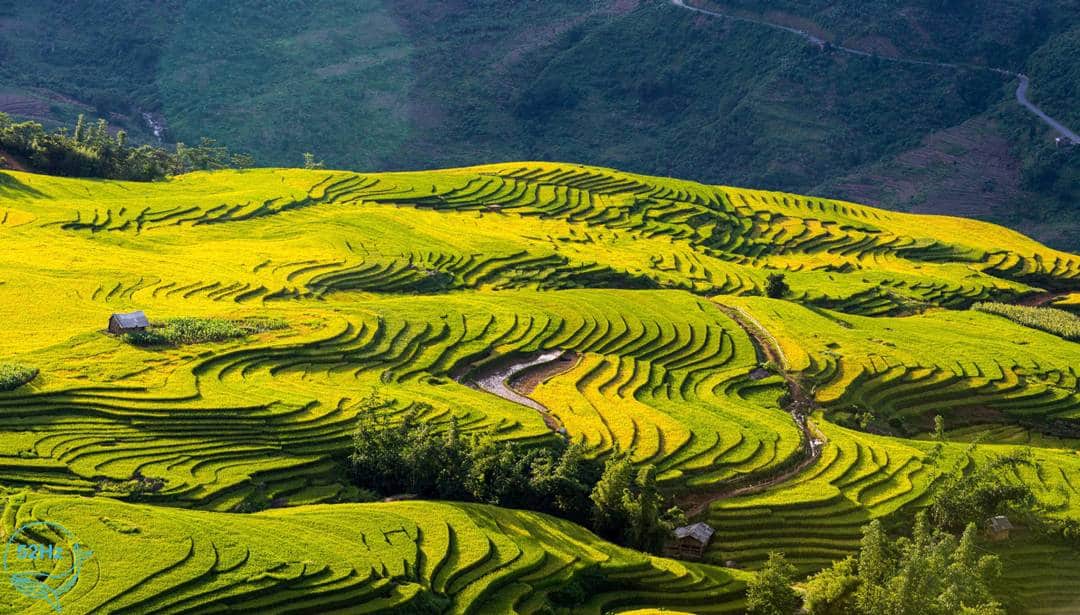
Northern Vietnam rice terraces follow one farming rhythm with local twists: flooded fields in late spring, green growth in summer and a golden harvest in early autumn. Sapa, Mu Cang Chai, Hoang Su Phi, Pu Luong and Mai Chau each peak at slightly different weeks. This guide walks the regions in turn, gives the season for each one and shows how to link two or three of them in one trip.
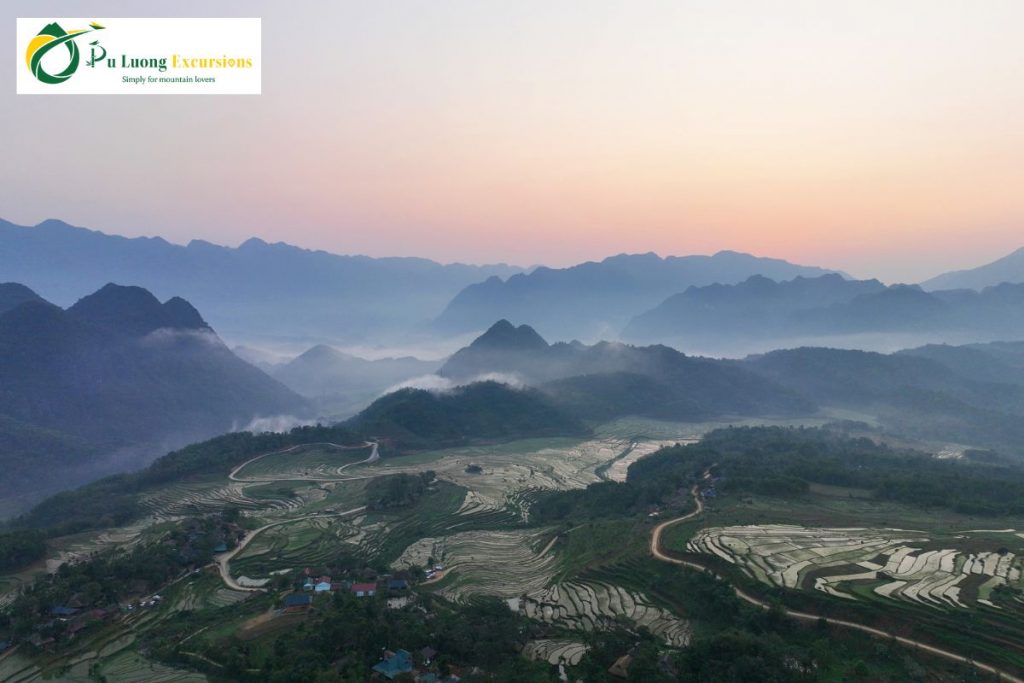
See the terraces with a team based among them
Terrace trips fail on timing more than on anything else, since a valley can turn from gold to bare earth in two weeks. Our team farms and walks in Pu Luong through the whole year, so we know how the seasons move across the north. Browse our pu luong tours for the routes that start closest to Hanoi, then ask us for a free plan. Tell us your month, and we will point you to the valleys that peak while you are here, in the right order.
How does the terrace season run across the north?
The rice terrace season runs in four clear stages in most northern valleys: water in May and June, green growth in July and August, gold from late August to October, then rest in winter. High valleys ripen later than low ones, often by 1 to 2 weeks.
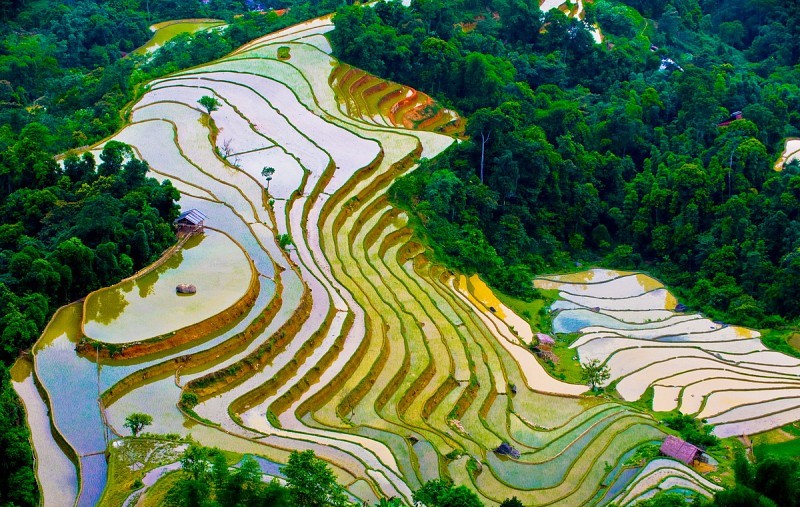
Farmers flood the terraces first, and the water turns each field into a mirror for the sky. Seedlings follow, and the hills turn green within weeks. The golden window is short, so harvest dates matter more than any other detail of the trip.
| Stage | Months | What you see |
|---|---|---|
| Water season | May to June in most valleys | Flooded fields that mirror the sky |
| Green season | July to August | Tall green rice, full and dense |
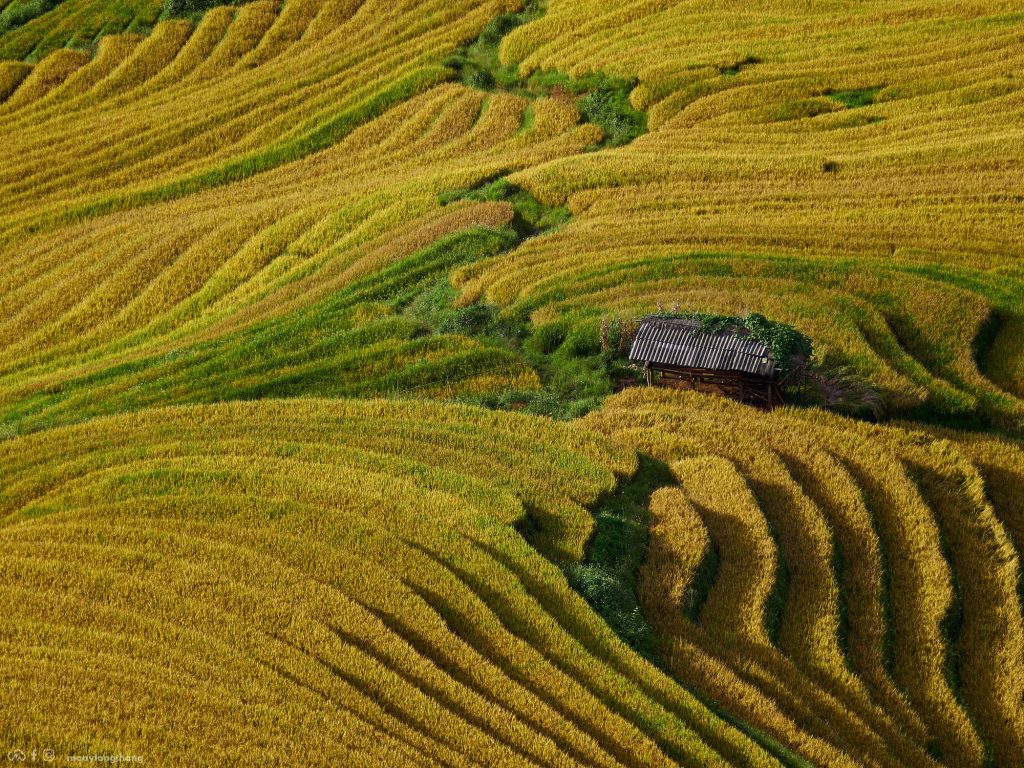
| Golden season | Late August to October | Ripe rice, harvest work in the fields |
| Rest season | November to March | Bare or fallow fields, farm repairs |
Pu Luong breaks the pattern with two crops a year. Its fields flood in March to mid April and again in July, and they turn golden in mid May to June and again in October. Read the Pu Luong Travel Guide for the valley month by month.
What do Sapa and Mu Cang Chai offer?
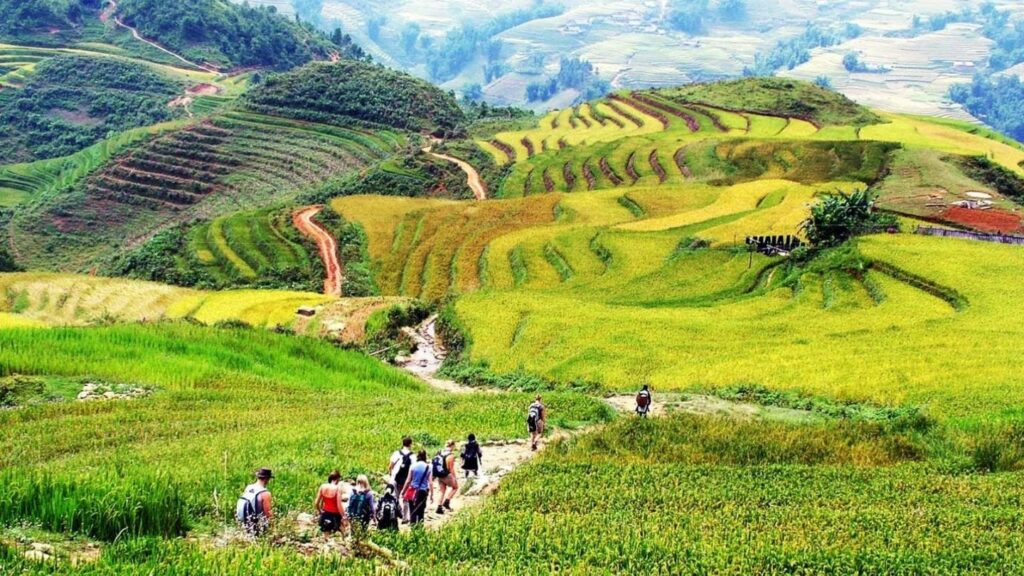
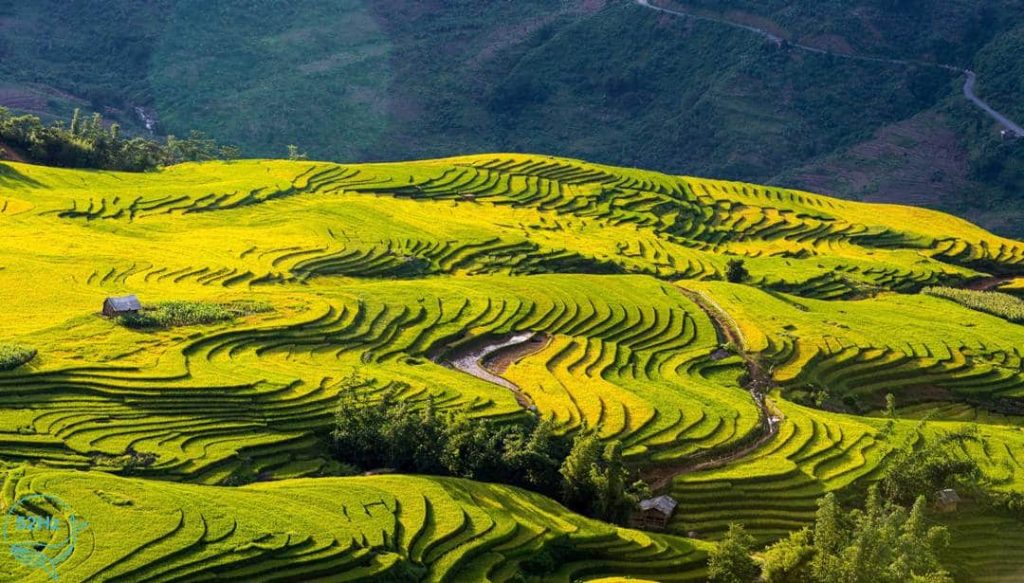
Sapa and Mu Cang Chai are the two famous names among the rice terraces in northern Vietnam, and both grow a single crop each year. Sapa floods its terraces in May and June and turns golden in September and October, with Hmong and Dao farmers working the slopes by hand.
Mu Cang Chai climbs steeper ground. Its terraces wind around rocks and ridges, and farmers level and water them by hand because machines cannot work the slope. The water season runs in May and June, and the harvest turns the hills gold in September and October.
Both places need a long drive from Hanoi and a flexible plan in wet weather. Go to Sapa for the town, the markets and the high peaks around the fields. Go to Mu Cang Chai for the steepest and most dramatic terrace shapes.
What do Hoang Su Phi and Y Ty offer?
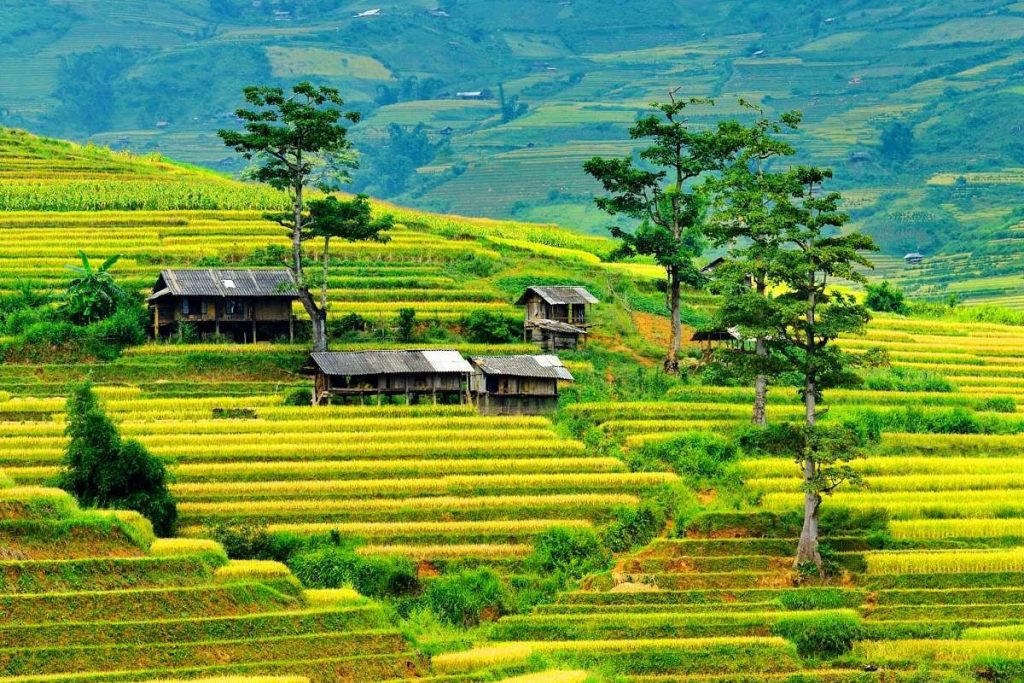
Hoang Su Phi and Y Ty suit travellers who accept long roads for fewer visitors, with a water season in May and June and a golden harvest in September and October. Dao and Nung farmers built the Hoang Su Phi terraces into deep, steep valleys, with stone walls and stream fed channels.
The work there is heavy. Farmers plough with buffalo, carry seedlings up narrow paths and repair walls by hand after heavy rain. The views repay the effort, but the roads demand time and care.
Y Ty sits high and spends much of the year in mist. Its narrow terraces follow the contours of the hills, green from June to September and golden from mid September to October. February and March bring the misty views that photographers come for.
What do Bac Son and the Ha Giang loop add?
Bac Son and Ha Giang show two other shapes of northern terrace, one flat and one rugged. Bac Son is a wide valley floor ringed by limestone peaks, with golden fields in July and again in October, and foggy mornings in February and March that suit early starts.
The Ha Giang loop links terraces with a mountain road route through Lung Cu, Du Gia and Nam Dam. Fields flood in May and June and turn golden in September and October. Dao and Hmong families farm the valleys along the road, and most visitors ride the loop rather than walk it.
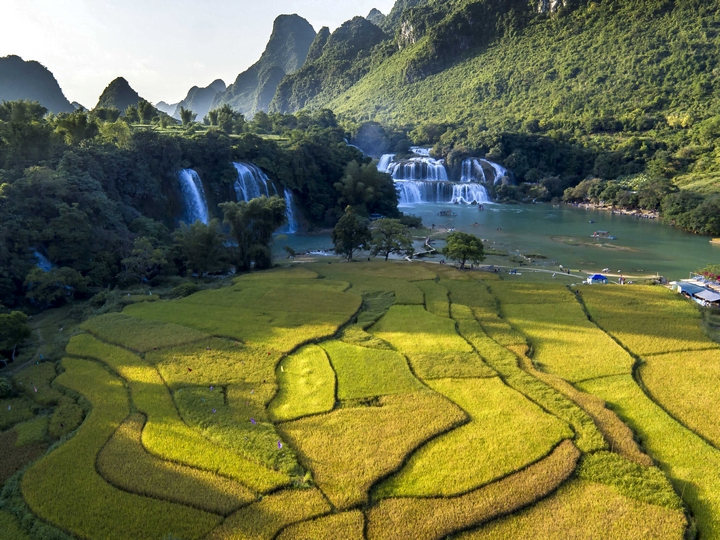
Near Ban Gioc waterfall, smaller terraces line the riverbanks. They grow green in May and June and turn golden in September and October, fed by streams from the hills. Ta Xua, known for its cloud seas, holds small terraces too, golden in September and October.

Why is Pu Luong the easiest terrace base from Hanoi?
Pu Luong is the closest terrace valley of scale to Hanoi, at about 160 km and roughly 4 hours by road, according to our route guides. That short drive makes it the one northern vietnam rice terrace base you can reach and walk on the same day.
The reserve grows two crops a year, so it gives you two golden windows instead of one. Late May to early June brings the first harvest, and October brings the second. March to mid April and July bring the water season, with flooded fields near the villages.
Pu Luong Nature Reserve also gives you the softest walking of the regions covered here. Village paths link Don, Hieu and Kho Muong through the terraces, and the pu luong trekking routes run from gentle half days to full days on the trails.
What do Mai Chau and Ninh Binh add?
Mai Chau and Ninh Binh add flat valley rice to the terrace map, which suits travellers who want the farming landscape without steep climbs. Mai Chau is a wide Thai valley with flat fields, stilt houses and easy cycling between villages, a gentle first step into the north.
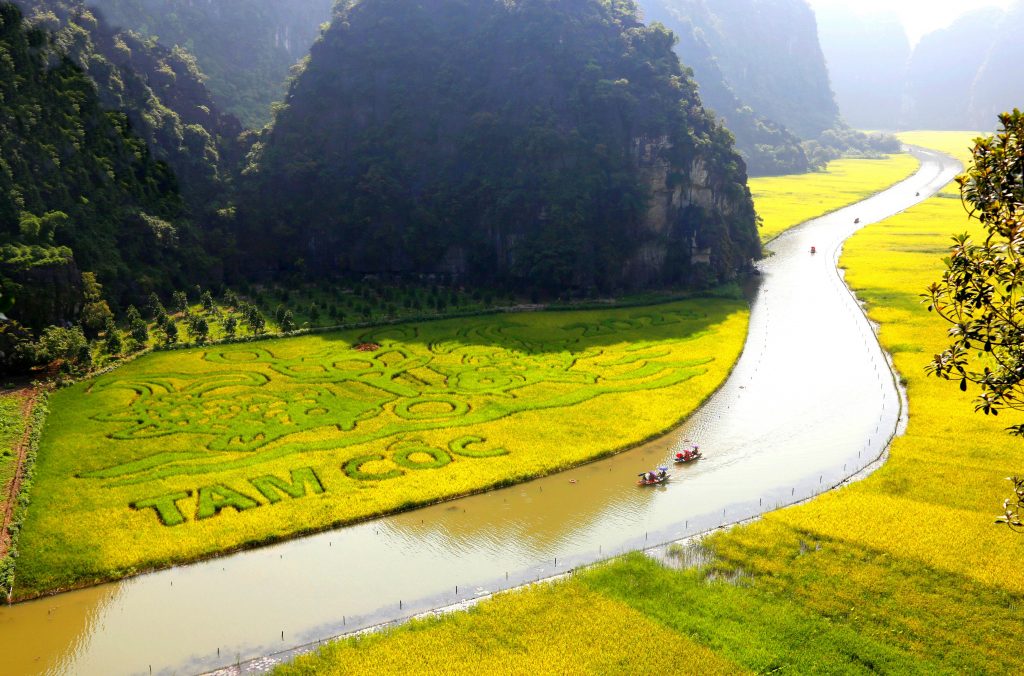
Ninh Binh grows flat rice between limestone peaks rather than on terraced slopes. Its fields turn golden in late May and June and stay green in September and October. Boat rides and the Mua Cave climb give you the fields from water level and from above.
Both places sit on the road between Hanoi and Pu Luong. That makes them easy to add to a terrace route without extra driving days.
How do you build a route across the regions?
Build the route by season first and by road second, since the golden weeks move from valley to valley across about 6 weeks. In September, start with Sapa, then move to Mu Cang Chai or Hoang Su Phi as their harvest follows. In October, Pu Luong and Bac Son carry the colour later.
With 5 to 7 days, pick 2 regions and walk properly in both. With 10 days, you can add a third, but the drives between the far north valleys eat full days. A route that starts in Pu Luong suits short trips, since the valley sits closest to Hanoi.
| Days | Route that fits | Golden window |
|---|---|---|
| 3 days | Pu Luong alone | Late May to June, or October |
| 5 to 7 days | Pu Luong and Mai Chau, or Sapa alone | September to October |
| 8 to 10 days | Sapa and Mu Cang Chai, or the Ha Giang loop | September to October |
At a glance
The northern terraces share one rhythm, with water in late spring, green in summer and gold from late August to October. Pu Luong adds a second crop, and it sits about 4 hours from Hanoi, closer than any other major terrace valley.
- Duration: 3 days for one valley, 8 to 10 days for a multi region route.
- Distance: Pu Luong about 160 km from Hanoi; the far north valleys need full travel days.
- Difficulty: easy village walks in Pu Luong and Mai Chau; steeper trails in Mu Cang Chai and Hoang Su Phi.
- Group size: small groups of up to 9 guests on our Pu Luong routes.
- Start and finish: Hanoi for every route above.
- Season note: gold peaks in September in the high valleys and in October in Pu Luong.

Who this is not for
A multi region terrace route does not suit travellers who want one base and no long drives. The far north valleys sit hours apart, and the roads are mountain roads. It also does not suit a winter trip built around golden fields.
- Travellers with only 2 days, since the far valleys need a full day of road each way.
- Visitors who want golden rice in winter, since the fields rest from November to March.
- Anyone who plans to enter Bat Cave in Pu Luong, which is closed to visitors since September 2026 after rockfalls.
- Travellers who dislike early starts, since the clearest terrace light comes near sunrise.
Our suggestion
For most travellers, start with the valley that sits closest to Hanoi and add regions only if your days allow. Village Discovery Plus (PE016), a 3 day 2 night small-group trip in Pu Luong Nature Reserve, walks the terraces at a gentle pace with village nights between walks.
It suits families and first time terrace travellers who want the season without the long northern drives. A pu luong 3 days 2 nights stay in the golden weeks of October gives you harvest work in the fields around Don village. Ask us which valley peaks on your exact dates before you book the far north.
Frequently asked questions about northern terraces
Terrace questions come down to timing, distance and where to sleep. The five answers below cover the golden weeks, the easiest base, the route length and the village choice for a Pu Luong stay.
Which village is best to stay in?
Don village suits most travellers in Pu Luong, with the widest choice of homestays and lodges and walks that start at the door. Hieu village suits travellers who want the waterfall nearby, while Kho Muong suits travellers who want the quietest valley. In Sapa, Ta Van makes a good village base below the town.
When do the terraces turn golden?
Most northern valleys turn golden between late August and October, with Sapa first and the high valleys of Hoang Su Phi and Mu Cang Chai peaking in late September. Pu Luong turns golden twice, in late May to June and again in October. Dates shift by 1 to 2 weeks with the weather each year.
Which terrace region is closest to Hanoi?
Pu Luong, at about 160 km and roughly 4 hours by road. Mai Chau and Ninh Binh also sit within a half day of the capital, but their rice grows on flat valley floors rather than terraces. The far north valleys need a full travel day.
How many regions can you see in one trip?
Two regions in 5 to 7 days, or three in 10 days, without rushing. The drives between Sapa, Mu Cang Chai and Ha Giang take most of a day each. One valley walked well beats three valleys seen from a car window.
What is the water season?
The water season is the weeks when farmers flood the terraces before planting, in May and June in most valleys. The still water mirrors the sky at sunrise and sunset. Pu Luong floods twice, in March to mid April and again in July.
Tell us your month and we will match the valleys
The terraces reward travellers who plan by the farming calendar rather than by the map alone. Tell us your month and your days, and we will match you to the valleys that peak while you are here, starting with the one closest to Hanoi. Contact us through https://puluongexcursions.com/, WhatsApp +84 975 432 588 or email tour@puluongexcursions.com for a free consultation and a same day quick quote. See photos and updates on our Facebook page, find us on Google Maps, and read traveller reviews on Tripadvisor.
Plan your trip with Pu Luong Excursions
- WhatsApp / phone (tours): +84 975 432 588
- Reservations: +84 966 939 026
- Email: tour@puluongexcursions.com
- Office: 13 Hang Muoi, Hoan Kiem, Hanoi, Vietnam
- Website: puluongexcursions.com
About Pu Luong Excursions Small-group treks, village stays and local-guided journeys in Pu Luong Nature Reserve, Northern Vietnam. A licensed international tour operator, walking these trails since 2016.