


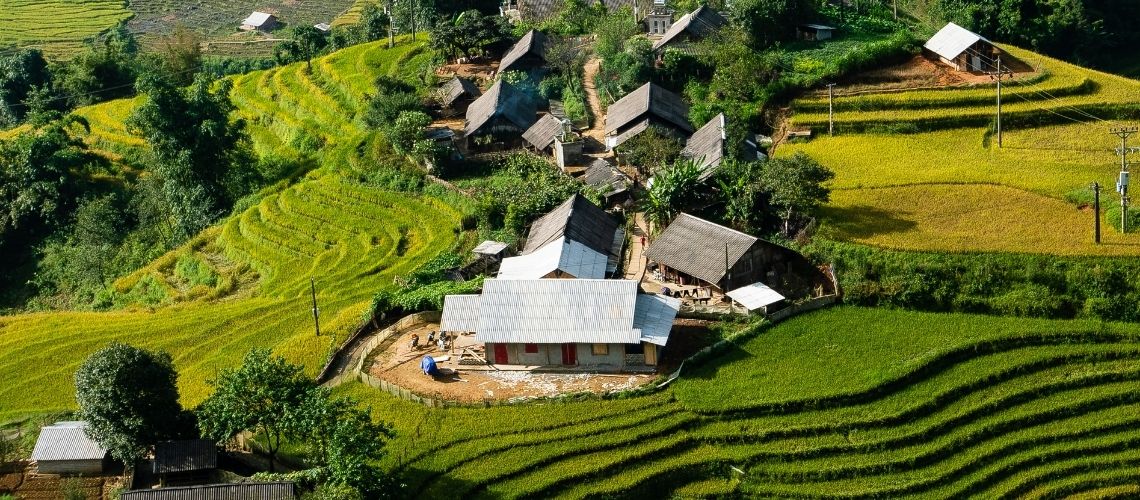
Remote mountain villages Vietnam searches usually lead to photo lists, but the useful question is which villages you can reach, sleep in and visit with respect. Kho Muong, Hieu and Son Ba Muoi in Pu Luong, Ta Van in Sapa, the Dong Van villages in Ha Giang and the Mai Chau valley each ask a different amount of time and effort. This guide gives the access, the people and the rules for each one.
Visit these villages with guides who live in one
Village trips work when the guide comes from the valley, since the visit runs on family time rather than on a schedule of sights. Our guides walk from their own villages in Pu Luong, in small groups of up to 9 guests, and they know which houses welcome guests and which paths the farmers use. Browse our pu luong tours to see the village routes, then ask us for a free plan. Tell us how far you want to walk, and we will match the villages to your legs and your days.
Which Pu Luong villages feel most remote?
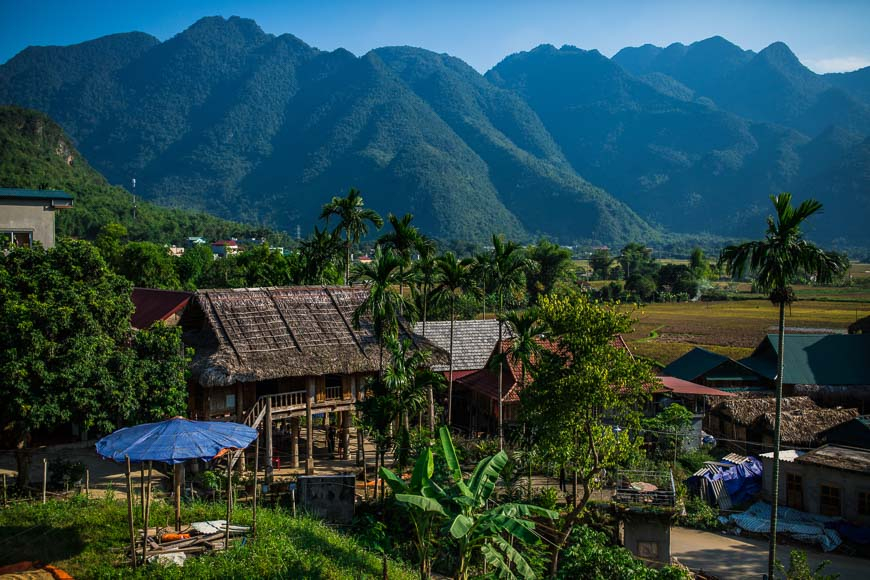
Kho Muong and Son Ba Muoi feel most remote in Pu Luong, since both sit at the end of valley roads and walking paths rather than on the main route. Kho Muong is a Thai village deep inside the reserve, reached by a soft trail through rice terraces and bamboo forest.
Wooden stilt houses stand by the fields, and the days run on farm work: rice in season, weaving under the houses and food from the gardens. The air stays cool, and the valley holds little phone signal, which is part of the point for most guests.
Son Ba Muoi villages are 3 highland Thai villages that sit higher and cooler than the valley floor. The road in is rough in wet weather, and the villages suit travellers who want a full day of walking and a simple homestay night. Read the Pu Luong Travel Guide for the road notes before you go.
Bat Cave sits near Kho Muong, but it is closed to visitors since September 2026 after rockfalls. Walk the valley and the terraces instead, and do not plan any part of the day around the cave.
What is Hieu village like?
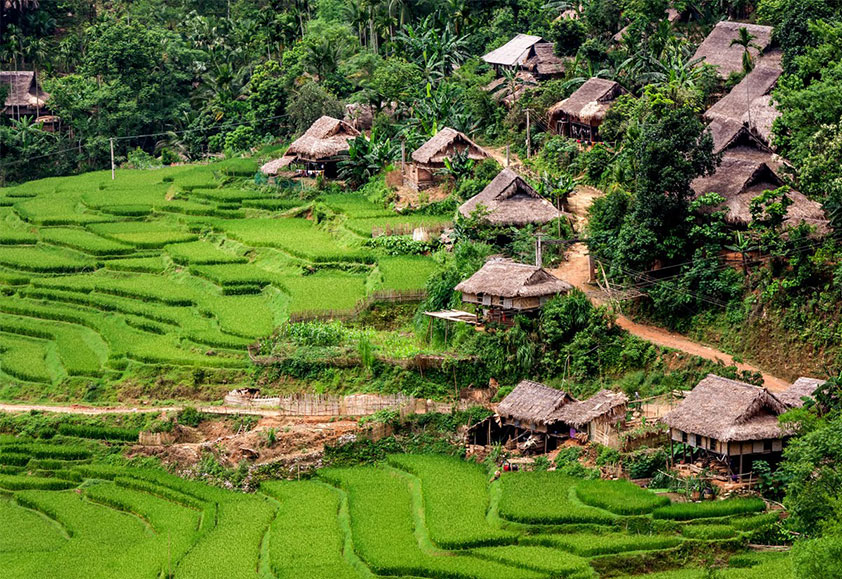
Hieu village spreads along the Hieu waterfall, with Thai stilt houses built on the hillsides above a chain of small falls and clear pools. You hear the water from most houses in the village, and the falls set the pace of the day.
Families here cook over fire, farm the slopes and host guests in the same houses they live in. Forest trails link Hieu to the neighbouring villages, so it works as a walking base as well as a rest stop. Many guests plan 1 night and stay for 2, so build slack into your route if you can.
Swimming in the natural pools suits the warm months. In the cool months, the village suits slow mornings, short walks and time by the fire instead.
What do Ta Van and Dong Van offer?
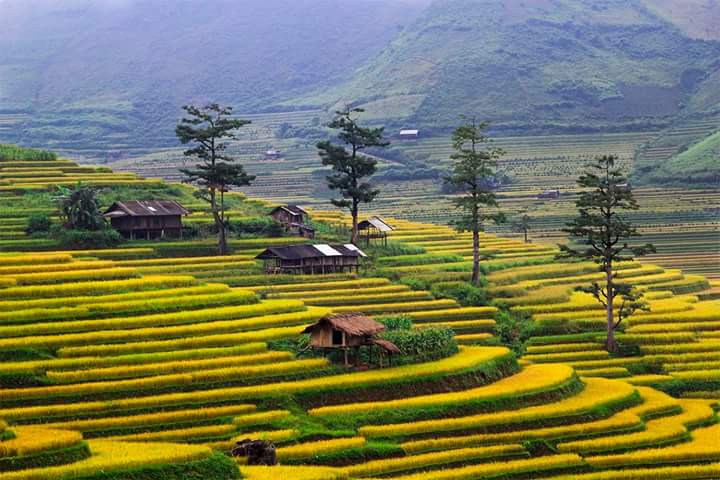
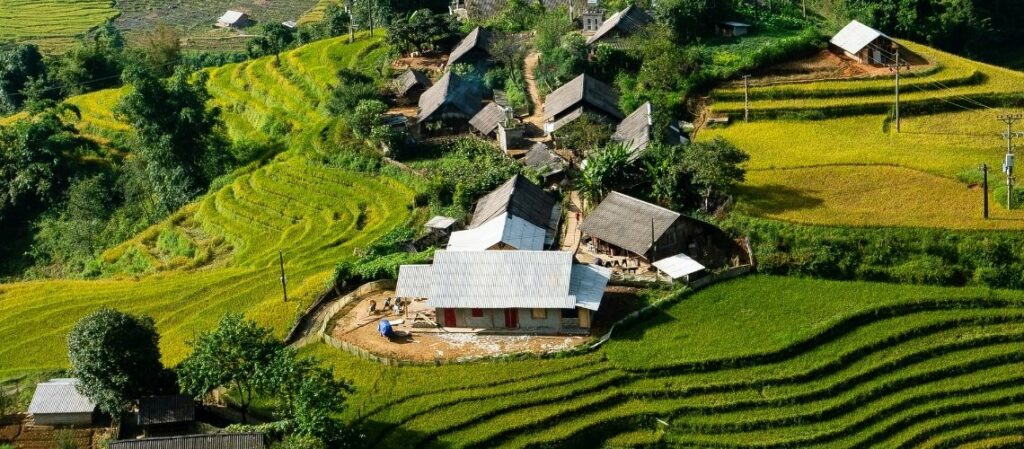
Ta Van and Dong Van show two other kinds of remote villages in vietnam, one in a famous valley and one on a high rocky plateau. Ta Van is a Giay village below Sapa town, with terraced fields, warm homestays and gentle paths that link it to Lao Chai and Y Linh Ho.
The fields turn green in summer, gold at harvest and misty from December to February. Ta Van sees more visitors than the Pu Luong villages, so it suits travellers who want village life with easier services.
The Dong Van villages in Ha Giang sit among limestone peaks, with Hmong stone houses and old markets where families trade food and handmade goods. The roads are long and the walking is harder. Go there with days to spare, not as a side trip.
Is Mai Chau a remote village area?
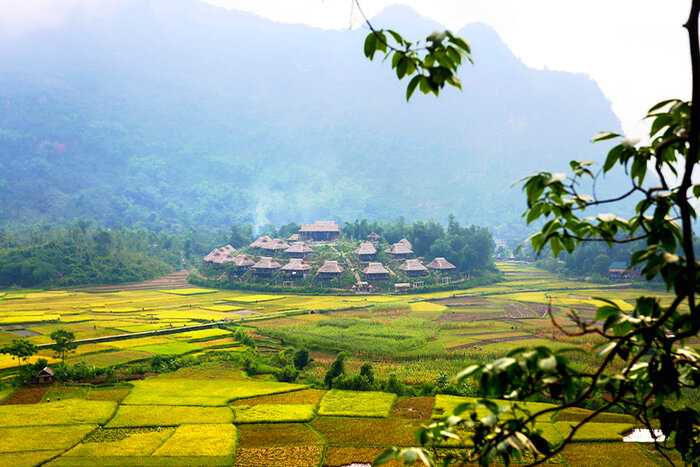
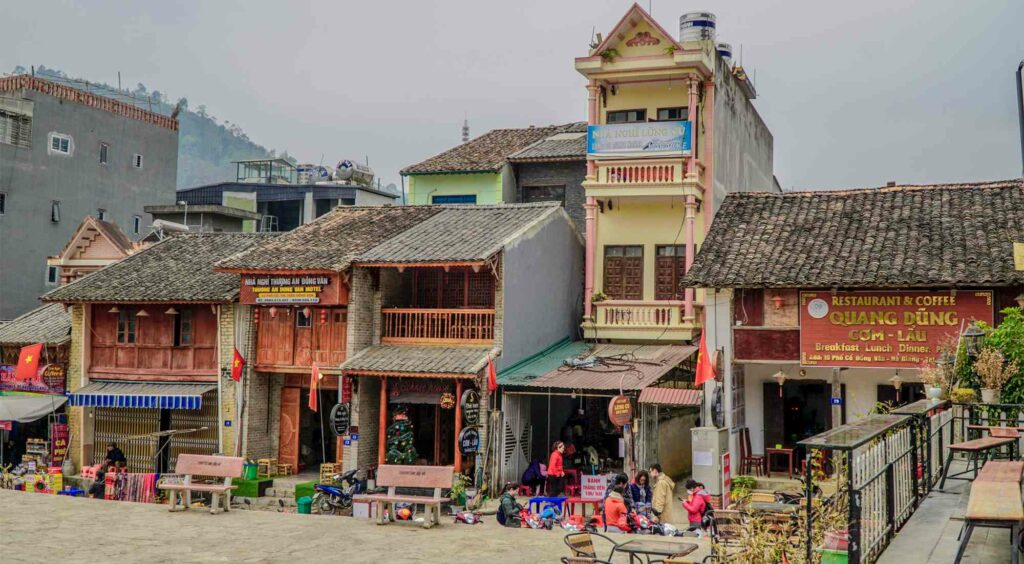
Mai Chau is the gentlest entry to mountain villages in vietnam, since the valley is wide and flat and the Thai villages sit close to the road. It suits first time village travellers, families and anyone who wants to cycle rather than trek.
Expect easy paths, flat rice fields, weaving and handicrafts for sale, and stilt house stays with a sunrise over the valley. Mai Chau feels less remote than Kho Muong or Dong Van, and that is its strength. Many travellers start here, then go deeper into Pu Luong on the next trip.
| Village area | Who lives there | Access in brief | Suits |
|---|---|---|---|
| Kho Muong, Pu Luong | Thai | Walking trail into the valley | Walkers who want quiet |
| Son Ba Muoi, Pu Luong | Thai | Rough road, then village paths | A full day out, simple stays |
| Hieu, Pu Luong | Thai | Road to the falls, hillside paths | Rest days by the water |
| Ta Van, Sapa | Giay | Road and paths below Sapa town | Village life with services |
| Dong Van, Ha Giang | Hmong | Long mountain roads | Long trips, harder walking |
| Mai Chau valley | Thai | Main road, flat cycling paths | First village trips, families |
What is daily life like in these villages?
Daily life in remote mountain villages in vietnam runs on the farming calendar, with planting and harvest done by hand and weaving fitted around the field work. You see farmers on the terraces at first light, women weaving under the stilt houses and children walking to school on the village paths.
Food comes from the garden, the stream and the rice store. Sticky rice cooked in bamboo, garden vegetables and herbal teas appear at most meals. Evenings are quiet in the plain sense: crickets, cool air and early nights, since the work starts early.
These are working villages, not displays. Families welcome guests who join the rhythm, help where help is wanted and leave the rest alone. A homestay night shows you more than a photo stop of 20 minutes.
How should you visit with respect?
Visit as a guest in a home village, in 5 practical ways: ask before you take photos, buy from village shops and makers, sleep in family homestays, keep the paths clean and learn a greeting and a thank you in the local language. Those habits cost little and change how a visit feels on both sides.
- Ask before photos, and accept a no without argument
- Do not give money or sweets to children; buy from their parents' shops instead
- Dress modestly in the village and at family altars
- Walk on paths, not across planted fields
- Pay the agreed price for guiding, meals and rooms without hard bargaining
Our guides brief every group on these points before a village night. The rules sit inside Pu Luong Nature Reserve visits too, where the villages form part of the protected area.
At a glance
The villages covered here range from Mai Chau, an easy flat valley, to Dong Van, a long mountain trip. Pu Luong holds the middle ground: Kho Muong, Hieu and Son Ba Muoi sit about 4 hours from Hanoi, with real village life and walking from the door.
- Duration: 1 night for a first village stay; 2 to 3 nights to walk between villages.
- Distance: Pu Luong about 160 km from Hanoi; Ha Giang needs a full travel day.
- Difficulty: easy in Mai Chau; moderate on the Pu Luong and Sapa paths; harder in Ha Giang.
- Group size: small groups of up to 9 guests on our village routes.
- Start and finish: Hanoi for Pu Luong and Mai Chau routes.
- Season note: harvest months give gold fields; winter gives mist and cool air.
Who this is not for
Remote villages do not suit travellers who want hotel services, nightlife or a packed list of sights. Village nights are simple, the food is family food and the evenings end early. They also do not suit a rush.
- Travellers who need a private bathroom in every stay, since simple homestays share facilities
- Visitors with only a few hours, since the value sits in the overnight rhythm
- Anyone who plans to enter Bat Cave near Kho Muong, which stays closed since September 2026
- Travellers who want to photograph people without asking, which hosts do not welcome
Our suggestion
For a first remote village trip, base yourself in Pu Luong and walk between villages with a guide from the valley. The pu luong trekking routes link Don, Hieu and Kho Muong in 2 or 3 days, with homestay nights between the walks.
A pu luong 3 days 2 nights trip gives you 2 village nights, which is where the rhythm of the place starts to make sense. It suits couples, slow travellers and walkers who want culture at walking pace. Ask us to add Son Ba Muoi if you want the highest and quietest night of the route.
Frequently asked questions about mountain villages
Village questions tend to cover access, comfort and conduct. The five answers below cover the base village, the easiest first trip, the hardest access, homestay bathrooms and photo rules.
Which village is best to stay in?
Don village suits most travellers in Pu Luong, with the widest choice of homestays and lodges and easy walks to the nearest sights. Kho Muong suits travellers who want the quietest valley, and Hieu suits travellers who want the waterfall by the houses. If you only stay 1 night, choose Don.
Which remote village is easiest for a first trip?
Mai Chau, since the valley is flat, the cycling is easy and the stilt house stays sit close to the road. Pu Luong comes next, with guided walks between villages. Save Dong Van for a longer trip with full travel days.
Are homestays comfortable?
Homestays are simple and clean, with a mattress, a mosquito net and shared bathrooms in the standard village houses. Private rooms and lodges exist in Don village for travellers who want more comfort. Tell us what you need when you book, and we will match the stay to it.
Can you visit Kho Muong cave?
No. Bat Cave near Kho Muong is closed to visitors since September 2026 after rockfalls, and it stays closed until safety checks finish. The village, the terraces and the forest trails around it remain open and worth the walk.
How should you take photos in villages?
Ask first, with a smile and a gesture if you share no language. Most people agree, and some invite you closer. Do not photograph children without a parent's clear yes, and do not pay children for photos.
Tell us how far you want to walk
A village trip is measured in nights and paths, not in sights per day. Tell us how far you want to walk and how simple you want to sleep, and we will build the route around the villages that fit. Contact us through https://puluongexcursions.com/, WhatsApp +84 975 432 588 or email tour@puluongexcursions.com for a free consultation and a same day quick quote. See photos and updates on our Facebook page, find us on Google Maps, and read traveller reviews on Tripadvisor.
Plan your trip with Pu Luong Excursions
- WhatsApp / phone (tours): +84 975 432 588
- Reservations: +84 966 939 026
- Email: tour@puluongexcursions.com
- Office: 13 Hang Muoi, Hoan Kiem, Hanoi, Vietnam
- Website: puluongexcursions.com
About Pu Luong Excursions Small-group treks, village stays and local-guided journeys in Pu Luong Nature Reserve, Northern Vietnam. A licensed international tour operator, walking these trails since 2016.