


More travellers today want their trips to mean something beyond great photos. They want to know that the people they visit benefit from the experience — not just wave goodbye from the side of the road. If that sounds like you, an ethnic Thai Muong support tour in Pu Luong might be exactly what you are looking for.
Tucked into the mountains of Thanh Hoa province in northern Vietnam, Pu Luong is home to two of the country’s most culturally rich ethnic groups: the Thai and the Muong. Their villages, farming traditions, handmade textiles, and community life are unlike anything you will find in a city. And when tourism is done right here, it becomes one of the most effective ways to help these communities keep their way of life going.
This guide covers everything you need to know — who the Thai and Muong people are, what a support tour actually looks like, and how to make sure your trip makes a real difference.
Who Are the Thai and Muong People of Pu Luong?
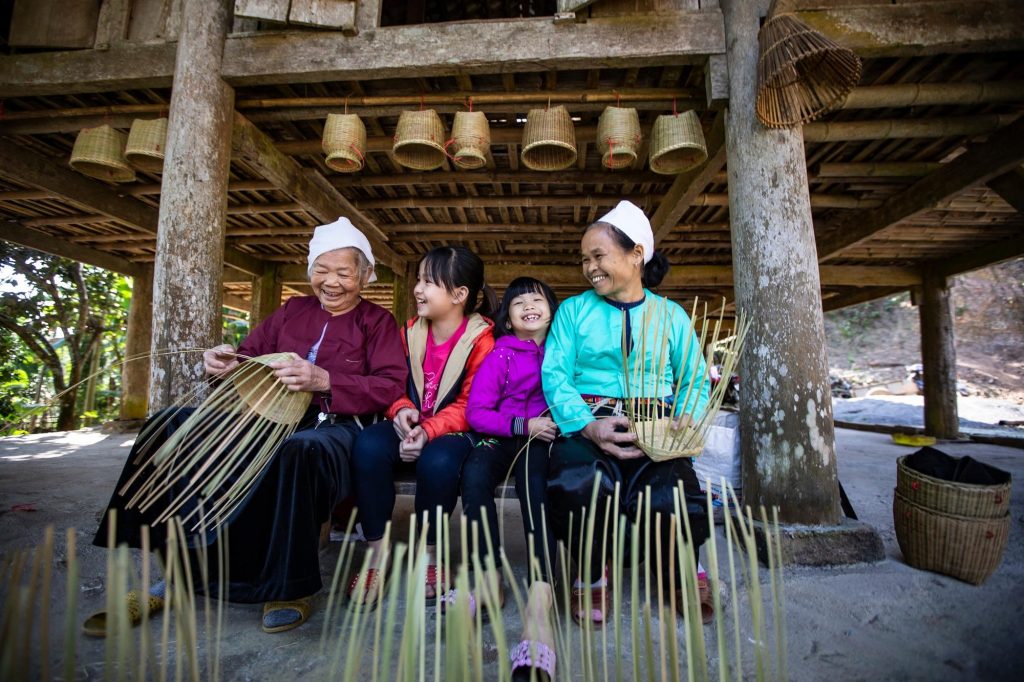
The Thai and Muong are two distinct ethnic minority groups who have lived in the Pu Luong valley for centuries. Together, they make up the majority of the local population in this part of Thanh Hoa province.
The Thai people (known as the Black Thai or White Thai, referring to traditional dress styles) are known for their stilt houses, elaborate woven fabrics, and a deep connection to the rivers and rice terraces. Thai women are especially renowned for their weaving — producing intricate patterns on hand looms that have been passed down through generations. Their festivals, music, and dance traditions are still actively practised in the villages around Pu Luong.
The Muong people have their own distinct language, customs, and agricultural knowledge. They are expert farmers who have shaped the terraced landscape of Pu Luong over many generations. Muong communities tend to be closely knit, with strong traditions around rice harvests, communal meals, and seasonal festivals.
Both groups face the pressures that come with modernisation — younger people moving to cities, traditional skills being lost, and outside economic forces that do not always benefit local families. Responsible tourism that actively channels money and attention into these communities is one of the most practical ways to help.
Thai and Muong People of Pu Luong
What Is an Ethnic Thai Muong Support Tour?
An ethnic Thai Muong support tour is a guided travel experience specifically designed to bring visitors into direct, respectful contact with Thai and Muong communities — and to make sure those communities benefit financially and culturally from the visit.
The key word here is “support.” This is not a sightseeing tour where you observe people from a distance. It is a participatory experience where you sleep in family homes, share meals, learn skills, and spend your money in ways that go directly to local people rather than to outside companies.
A good ethnic support tour in Pu Luong will typically involve:
- Small group sizes to reduce the impact on village life
- Local guides who are from the communities themselves
- Accommodation in family-run stilt house homestays
- Meals cooked by your host family using local ingredients
- Activities that are genuinely part of community life — farming, weaving, cooking — not performances staged for tourists
- A booking structure where the families receive a fair share of what you pay
It is a different kind of travel, and most people who do it say it is the most memorable trip they have ever taken.
Ethnic Thai Muong Support Tour
See more: Why Choose a Community Based Pu Luong Tour
What You Will Experience on an Ethnic Thai Muong Support Tour
No two tours are exactly alike, but here is a picture of the kinds of experiences that make an ethnic Thai Muong support tour in Pu Luong so special.
Village Walks and Cultural Encounters
The most natural way to start is on foot. Village trails in Pu Luong pass through rice paddies, past water wheels spinning over clear streams, and through clusters of wooden stilt houses with smoke rising from the kitchens. Your guide — usually a local person from one of the villages — will introduce you to farmers working their fields, point out plants used for medicine or cooking, and explain the meaning behind what you see.
These walks are slow and conversational. There is no rush to tick off attractions. The goal is to understand how people live here, and the pace of a support tour reflects that.
Overnight Stays in Traditional Stilt Houses
Sleeping in a Thai or Muong stilt house is one of the most distinctive things you can do in northern Vietnam. The houses are built on wooden stilts, with the living space upstairs and the traditional structure underneath. Inside, you will find simple but comfortable sleeping mats or mattresses, clean blankets, and a mosquito net. Most homestay families have added proper bathroom facilities for guests.
Evenings are the best part. After dinner, families often sit together and talk, play music, or simply enjoy the quiet. If you arrive during a festival period, you may witness dancing or communal celebrations that have nothing to do with tourism — you are just lucky to be there.
Traditional Food and Local Cooking
Food on an ethnic Thai Muong support tour is a highlight in itself. Meals are prepared by your host family using whatever is growing in the garden, freshly caught from the river, or raised in the yard. Sticky rice is a staple at nearly every meal. You will also find dishes made with bamboo shoots, foraged greens, dried fish, free-range chicken, and homemade sauces.
Many tours include a cooking session where you join the family in the kitchen, learn to wrap sticky rice in banana leaves, pound herbs with a mortar and pestle, or prepare a simple soup. It is hands-on, relaxed, and completely delicious.
Handicrafts, Weaving, and Local Markets
Thai weaving is one of the most impressive traditional crafts still practised in Pu Luong. Women use backstrap looms to create fabric with geometric patterns in deep reds, blacks, and golds — each design carrying cultural meaning. On a support tour, you can watch this process up close, ask questions through your guide, and purchase fabric or finished items directly from the maker.
Some itineraries include a visit to a local market where Thai and Muong vendors sell produce, spices, textiles, and handmade goods. Buying here — rather than from a tourist shop in Hanoi — puts money directly in the hands of the people who made it.
Ethnic Thai Muong Support Tour
How This Kind of Tour Actually Supports the Communities
It is worth being specific about this, because “responsible tourism” can sometimes be a vague label that does not mean much in practice.
On a well-structured ethnic Thai Muong support tour, here is where your money actually goes:
- Homestay families receive payment for accommodation and meals, giving them a reliable income source that does not require leaving the village
- Local guides earn wages that reflect their knowledge and language skills, creating meaningful employment within the community
- Artisans and farmers make direct sales when you buy their products or pay for a cooking or weaving demonstration
- Community infrastructure benefits in some programs where a small portion of tour fees goes into shared funds for trail maintenance, clean water access, or cultural programs
The economic impact of one two-night community tour — spread across a homestay family, a guide, and a few market purchases — can be more meaningful than a week in a resort where most spending goes to a large company.
Beyond money, there is also the less tangible value of cultural pride. When outside visitors genuinely want to learn Thai weaving or understand Muong farming practices, it sends a message to younger community members that their heritage is worth holding onto.
Pu Luong Excursions: Your Guide to Ethical Ethnic Culture Tours
Pu Luong Excursions is a licensed tour operator based in Pu Luong Nature Reserve, Thanh Hoa. We have been running ethnic Thai Muong support tours for years, working closely with families in villages throughout the valley to create experiences that are genuine, fair, and memorable.
We believe that the best travel is travel that respects people. That is why every tour we run uses local guides from the communities we visit, places guests in family-run homestays rather than outside-owned properties, and structures payments so that the families hosting you receive a fair share.
Our ethnic culture tour options include:
- 2-day / 1-night Thai or Muong village tours — a first introduction to stilt house life, local food, and guided village walks
- 3-day / 2-night cultural immersion tours — deeper village access, weaving and cooking sessions, and multi-village trekking routes
- Extended northern Vietnam circuits — combining Pu Luong with destinations like Mai Chau, Mu Cang Chai, or Ha Giang for a broader look at ethnic minority cultures across the north
- Custom group programs — designed for families, small travel groups, schools, or NGOs with a specific interest in community development tourism
Every itinerary is designed with input from the communities we work with. We keep group sizes small, brief our guests on respectful conduct before arrival, and maintain long-term relationships with the same families year after year — because consistent partnerships are better for everyone than one-off visits.
An ethnic Thai Muong support tour is one of the most honest ways to travel. You are not visiting a reconstruction or a cultural museum — you are spending time with families in real villages, learning from people whose knowledge goes back generations, and contributing directly to their ability to keep living and working here.
The Thai and Muong communities of Pu Luong have something rare: a landscape and a way of life that has not been completely overrun by modernisation. Travel that supports them helps keep it that way.
If you are ready to plan a trip that goes beyond the surface, get in touch with Pu Luong Excursions. We will help you find the right tour, the right timing, and the right experience for what you are looking for.