


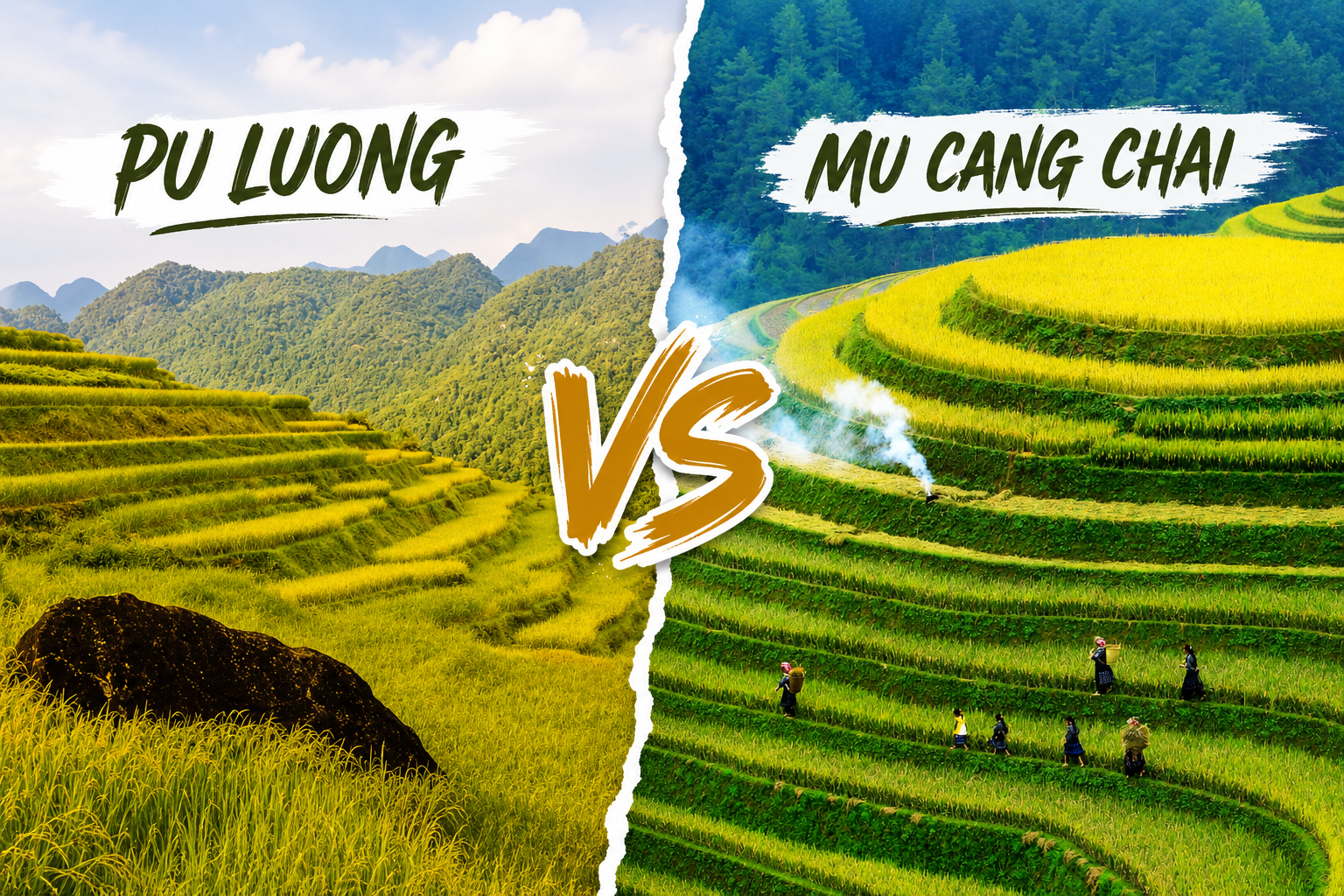
Vietnam’s northwest is home to some of the world’s most breathtaking rice terraces — ancient masterpieces carved into steep mountainsides. Among them, Mu Cang Chai in Yen Bai Province and Pu Luong in Thanh Hoa Province stand out as two of the most beautiful and frequently compared destinations.
While both offer stunning seasonal landscapes that shift from lush emerald green to brilliant gold, they deliver distinctly different experiences.
If you’re wondering Mu Cang Chai vs Pu Luong rice terraces, this guide will help you choose the right one. We compare scenery, accessibility, culture, trekking, best time to visit, and accommodation so you can plan your perfect trip. As experts at Pu Luong Excursions, we’ve guided thousands of travelers to these hidden gems and are happy to share our insights.
The Majestic Mu Cang Chai Rice Terraces
Mu Cang Chai, located approximately 280-300 km northwest of Hanoi, sits at an average altitude of around 1,000 meters. This remote district is renowned for its expansive, dramatic rice terraces, often hailed as among Vietnam’s most beautiful.
Key Highlights and Viewpoints:
- La Pan Tan: The crown jewel with spiral-shaped terraces resembling stairs to the sky. Recognized as a national heritage site, it’s the most photographed spot.
- Che Cu Nha: Steeper terrain with sharp curves and high-altitude views, ideal for adventurous souls seeking raw beauty.
- De Xu Phinh: Gentler, wider terraces in a peaceful valley, perfect for relaxed exploration.
The H’mong people primarily cultivate these terraces, using traditional methods passed down generations. The fields create a breathtaking mosaic against misty mountains, especially stunning during the harvest when they glow golden.
Best Time to Visit Mu Cang Chai:
The prime season is September to early October for the golden harvest. Other highlights include May-June (flooded fields reflecting the sky) and July-August (lush green growth). Weather is cooler in autumn, ranging 18-26°C, ideal for outdoor activities.
Accessibility and Travel:
Reaching Mu Cang Chai takes 6-8+ hours by private car or longer by public transport from Hanoi. The journey includes winding mountain roads and the impressive Khau Pha Pass, offering scenic stops but requiring patience. Roads have improved, yet it remains more remote than many destinations.
Cultural Experiences:
Visitors can engage with H’mong communities, learn about their traditions, festivals, and daily farming life. Homestays provide insights into local customs, though tourism is growing.
Activities:
Trekking through terraces and forests, photography (especially sunrise/sunset), motorbike exploration, and village visits top the list. It appeals strongly to photographers and hikers craving epic scale.
Pros and Cons:
- Pros: Spectacular, large-scale terraces; iconic viewpoints; strong H’mong cultural presence; rewarding for photographers.
- Cons: Longer travel time; can feel more touristy at peak harvest; fewer luxury accommodations; limited infrastructure in remote areas.
Mu Cang Chai delivers wow-factor landscapes that feel monumental and cinematic.
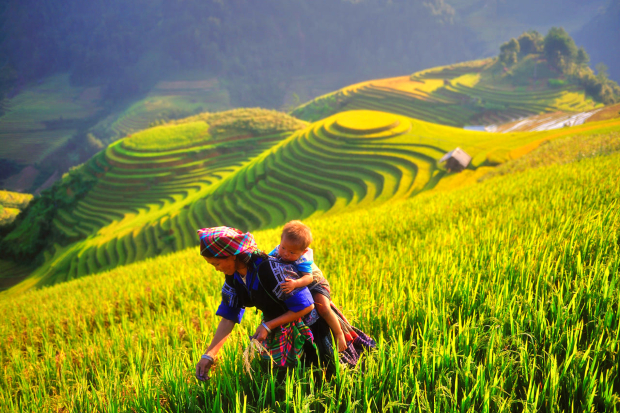
Mu Cang Chai Rice Terraces
The Serene Beauty of Pu Luong Rice Terraces
Pu Luong Nature Reserve, about 150-170 km southwest of Hanoi (roughly 3-5 hours drive), offers a more intimate, lush alternative. Nestled in Thanh Hoa Province, it combines limestone mountains, dense forests, waterfalls, and terraced rice fields in a pristine setting often called a “hidden gem” or “little Sapa without the crowds.”
Landscape and Villages:
Terraces here are integrated with tropical forests and rivers. Key areas include Don Village, Ban Kho Muong, and spots around Ban Hieu. The fields create layered patterns against karst formations, with water wheels, bamboo bridges, and streams enhancing the charm. It feels more integrated with nature than purely agricultural.
Best Time to Visit Pu Luong:
Pu Luong has two rice crops per year, so visitors can enjoy beautiful terraced landscapes for most of the year. The scenery changes dramatically between seasons:
- November – March: Fields are fallow and brown. Buffaloes graze on the terraces. Quiet period, good for peaceful trekking.
- March – mid-April & July: Terraces are flooded with water, creating stunning mirror-like reflections. Especially beautiful at sunrise and sunset.
- Mid-April – mid-May & August – September: Lush, vibrant green rice fields. The valley turns into a sea of green mixed with jungle and forest.
- Mid-May – June & October – early November: Golden harvest season. The terraces glow bright yellow-gold as farmers harvest the rice. This is the most beautiful and popular time to visit.
Best periods for golden terraces: Late May–early June and mid-October–early November.
Accessibility:
Significantly easier than Mu Cang Chai. The drive from Hanoi is smoother and shorter, making it ideal for weekend getaways or multi-destination trips (e.g., combining with Mai Chau). Internal roads and trails suit various fitness levels.
Ethnic Culture:
Predominantly home to White Thai and Black Thai communities. Their stilt houses, traditional weaving, music, and cuisine (delicious sticky rice, herbal dishes) offer warm hospitality. Stays in Thai homestays provide deep cultural immersion with fewer commercial interruptions.
Activities in Pu Luong:
- Multi-day trekking through rice terraces, jungles, and villages.
- Bamboo rafting, waterfall swimming, cycling, and forest exploration.
- Homestay experiences with cooking classes and local interactions.
- Birdwatching and biodiversity spotting in the nature reserve.
Pros and Cons:
- Pros: Closer to Hanoi; less crowded and more authentic; diverse activities (trekking + water-based); excellent eco-homestays and lodges; lush, varied scenery with forests and waterfalls; strong community-based tourism focus.
- Cons: Terraces may feel slightly less “epic” in scale compared to Mu Cang Chai; fewer ultra-famous single viewpoints.
Pu Luong excels in tranquility, sustainability, and holistic nature-culture experiences.
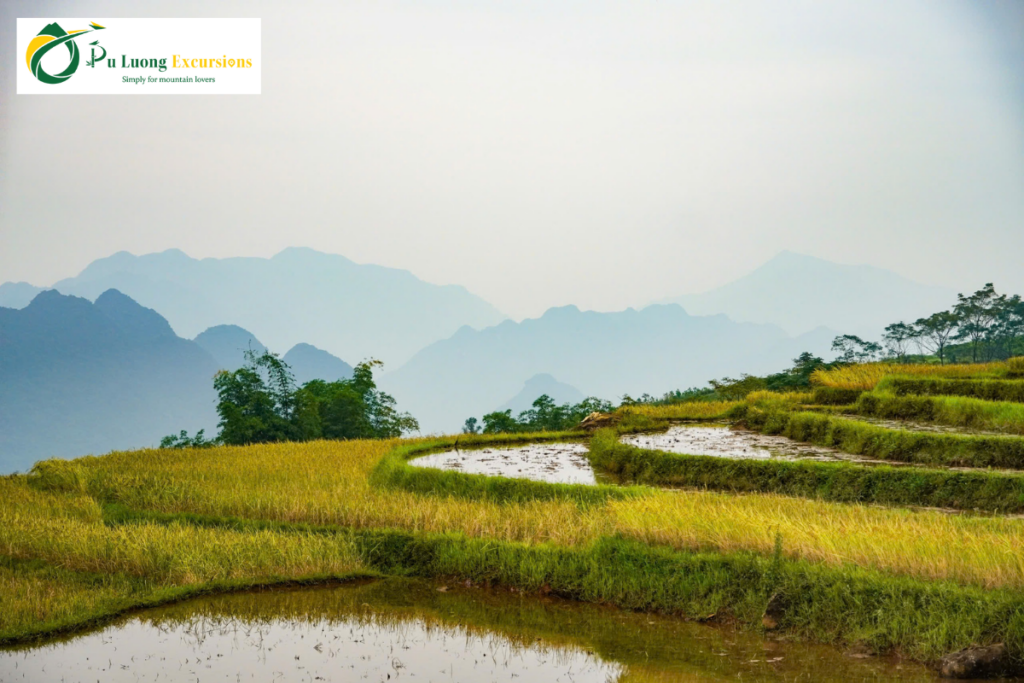
Pu Luong Rice Terraces
Direct Comparison: Mu Cang Chai vs Pu Luong Rice Terraces
Scenery and Photography:
Mu Cang Chai wins for sheer scale and dramatic, sweeping vistas—perfect for iconic “stairway to heaven” shots. Pu Luong offers more intimate, layered views blended with forests and water features, ideal for atmospheric, story-rich photography.
Crowds and Authenticity:
Pu Luong remains significantly less touristy, preserving a more genuine local lifestyle. Mu Cang Chai attracts more visitors during peak season, especially at famous viewpoints, though it’s still far quieter than Sapa.
Accessibility and Convenience:
Pu Luong is the clear winner for shorter travel and easier logistics, suiting first-timers or time-constrained travelers. Mu Cang Chai rewards those willing to journey farther with unique remoteness.
Cultural Immersion:
Both rich, but different flavors. H’mong in Mu Cang Chai (mountain nomad heritage) vs. Thai in Pu Luong (stilt-house river-valley traditions). Pu Luong often feels more interactive due to community-based models.
Trekking and Activities:
Both excellent, but Pu Luong provides more varied options (jungle, rivers, caves) and better infrastructure for multi-day treks with comfortable homestays. Mu Cang Chai focuses on terrace hikes and panoramic viewpoints.
Accommodation:
Pu Luong boasts a wider range of quality eco-lodges, treehouses, and authentic homestays (many with stunning views). Mu Cang Chai has growing options, mostly basic to mid-range homestays and a few ecolodges.
Best For:
- Mu Cang Chai: Photographers, landscape lovers, those seeking dramatic scale and willing to travel farther.
- Pu Luong: Nature enthusiasts, trekkers, culture seekers wanting relaxation and authenticity in a pristine setting.
Many travelers combine both on longer Northwest loops, but if choosing one, consider priorities: epic views (Mu Cang Chai) or balanced, accessible immersion (Pu Luong).
mu cang chai vs pu luong rice terraces
Practical Tips for Your Trip
Getting There:
- Pu Luong: Private car/minivan (recommended, 4-5 hours), or bus to nearby towns then transfer.
- Mu Cang Chai: Private transfer (6-8 hours), sleeper bus options.
What to Pack:
Sturdy trekking shoes, rain jacket, layers (mountain temperatures drop), insect repellent, sunscreen, reusable water bottle, and cash (limited ATMs).
Responsible Travel:
Support local homestays, respect customs (ask before photographing people), avoid single-use plastics, and follow Leave No Trace principles. Both areas benefit from sustainable tourism.
Safety and Health:
Moderate fitness for treks. Check weather, hire local guides for remote trails, and stay hydrated.
Why Choose Pu Luong Excursions?
At Pu Luong Excursions, we specialize in curating meaningful experiences in these breathtaking regions. Our licensed team offers private tours, expert local guides, comfortable accommodations, and deep cultural connections. Whether exploring Pu Luong’s hidden trails or arranging a Mu Cang Chai extension, we prioritize authenticity, comfort, and low-impact travel. Discover Northern Vietnam’s rural wonders with those who call it home.
The choice between Mu Cang Chai and Pu Luong rice terraces ultimately depends on your travel style. Mu Cang Chai delivers unforgettable, large-scale beauty and H’mong heritage for those chasing iconic imagery. Pu Luong provides accessible, serene immersion in Thai culture amid diverse natural wonders—perfect for relaxed yet adventurous exploration.
Both represent Vietnam’s incredible agricultural heritage and natural splendor. Many visitors return to experience both in different seasons. Whichever you choose, the rice terraces of Northern Vietnam promise transformative moments of awe, connection, and peace.