


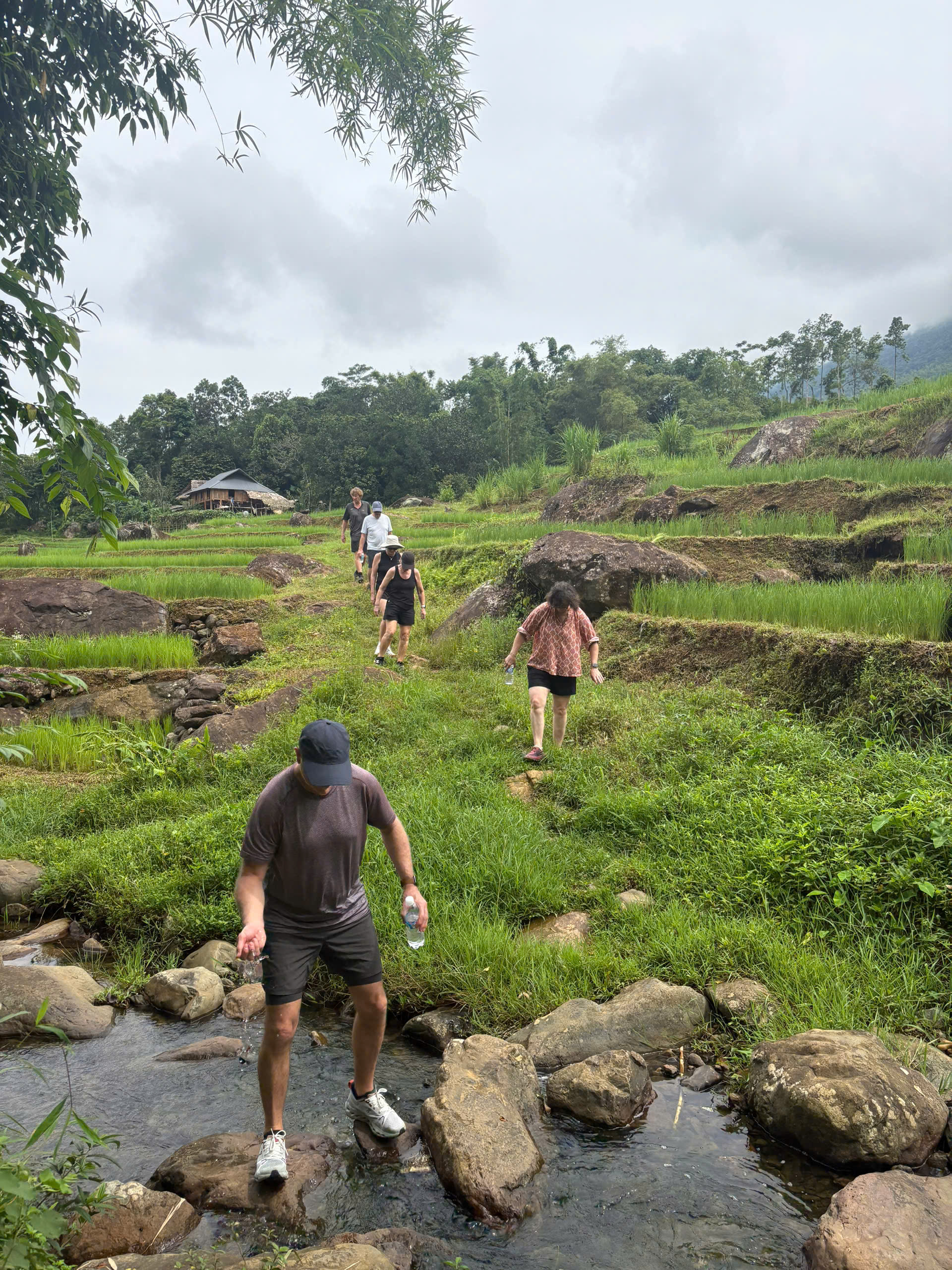
Most travelers who visit northern Vietnam beeline for Sapa — and miss what many seasoned trekkers quietly call a better experience. The Pu Luong cliff viewpoint trek sits inside a protected nature reserve in Thanh Hoa province, just 160 km southwest of Hanoi, yet it draws a fraction of the crowds. Standing at the cliff’s edge, staring out over a sweeping valley of stacked rice terraces, limestone karsts, and bamboo forest with nobody else in sight — it feels like a secret the mountains decided to keep.
This guide covers everything you need to plan your Pu Luong cliff viewpoint hike: the trail itself, seasonal timing, how to get there, and exactly what to bring. Whether you’re a first-time trekker or an experienced trail runner looking for your next adventure, this is the hike you’ll still be talking about years later.
What Makes the Pu Luong Cliff Viewpoint Trek So Special?
The Pu Luong Nature Reserve spans over 17,000 hectares of subtropical forest, traditional Thai and Muong ethnic villages, and working rice terraces that have been farmed by the same families for generations. The cliff viewpoint trek cuts through the heart of this landscape, offering a perspective that no road or motorbike ride can replicate.
A landscape unlike anywhere else in northern Vietnam
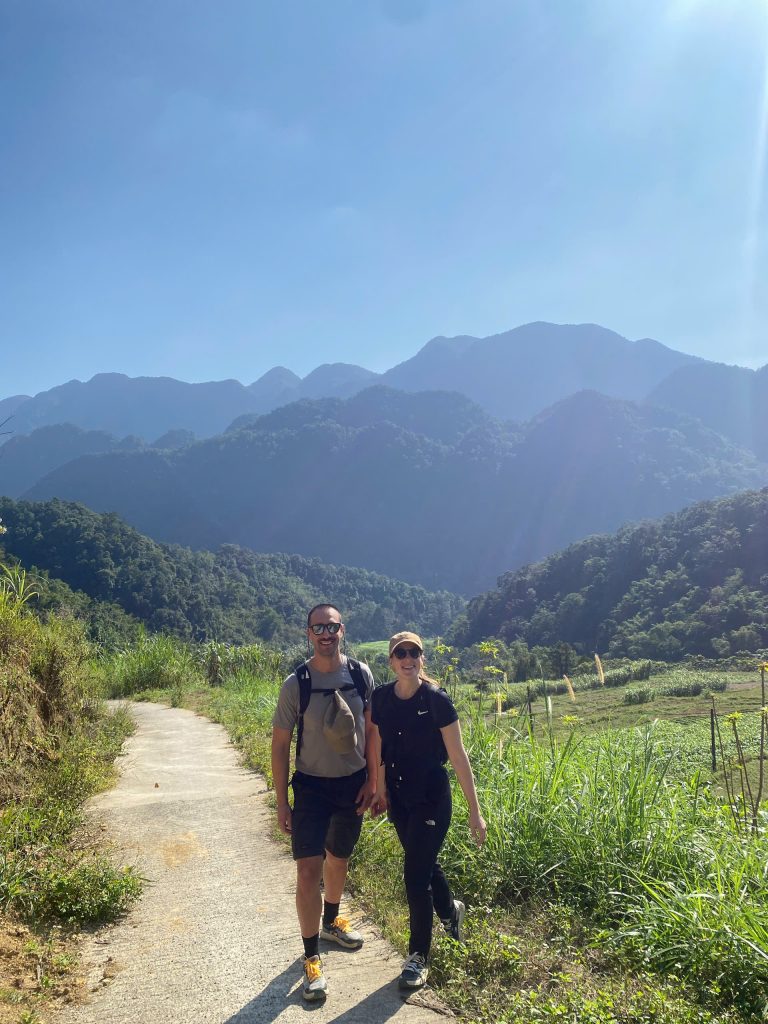
The trail climbs steadily through dense jungle before breaking into open limestone ridgelines. At the top, the cliff viewpoint delivers a panoramic view that takes in the entire Pu Luong valley — terraced paddies cascading down hillsides, wooden stilt houses dotting the valley floor, and mountain ridges fading into the mist. On a clear morning, you can see three villages simultaneously from a single vantage point.
What separates this view from other highland lookouts in Vietnam is the intimacy of the scale. Unlike the vast panoramas of Mu Cang Chai, the Pu Luong cliff viewpoint frames the landscape at human height — close enough to hear water rushing through the irrigation channels below, close enough to see farmers walking their buffalo through the paddies.
Why this trek stays off the tourist radar
Pu Luong sits in the sweet spot of being genuinely remote without being logistically difficult. There are no cable cars, no souvenir stalls at the summit, and no concrete viewing platforms. The trail to the cliff viewpoint passes through working farmland and secondary forest managed by local communities, meaning visitor numbers are deliberately kept low to protect both the ecosystem and the livelihoods of the people who live here.
This combination — dramatic scenery, cultural authenticity, and minimal crowds — is exactly what makes the Pu Luong cliff viewpoint trek one of the most rewarding hikes in northern Vietnam.
What Makes the Pu Luong Cliff Viewpoint Trek So Special
Trek Route & Difficulty: What to Expect on the Trail
The cliff viewpoint trek is offered as a guided experience, typically structured as either a half-day add-on or a full-day standalone hike depending on your basecamp location within the reserve.
Distance, elevation, and terrain breakdown
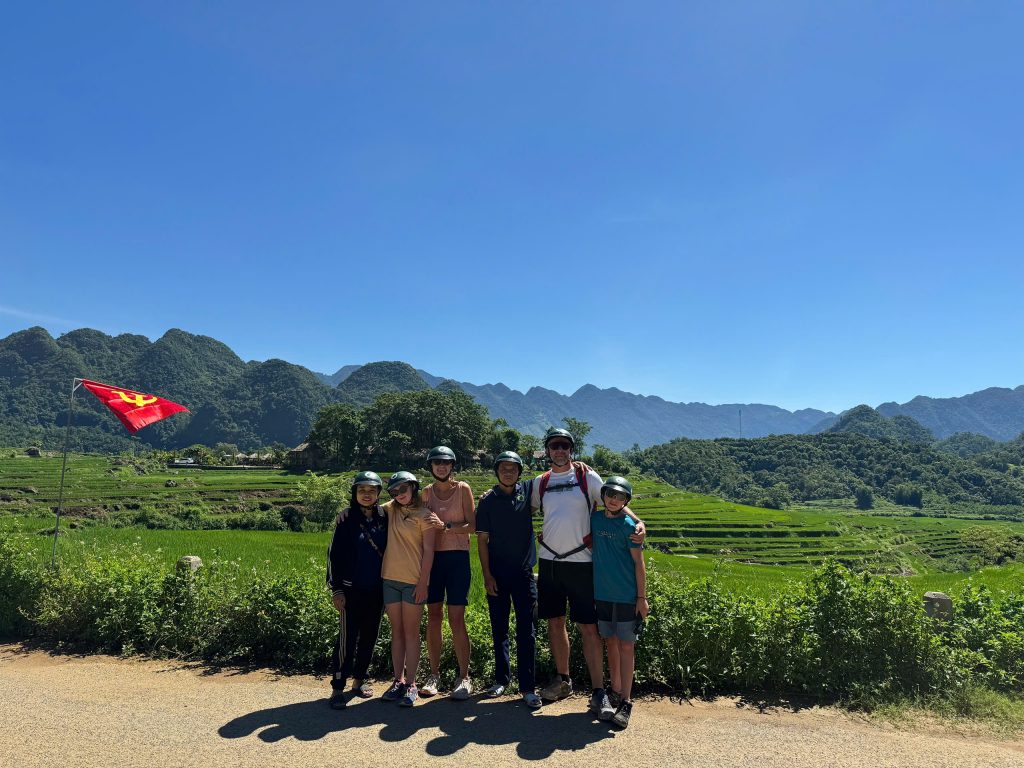
The most common route to the cliff viewpoint covers approximately 8–12 km round trip, with a total elevation gain of 300–450 metres depending on the starting village. The terrain breaks down into three distinct phases:
- Village and paddy section (0–2 km): Flat to gently rolling, through rice terraces and traditional villages. This section is the most visually rewarding for photography and cultural encounters.
- Forest ascent (2–6 km): The trail steepens as it enters secondary forest and dense bamboo groves. Footing becomes rooted and uneven — trekking poles are useful here.
- Cliff ridge approach (6 km to summit): The final push onto the limestone ridgeline. Exposure increases and the views open up dramatically. The cliff viewpoint itself is a natural rock platform with a sheer drop on the valley side.
Total hiking time for a moderate pace with photo stops: 4–6 hours.
Fitness level required
The Pu Luong cliff viewpoint trek is rated moderate. You don’t need prior climbing experience or technical skill, but a basic level of cardiovascular fitness makes the forest ascent considerably more enjoyable. If you can comfortably walk for 2 hours on hilly terrain without stopping, you’re ready for this trail.
The descent deserves special attention — the forest section can be slippery after rain, and tired knees will feel the gradient. Trekking with a local guide (which is strongly recommended) ensures you take the safest line down.
Trek Route & Difficulty: What to Expect on the Trail
See more: What to Expect at a Pu Luong Ethnic Dance Night
How to Get to Pu Luong from Hanoi
Pu Luong is accessible from Hanoi in approximately 3.5–4 hours, making it viable for a 2-day/1-night trip or a more comfortable 3-day itinerary.
Option 1 — Private car or minivan (recommended): Direct transfers from Hanoi to the reserve drop you at your specific accommodation. Most tour operators and guesthouses arrange this. Cost typically runs $30–60 USD per person depending on group size and vehicle type.
Option 2 — Shuttle bus: Several operators run shared shuttle services from Hanoi’s Old Quarter to Pu Luong on specific days of the week. More affordable (around $15–20 USD) but less flexible on timing. Puluong Excursions offers a scheduled shuttle service for those booking tours through them.
Option 3 — Self-drive motorbike: Experienced riders can follow Highway 6 south from Hanoi to Hoa Binh, then continue to Quan Hoa district. The road is well-maintained for most of the route but requires navigation confidence in the final mountain sections.
Once inside the reserve, most accommodation is concentrated around Ban Hieu and Thanh Xuan villages — both excellent bases for the cliff viewpoint trek.
What to Pack for the Cliff Viewpoint Hike
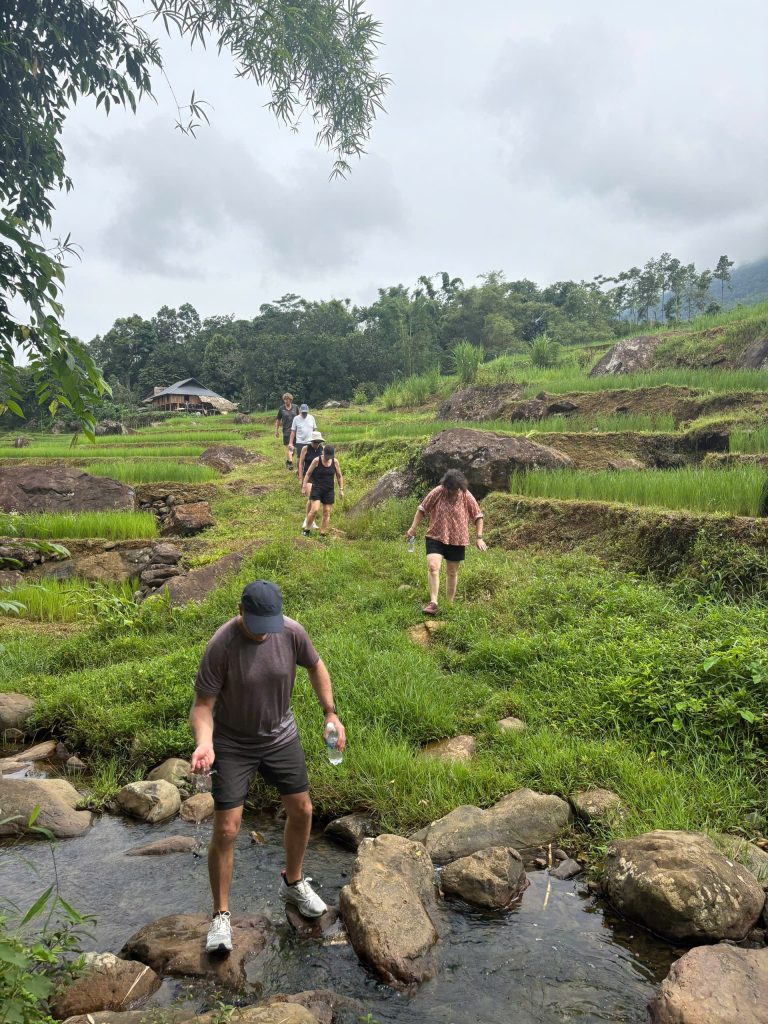
Packing right makes the difference between a comfortable summit experience and a miserable slog. The essentials for the Pu Luong cliff viewpoint trek:
Footwear and clothing:
- Trail shoes or hiking boots with grip (essential — not sandals)
- Moisture-wicking layers; a light windbreaker for the exposed ridgeline
- Long trousers recommended for the forest section (leeches after heavy rain)
- Sun hat and sunscreen — the cliff section is fully exposed
Hydration and food:
- Minimum 1.5 litres of water per person; refill opportunities are limited on trail
- Light snacks: trail mix, energy bars, fruit — your guesthouse or tour operator can often pack lunch
- Electrolyte tablets or sachets are a smart addition in warmer months
Navigation and safety:
- A local guide is not just recommended — it’s essential for the unmarked sections of trail
- Charged phone with offline maps downloaded (Maps.me or Organic Maps work well in the reserve)
- Basic first aid kit including blister plasters and antiseptic wipes
Photography:
- The cliff viewpoint rewards a wide-angle lens if you’re carrying a camera
- A lightweight tripod or gorilla pod for early morning shots when light is low
Leave heavy daypacks behind if possible — a 15–20 litre pack is sufficient and far more comfortable on the ascent.
What to Pack for the Cliff Viewpoint Hike
The Pu Luong cliff viewpoint trek doesn’t ask you to push to physical extremes. It asks something different — to slow down, walk through a landscape shaped by centuries of farming, listen to the forest, and then stand at the edge of a cliff and understand why people fall in love with Vietnam’s mountains.
Few hikes in the country reward moderate effort with such outsized scenery. Fewer still do it while keeping you completely off the beaten path.
If you’re planning a trip to northern Vietnam and wondering whether to add Pu Luong to your itinerary — this is your sign. Book your Pu Luong cliff viewpoint trek, pack your trail shoes, and get out there before the rest of the world catches on.