


Most travelers searching for a pu luong itinerary want to know the same thing: how do you fit rice terraces, waterfalls, village life and a decent night’s sleep into a short trip without wasting hours in transit? This guide comes from our guides who walk these trails every week. You will find a realistic day-by-day plan, travel times from Hanoi, seasonal advice, honest costs and the mistakes first-timers make most often.
Skip the logistics: let local experts plan your Pu Luong trip
Planning Pu Luong alone means juggling transfers, lodge bookings and trail choices in a region where signage is thin and mobile signal is patchy. Our private Pu Luong 3 days 2 nights program removes that stress. You get a comfortable car from Hanoi, an English-speaking Thai or Muong guide born in the valley, hand-picked eco-lodges and quiet trails away from the tour-bus crowds. Every stop in this itinerary is already built into the plan, and the program can be adjusted to your pace and season.
Explore our Pu Luong tours and get a free quote →
How many days do you need in Pu Luong?
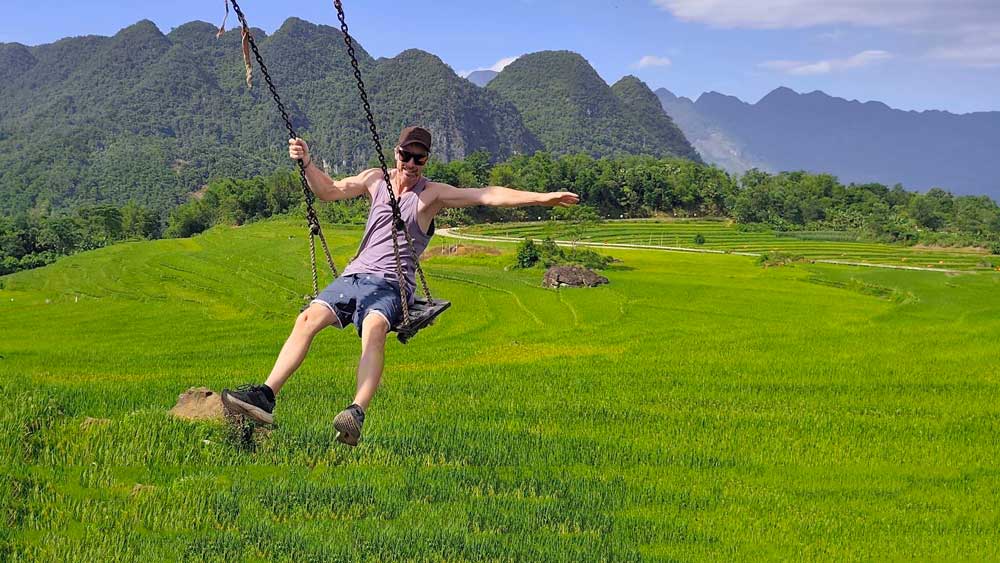
Three days and two nights is the best length for a first visit. Pu Luong is about 150 km from Hanoi, roughly 4 hours by road each way, so a day trip wastes most of your time in the car. Three days lets you trek, raft, visit villages and still rest.
- One night: only if you are short on time, and you will see the terraces at a rush.
- Two nights: the sweet spot for most travelers, covering the main highlights at a relaxed pace.
- Three or more nights: ideal for the Pu Luong Peak hike, photography or slow travel.
For a ready-made version, see our pu luong 3 days 2 nights program, or browse all pu luong tours.
When is the best time to follow a Pu Luong itinerary?
The best months are May to early June and mid-September to early October, when the terraces turn golden before harvest. June to August brings vivid green fields, while November to March is cool and misty with bare terraces. Each season suits a different traveler, so match your dates to your priorities.
| Period | Terraces | Weather | Best for |
|---|---|---|---|
| Mid-March to April | Water-filled, newly planted | Mild, some drizzle | Mirror-like reflections, quiet trails |
| May to early June | Golden, harvest begins | Warm, getting humid | Photography, harvest scenes |
| June to August | Deep green | Hot, rainy afternoons | Waterfalls, swimming, lush views |
| Mid-September to early October | Golden, second harvest | Warm, drier | The classic postcard season |
| November to February | Bare, brown stubble | Cool, foggy, 8–18°C | Peace, village life, low prices |
Golden-season dates shift by a week or two each year depending on planting, so confirm with us before booking non-refundable flights.

How do you get to Pu Luong from Hanoi, Ninh Binh and Mai Chau?
Pu Luong is reached by road only. From Hanoi it takes about 4 hours (150 km) by private car or limousine van, from Ninh Binh about 2.5 to 3 hours, and from Mai Chau roughly 1.5 to 2 hours. Roads in the final stretch are narrow and winding, so a private car is far more comfortable than a public bus.
| Starting point | Distance | Travel time | Best option |
|---|---|---|---|
| Hanoi | about 150 km | 4 hours | Private car or limousine van |
| Ninh Binh | about 100 km | 2.5–3 hours | Private car |
| Mai Chau | about 60 km | 1.5–2 hours | Private car or motorbike |
Our guides recommend leaving Hanoi at 7:30 so you arrive in time for lunch and an afternoon walk. Read more transport options in our Pu Luong Travel Guide.
What does a 3-day Pu Luong itinerary look like?
A good 3-day itinerary puts the most physical activity on day two, when you are rested and local conditions are clear. Day one is a transfer with gentle walks, day two is the main trekking and rafting day, and day three is a slow morning before heading back. The plan below is the one we run most often.
Day 1: Hanoi to Pu Luong, Ban Don and the terraces
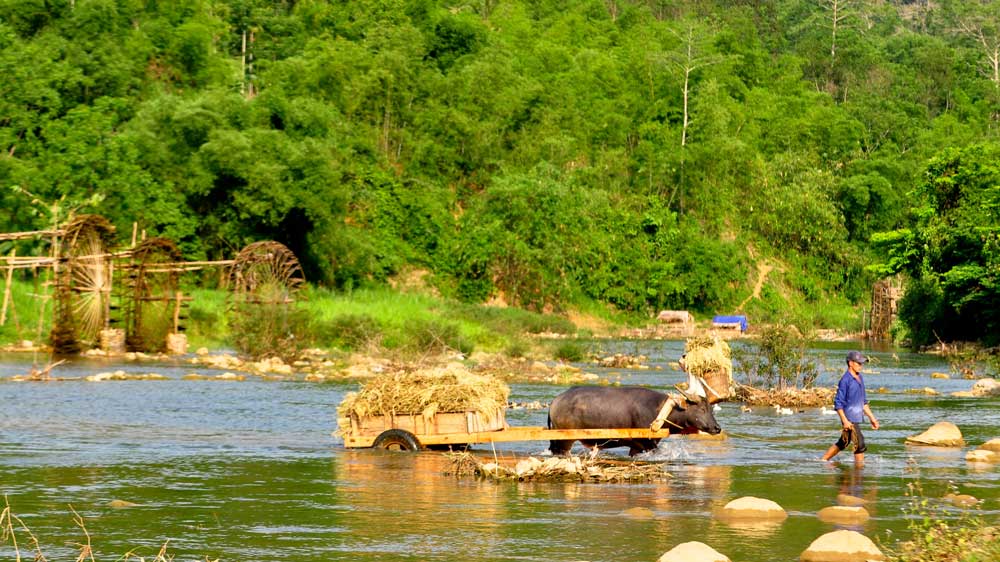
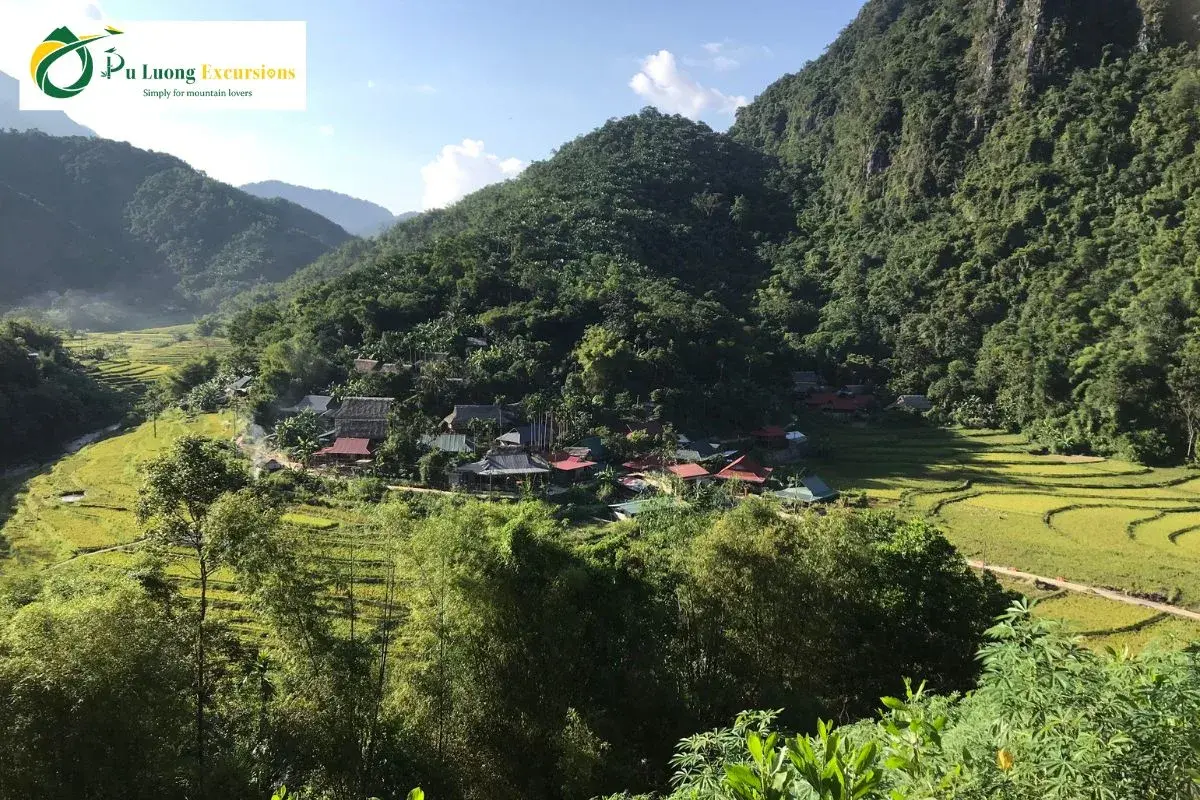
Leave Hanoi around 7:30 and drive about 4 hours to Pu Luong, with a short coffee stop on the way. Check in to your eco-lodge, have lunch, then take an easy afternoon walk through the rice terraces near Ban Don, a Thai village known for its stilt houses and buffalo-lined paths. Finish with sunset from the fields and a home-cooked dinner.
- Morning: private transfer from Hanoi Old Quarter.
- Afternoon: easy 2–3 hour terrace walk, flat to gentle slopes.
- Evening: family-style Thai dinner, with sticky rice, grilled river fish and local greens.
Day 2: Hieu Waterfall, Bat Cave, Cham Stream rafting and Muong villages
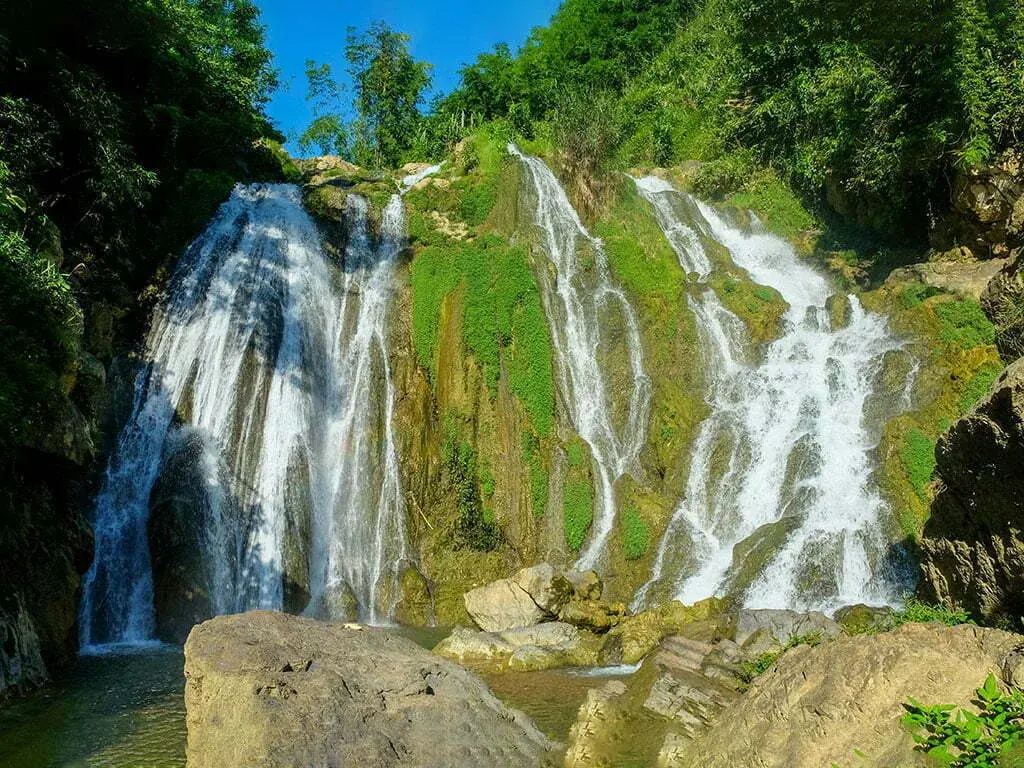
This is the main adventure day. After breakfast, your guide leads a walk to Hieu Waterfall, where you can swim in the warmer months, then on to nearby caves such as Bat Cave and Kho Muong Cave. In the afternoon, float down Cham Stream on a bamboo raft, and walk through Muong villages as the light softens.
- Morning: trek to Hieu Waterfall, about 3 to 4 hours with swim breaks.
- Midday: lunch in a village home, cooked by your host family.
- Afternoon: bamboo rafting on Cham Stream and a visit to Bat Cave or Kho Muong Cave.
- Evening: optional cooking class or rice wine tasting at the lodge.
Day 3: Sunrise, Pho Doan Market and return to Hanoi
Wake early for sunrise over the terraces, then enjoy a relaxed breakfast. If your dates match the weekly market schedule, visit Pho Doan Market to see Thai and Muong families trading produce, textiles and local goods. After lunch, drive back to Hanoi, arriving by late afternoon or early evening.
- Morning: sunrise walk, then breakfast.
- Late morning: Pho Doan Market, if it is running on your travel day.
- Afternoon: private transfer back to Hanoi, about 4 hours.
Market days vary, so ask us when you book and we will plan the route around it.
What are the must-see places in Pu Luong?
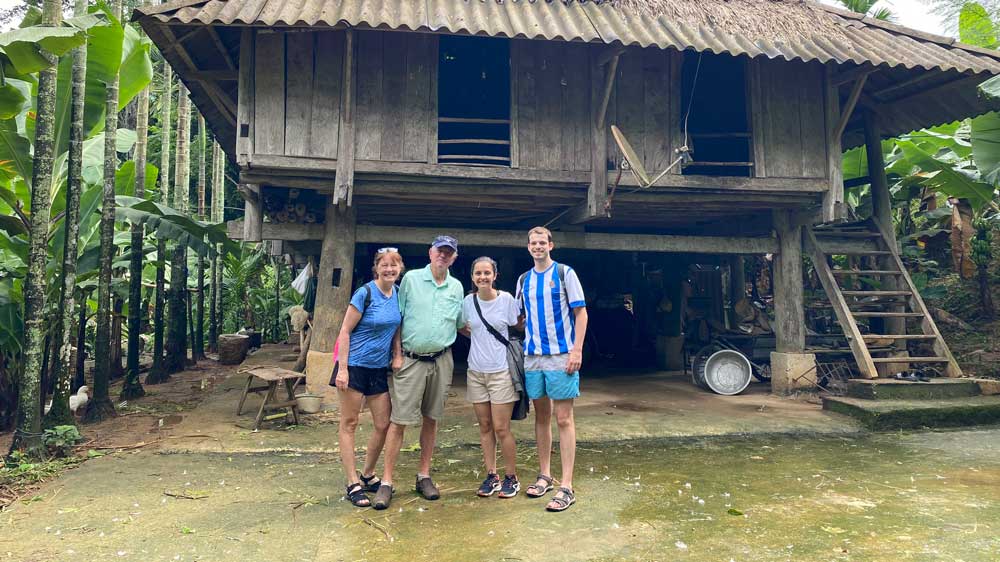
The top Pu Luong highlights are Ban Don village, Hieu Waterfall, Bat Cave, Kho Muong Cave, bamboo rafting on Cham Stream, Pho Doan Market and the Eo Ken viewpoint. Experienced hikers can add Pu Luong Peak at about 1,700 m. Most are reachable within a 3-day plan.
| Place | What it is | Time needed | Effort |
|---|---|---|---|
| Ban Don | Thai stilt-house village among terraces | 2–3 hours | Easy |
| Hieu Waterfall | Waterfall with swimming pools in the warm season | 3–4 hours round trip | Moderate |
| Bat Cave and Kho Muong Cave | Limestone caves near the villages | 1–2 hours | Easy to moderate |
| Cham Stream | Bamboo rafting through the valley | 1–1.5 hours | Easy |
| Eo Ken | Viewpoint over terraces and valley | 1–2 hours | Easy to moderate |
| Pho Doan Market | Weekly ethnic market | 1–2 hours | Easy |
| Pu Luong Peak (1,700 m) | Highest summit in the reserve | 1–2 days | Hard |
How hard is trekking in Pu Luong?
Most Pu Luong trails are easy to moderate, with 2 to 5 hours of walking on dirt paths, rice-field edges and some steps. You do not need special fitness for a standard 3-day plan. Only the Pu Luong Peak hike is demanding, with steep, slippery sections, and it should be done with a guide.
- Easy: terrace walks around Ban Don, flat and shaded in places.
- Moderate: Hieu Waterfall route, with some slippery steps after rain.
- Hard: Pu Luong Peak, steep and humid, best from October to April.
Our guides advise sturdy shoes with grip, a light rain jacket and plenty of water. Rice-field paths become slick after a storm, so flip-flops are a common mistake.
Where should you stay in Pu Luong?
Choose a bamboo or timber eco-lodge or a Thai stilt-house homestay in the Ban Don or Hieu area. Rooms usually cost $35 to $90 per night, with simple comforts, hot water and terrace views. Staying inside the valley saves travel time and lets you see sunrise over the fields.
- Eco-lodge: private bungalows, restaurants, better for couples and families.
- Homestay: shared stilt house, family meals, a closer look at Thai village life.
- Boutique resort: a few higher-end options with pools, from around $90 per night.
Book early for September, October and May, when the terraces are golden and rooms fill quickly.
How much does a Pu Luong trip cost?
A mid-range 3-day Pu Luong trip typically costs $200 to $450 per person, depending on group size, lodging level and transfers. Costs fall as the group grows, because the car is shared. Entrance fees, rafting and guide services are the main variable items.
| Item | Reference cost | Notes |
|---|---|---|
| Private car, Hanoi round trip | $120–180 per car | Shared by 2–4 guests |
| Eco-lodge, per night | $35–90 per room | 2 nights |
| Meals | $20–35 per person per day | Local home cooking |
| Local guide | $35–60 per day | English-speaking |
| Rafting and entrance fees | $10–25 per person | Seasonal |
These are reference figures in US dollars and shift with season and group size. Ask us for an exact quote for your dates.
How should you respect Thai and Muong culture?
Be polite, ask before photographing people, and dress modestly in villages. The Thai and Muong communities of Pu Luong live from rice farming, and many families host visitors in their homes. Small courtesies such as removing shoes before entering a stilt house go a long way.
- Remove shoes at the door of homes and homestays.
- Ask permission before taking portraits, especially of children and elders.
- Stay on paths and avoid stepping into planted fields.
- Buy crafts and produce directly from local families when you can.
Common mistakes to avoid when planning your Pu Luong itinerary
The biggest mistakes are trying a day trip, visiting at the wrong season, booking lodging far from the main trails and underestimating the road time. Planning around these four points saves most travelers hours and money.
- Doing too much in one day: the winding roads are slower than the map suggests.
- Expecting gold in July: the terraces are green then, not golden.
- Skipping a local guide: many trails are unmarked and caves are hard to find alone.
- Booking too late in peak season: the best lodges sell out weeks ahead.
For more detail on seasons, transport and lodging, see our complete Pu Luong travel guide, or start from our pu luong vietnam home page.
Frequently asked questions
How to plan a 3-day trip to Pu Luong?
Choose your dates by season, book a private car from Hanoi, reserve an eco-lodge near Ban Don, and split the days into transfer, trekking and return. Day one is the drive and an easy terrace walk, day two covers Hieu Waterfall and Cham Stream, and day three is sunrise and a slow return.
Is Pu Luong worth visiting for international travelers?
Yes. Pu Luong offers terraced landscapes, waterfalls, caves and authentic Thai and Muong village life without the crowds of Sapa or Ha Giang. It suits couples, families and active travelers who want nature and culture within 4 hours of Hanoi.
Can I visit Pu Luong without a guide?
You can, but a guide is strongly recommended. Trails to Hieu Waterfall and the caves are not well marked, mobile signal is patchy, and a local guide opens doors to village homes and markets that independent travelers rarely see.
What should I pack for Pu Luong?
Pack sturdy walking shoes, a light rain jacket, a hat, insect repellent, sunscreen and a small daypack. In winter, add a warm layer, because mornings can drop to around 8°C.
Get your personal Pu Luong itinerary, free and fast
Ready to turn this plan into a real trip? Our local team will shape the route around your dates, fitness level and budget, with a private car, an English-speaking guide and lodges we trust. You get a clear quote with no hidden costs. Contact us through puluongexcursions.com, message us on WhatsApp at 84975432588 , call 0975432588, or send a message on our fanpage. Send us your travel dates today and receive a free custom itinerary and quick quote within the same day.
See more: