


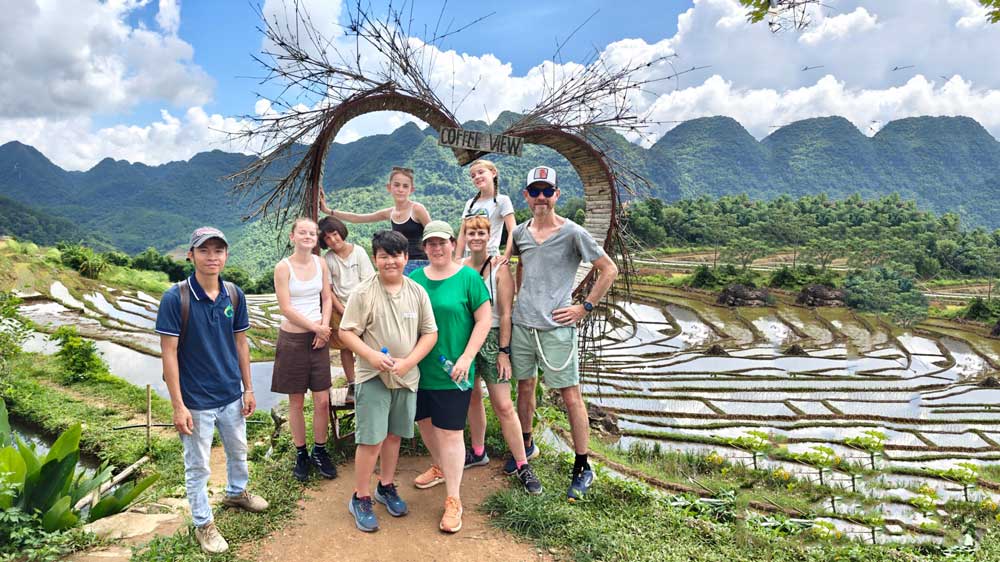
Most travellers see “rainy season” and cross Pu Luong off the list. That is a mistake. From May to September the terraces glow emerald, the waterfalls roar and the valleys are almost empty. But the trails do get muddy, and the wrong plan can turn a dream trek into a miserable one. This guide shows how our local guides handle rain, which routes work best, what to pack and what it costs.
Trek Pu Luong in the green season with a local guide who knows every muddy corner
Rain should not decide your trip, but poor planning can. With Pu Luong Excursions, you get a complete wet-season package built around safety and comfort:
- A private car from Hanoi, so you skip the stress of winding mountain roads in the rain
- An English-speaking Thai or Muong guide who knows which trails are safe each week
- Rain-ready routes that avoid the most slippery slopes and flooded stream crossings
- Small groups and quiet trails, with no crowds at the viewpoints
- Stays in family-run eco-lodges and homestays with hot showers and drying space
Rainy season is our guides’ favourite time of year, and they will show you why. Explore our trekking packages and plan a green-season escape at puluongexcursions.com.
See more: Pu Luong Trekking Guide: Routes, Difficulty & Tours

Can you trek in the rain in Pu Luong?
Yes. Pu Luong is trekkable all year, and the rainy season from May to September is when the terraces are greenest. Most trails are 3 to 6 hours long, but clay paths turn slick after heavy showers, so you need grip shoes, a local guide and flexible timing.
Rain in Pu Luong usually falls in short, heavy bursts, often in the afternoon or at night. Mornings are often dry or drizzly, which is why our guides start early and finish the hardest sections before the clouds build.
On a typical rainy-season day, you can expect:
- Temperatures of 24 to 32°C, warm enough that you will not be cold, only damp
- Short, intense downpours of 30 to 90 minutes, followed by clearing skies
- Low cloud over the ridges, which gives the valleys a misty, cinematic look
- Fewer travellers on the trails, so villages feel calm and welcoming
Is it slippery? What the trails are really like
Yes, parts are slippery. Red clay and stone steps become slick after rain, mainly on steep descents and narrow terrace walls. Most routes, such as Ban Don to Hieu Waterfall (about 8 km), are easy to manage with trekking shoes, poles and a slower pace.
Not every path is equal. Our guides rate slippery risk by surface:
- Paved village lanes and concrete paths: low risk, usually fine in any weather
- Terrace edges and narrow earth bunds: medium risk, and you walk slowly in single file
- Forest descents with clay and roots: high risk, and we often reroute or use trekking poles
- Stream crossings: variable risk, and we skip them if the water is brown and fast
Local guide tip: the slipperiest moment is not during the rain but about an hour after it stops, when the top layer of mud is soft. Guides on our team often pause for tea at a village house and let the path firm up.
See more: Best time to visit Pu Luong (month by month)
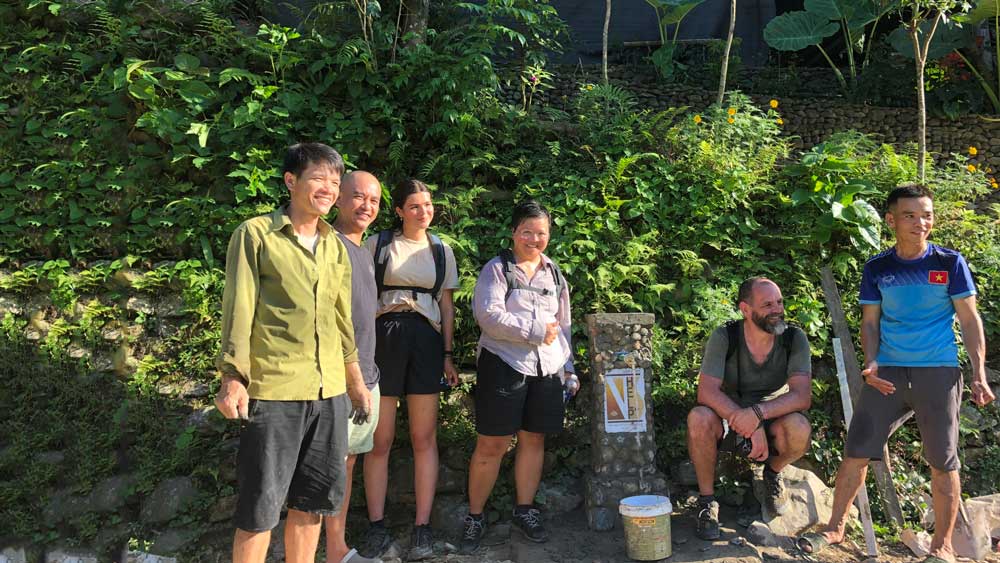
How does rainy season compare with other seasons?
Pu Luong has two main trekking seasons for rice: green terraces from May to August and golden terraces from September to October. Rainy season means the most lush views, fewer visitors and lower prices, but also more mud, leeches in forest areas and some route changes.
| Month | Terrace colour | Rain level | Trail condition | Crowds |
|---|---|---|---|---|
| March to April | Fresh green, young rice | Light drizzle | Mostly dry | Medium |
| May to June | Bright green, some early gold | Moderate to heavy | Muddy in places | Low |
| July to August | Deep emerald | Heaviest rain | Slippery, some route changes | Very low |
| September to October | Golden harvest | Light to moderate | Mostly good | High |
| November to February | Brown stubble, cool mist | Dry, cold nights | Firm and dry | Low to medium |
If you want golden rice and dry trails, September is the compromise. If you want green photography and peace, June to August is hard to beat.
Best Pu Luong trekking routes in the rain
The best wet-season routes use paved village lanes, short forest sections and waterfall or cave stops where rain adds to the scene. Our guides favour 4 to 6 hour loops of 8 to 14 km, with a lunch stop and a safe, dry way back to your lodge.
Ban Don to Hieu Waterfall
This is the classic route, about 8 to 10 km and 4 to 5 hours. After rain, Hieu Waterfall is at its most powerful. The path is mostly village lanes and terrace walls, so it suits most fitness levels. Swimming is only safe when the guide confirms the current.
Eo Ken and the terrace viewpoints
Eo Ken is one of the most photographed terrace areas, and green season is its best look. The walk is 3 to 4 hours with gentle climbs. Mist often rolls through the valley in the morning, so start early.
Kho Muong Cave and Bat Cave
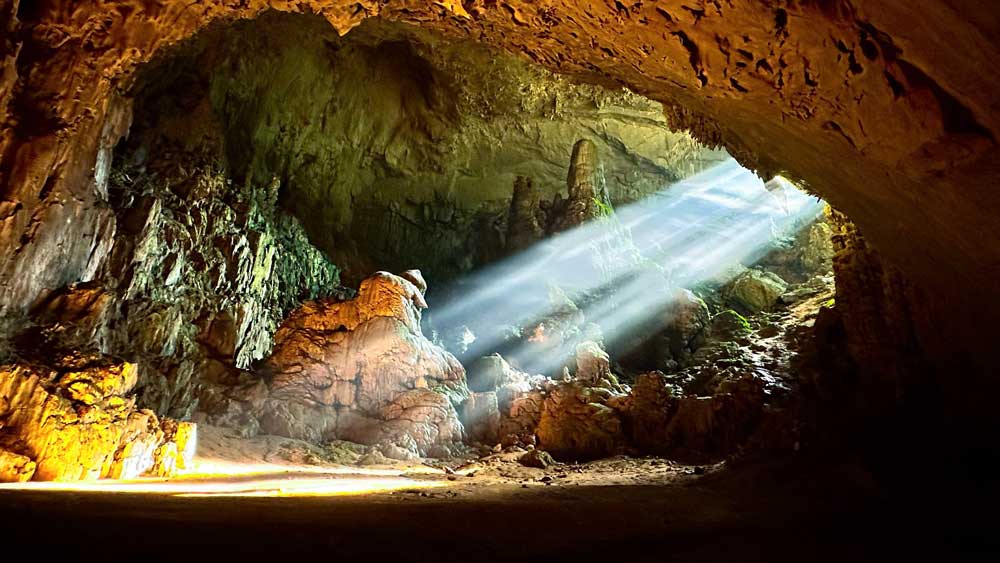
Caves are an excellent wet-season option because you are sheltered when it pours. Kho Muong Cave and Bat Cave can be combined with a village walk. Caves can be damp and slippery inside, so we bring headlamps and walk slowly.
Pu Luong Peak (1,700 m)
This is a demanding full-day climb and not recommended in heavy rain. Low cloud hides the view, and forest trails have leeches and slick roots. We only run it on stable weather windows with experienced guides.
Cham Stream bamboo rafting
Rafting on the Cham Stream is a relaxing way to get out of the mud. In heavy rain the water can rise, so your guide checks with local boatmen before departure. When it runs, you see terraces from the water.
Rainy season route comparison at a glance
| Route | Distance | Time | Difficulty | Slippery risk | Rain rating |
|---|---|---|---|---|---|
| Ban Don to Hieu Waterfall | 8 to 10 km | 4 to 5 hours | Easy to moderate | Low to medium | Excellent |
| Eo Ken terrace loop | 6 to 8 km | 3 to 4 hours | Easy | Low | Very good |
| Kho Muong Cave and village walk | 5 to 7 km | 3 to 4 hours | Easy | Medium inside cave | Excellent |
| Bat Cave and Muong village trail | 6 to 8 km | 3 to 4 hours | Easy to moderate | Medium | Good |
| Cham Stream bamboo rafting | 1 to 2 hours on water | Half day | Easy | Low | Depends on water level |
| Pu Luong Peak | 12 to 16 km | 7 to 9 hours | Hard | High | Only in stable weather |
What to pack for rainy season trekking in Pu Luong
Pack light, quick-drying and waterproof. Rain is warm, so your main goals are grip, dry socks and protecting your electronics. A heavy raincoat will make you sweat, so a light poncho or shell works better.
- Trail shoes or hiking boots with deep grip, not canvas sneakers
- A lightweight rain jacket or poncho, plus a pack rain cover
- Two pairs of quick-drying socks and one spare dry pair in a zip bag
- Long, light trousers to protect against leeches and mud
- Insect repellent and a few salt-based leech repellent options
- Dry bags or zip bags for your phone, passport and camera
- A small headlamp for caves and early starts
- Trekking poles, which our guides can provide on request
Leeches: they are present in damp forest sections but rare on village lanes and terraces. Your guide will check your socks at rest stops, and a bite is harmless though it can bleed for a while.
Getting to Pu Luong in the rainy season
Pu Luong is about 150 km from Hanoi and takes 3.5 to 4.5 hours by car, depending on traffic and rain. Mai Chau is about 60 km away and Ninh Binh about 100 km. In heavy rain, a private car with an experienced driver is safer and more comfortable than a motorbike.
- Hanoi to Pu Luong: about 150 km, 3.5 to 4.5 hours
- Ninh Binh to Pu Luong: about 100 km, 2.5 to 3 hours
- Mai Chau to Pu Luong: about 60 km, 1.5 to 2 hours
- Best time to leave Hanoi: around 7:30 am, so you arrive before afternoon storms
How much does rainy season trekking in Pu Luong cost?
A 2-day, 1-night trek with a private guide, lodging and meals typically costs about 150 to 300 USD per person, or roughly 3.9 to 7.8 million VND, depending on group size and transport. Rainy season often brings lower lodge rates and easier availability.
| Item | Approximate cost (USD) | Approximate cost (VND) |
|---|---|---|
| Private car, Hanoi to Pu Luong one way | 90 to 130 | 2.3 to 3.4 million |
| English-speaking trekking guide, per day | 35 to 50 | 910,000 to 1.3 million |
| Homestay or eco-lodge, per night | 25 to 70 | 650,000 to 1.8 million |
| Local meals, per day | 10 to 20 | 260,000 to 520,000 |
| Bamboo rafting on Cham Stream | 10 to 20 | 260,000 to 520,000 |
Prices are indicative and vary by season, group size and lodge. Confirm current rates with our team before booking.
Culture and stays: what makes rainy season special
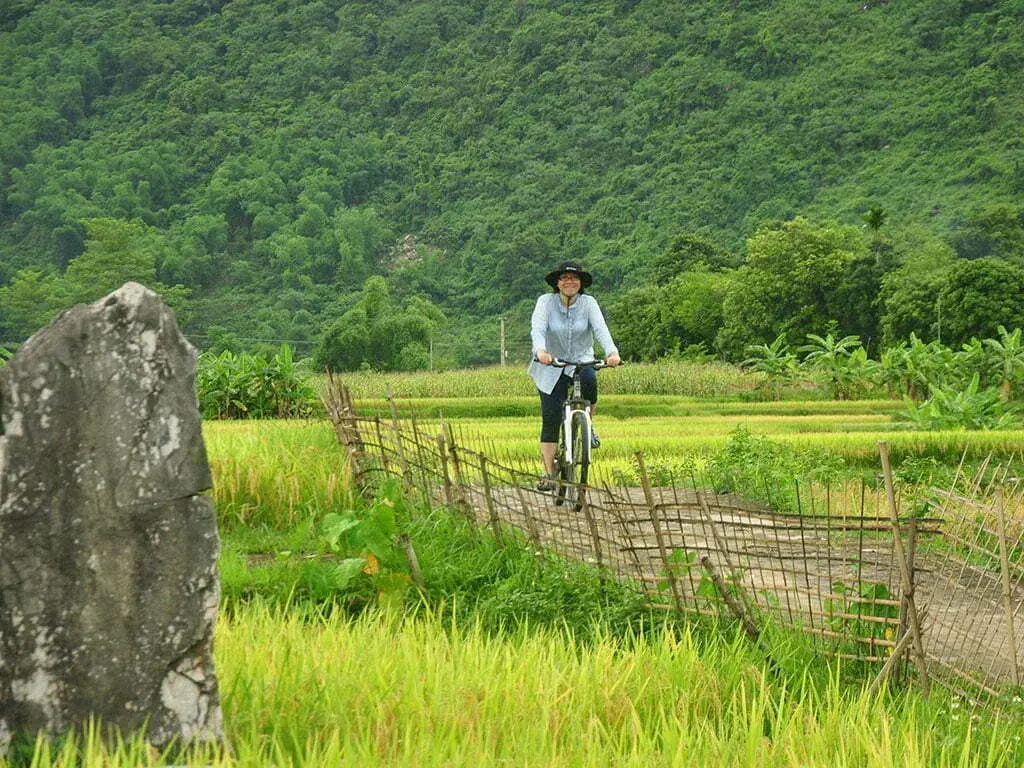
Rainy season is when the Thai and Muong villages are at their most local. Farmers are planting and tending the terraces, families cook over wood fires and evenings are slow. Staying in a stilt-house homestay lets you hear rain on the roof and share a home-cooked dinner.
- Thai stilt houses, usually with shared meals and mattresses on the floor
- Muong villages with traditional weaving and bamboo crafts
- Pho Doan Market, where you can see local produce and daily life (check market days with your guide)
- Eco-lodges with terrace-view rooms, covered porches and drying areas for wet gear
Frequently asked questions
Can you trek in the rain? Is it slippery?
Yes, you can trek in the rain in Pu Luong, and many travellers say it is their best visit. Clay paths and stone steps become slippery, mainly on steep descents. With trail shoes, trekking poles and a local guide who picks safe routes, most treks are manageable and enjoyable.
What is the best month for rainy season trekking in Pu Luong?
May and June are the best balance. The terraces are bright green, some early rice turns gold, and the heaviest rain has not yet arrived. July and August are wetter but quieter, with the fullest waterfalls and the most dramatic mist.
Are there leeches in Pu Luong during the rainy season?
Leeches can appear in damp forest sections, especially after rain, but they are rare on village lanes and open terraces. Wear long trousers, tuck them into your socks, use repellent and let your guide check your shoes at breaks.
Is Pu Luong safe to visit during heavy rain?
Pu Luong is generally safe, but heavy storms can cause muddy roads and swollen streams. A good operator monitors the weather daily, skips risky routes such as high peaks or stream crossings and has indoor alternatives like caves, cooking classes and village visits.
Plan your rainy season Pu Luong trek with a local expert
Rain does not have to ruin your trip, and with the right plan it makes Pu Luong more beautiful. Our local team will design a personalised itinerary with safe routes, a private transfer from Hanoi, English-speaking guides and comfortable stays that suit your fitness and dates.
- Tell us your travel dates, group size and fitness level
- We reply with a custom itinerary and a clear price in USD, usually within the same day
- Get free advice on routes, packing and weather, with no obligation
Contact us through puluongexcursions.com, WhatsApp at 84975432588, our Facebook page or the booking form on the website. Get your free consultation and quick quote today, and see Pu Luong at its greenest.
See more: