


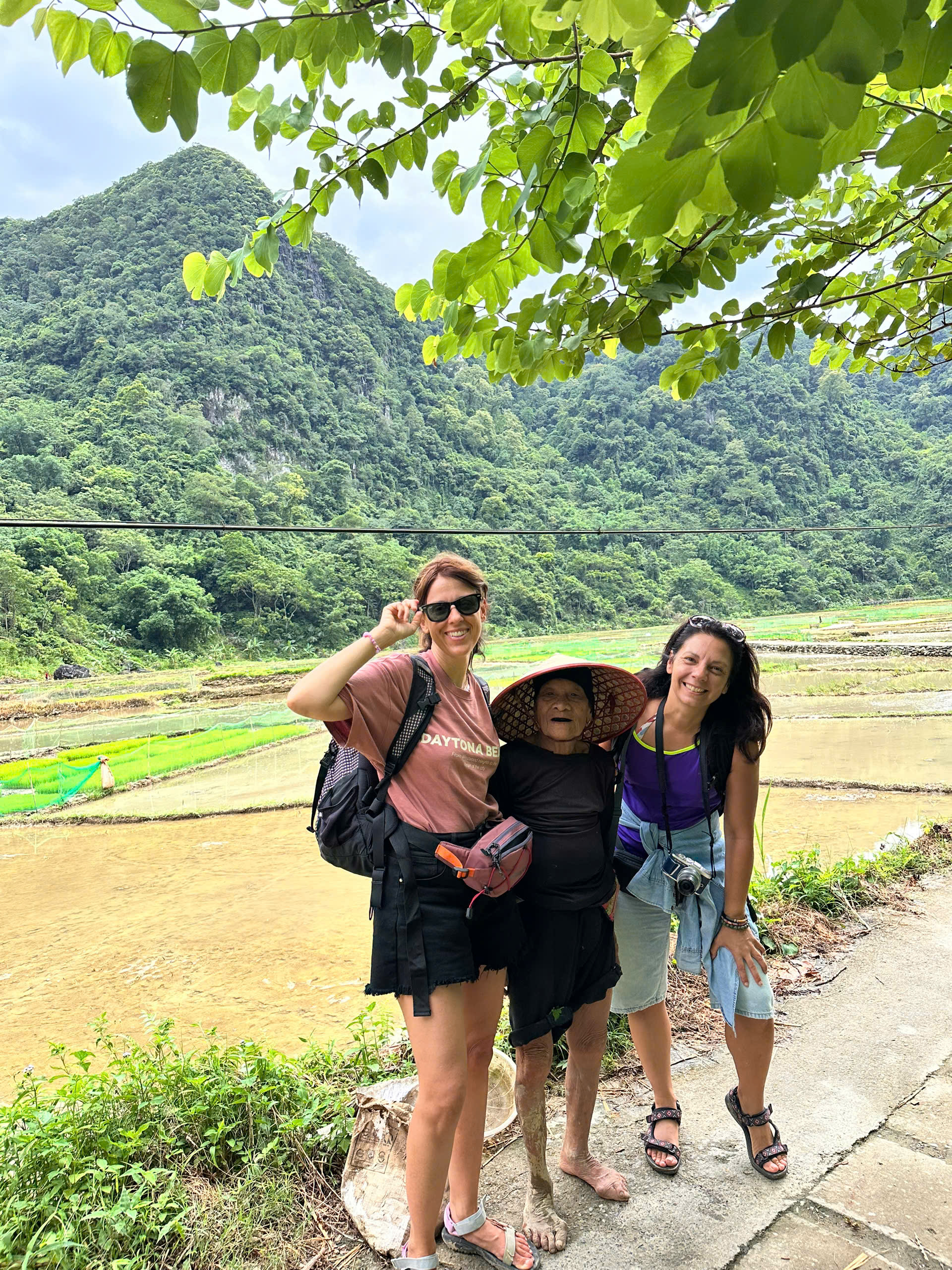
More people are asking the same question before they book a trip: who actually benefits from this?
It is a fair question. Tourism can do a lot of good — or it can extract a great deal from a place and leave very little behind. The difference often comes down to how the trip is structured, who runs it, and where the money goes.
A Pu Luong responsible tourism package is designed with that question answered from the start. The valley in Thanh Hoa province where these tours take place is home to Thai and Muong communities, a protected nature reserve, and one of northern Vietnam’s most intact rural landscapes. A well-built responsible package lets you experience all of that — and makes sure the experience is good for the people and places you are visiting, not just for you.
This guide explains what responsible tourism looks like in practice in Pu Luong, what a package typically includes, and how to choose one that lives up to what it says on the label.
What Does Responsible Tourism Actually Mean in Pu Luong?
Responsible tourism is a term that covers a lot of ground. At its core, it means travelling in a way that has a positive effect — or at least a minimal negative effect — on the communities and environments you visit. In practice, for a destination like Pu Luong, it breaks down into a few concrete commitments.
Economic responsibility means that the money you spend on your trip goes to the people who live and work in the destination — not mainly to outside investors or companies based elsewhere. In Pu Luong, this means Thai and Muong families running your homestay, local people employed as guides and cooks, and village artisans earning from the crafts you buy.
Environmental responsibility means that the way the tour operates does not damage the natural systems that make Pu Luong worth visiting in the first place. This includes keeping group sizes small to reduce trail erosion, not disturbing wildlife, managing waste properly in village settings, and in some cases actively contributing to conservation or reforestation efforts.
Cultural responsibility means engaging with local people and traditions in a respectful, non-exploitative way. A responsible tour does not treat ethnic minority communities as a performance or an exhibit. It builds genuine exchange — where visitors learn, families host on their own terms, and traditional knowledge and practices are valued rather than just photographed.
When a tourism package in Pu Luong genuinely delivers on all three of these — economic, environmental, and cultural responsibility — it earns the label. When it only delivers on one or delivers none and just uses the language, it does not.
Why Pu Luong Is One of Northern Vietnam’s Best Destinations for Responsible Travel
Not every destination is equally well set up for responsible tourism. Pu Luong is, and that is not an accident.
The valley has a relatively small tourism footprint compared to more famous destinations in northern Vietnam. This means the communities here have had more control over how tourism develops, and the landscape has not yet been overwhelmed by the kind of rapid, unplanned visitor growth that has damaged some other rural areas in the country.
The Thai and Muong communities in Pu Luong have a long history of managing their land and resources collectively. Many of the responsible tourism structures that exist here — community-run homestays, locally guided treks, village-based activity programs — grew out of that tradition of collective management. Tourism did not impose a foreign model on the community; it adapted to one that was already there.
Pu Luong Nature Reserve provides a protected ecological backdrop that gives responsible tourism a specific environmental dimension. The forest, the rice terraces, the water systems — these are not just scenery. They are a functioning landscape that the communities depend on and that careful tourism can help protect.
The result is a place where responsible travel is not a niche offering or a premium add-on. It is the default. And the packages that deliver it best are the ones that have been built from the community up, rather than the market down.
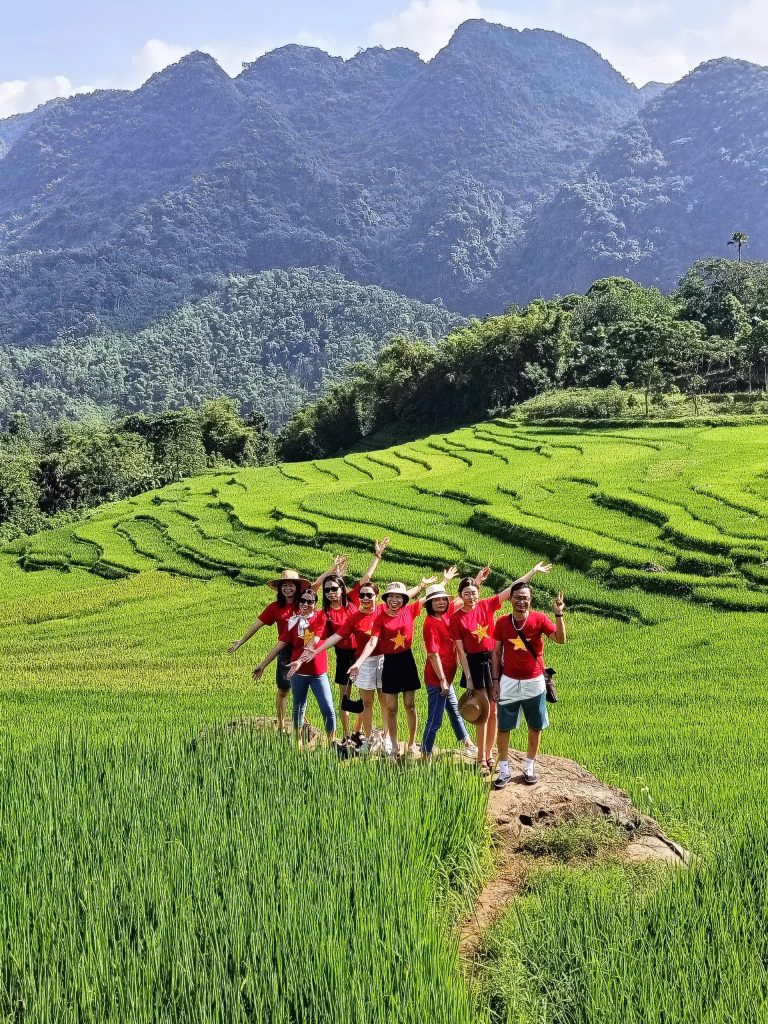
Pu Luong
What a Pu Luong Responsible Tourism Package Includes
A genuine Pu Luong responsible tourism package is not just a collection of activities with an eco label stuck on it. The responsible element runs through every part of the structure. Here is what that looks like in practice.
Community Homestays and Locally Run Accommodation
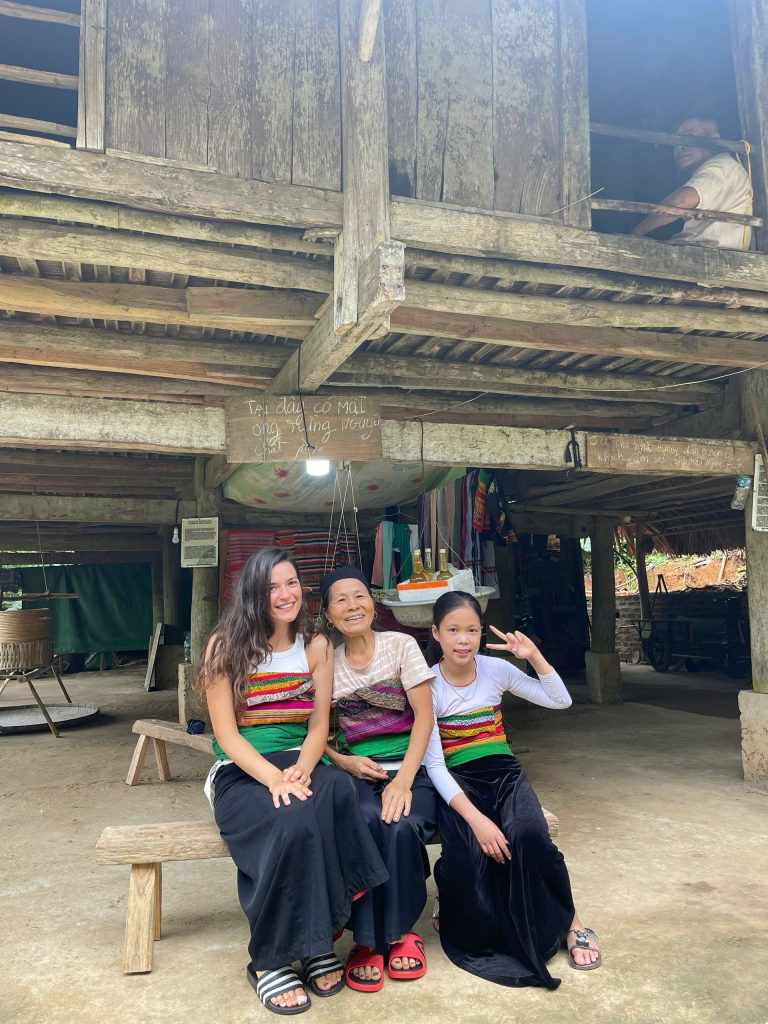
Where you sleep on a responsible tourism package matters. Staying in a family-run Thai or Muong stilt house means your accommodation fee goes directly to the household hosting you — not to a third-party hotel owner or an outside property investor.
These homestays are not rough or uncomfortable. They are traditional wooden stilt houses that have been welcoming guests for years, with clean sleeping spaces, proper bathroom facilities, and an atmosphere that no hotel can replicate. You sleep under the same roof as the family, share their meals, and have the kind of spontaneous evening conversations — about farming, about the valley, about what life here looks like — that rarely happen in a guesthouse.
For travellers who want a slightly higher level of comfort, responsible tourism packages can also include stays at boutique eco lodges that are locally staffed and community-connected. The important thing is that the accommodation choice supports local people rather than bypassing them.
Local Guides From Thai and Muong Villages
Your guide is one of the most important choices in any responsible tourism package. On a well-structured Pu Luong package, your guide comes from one of the communities you are visiting — not from an agency in Hanoi or a city-based tour company that contracts work out to local people at the lowest possible rate.
A local guide brings knowledge that no outsider can replicate: the names of plants in both Vietnamese and the local language, the history of a particular farming terrace, the story behind a village well, the meaning of a pattern woven into a piece of Thai fabric. This is not information you can look up. It comes from growing up in the valley and knowing it as a home, not a tourist attraction.
Employing local guides also keeps income in the community, creates meaningful professional development for young people who might otherwise leave the valley for city work, and builds the skills and confidence that sustain community-based tourism over the long term.
Sustainable Activities — Trekking, Planting, Learning
The activities on a responsible tourism package are chosen and run in ways that minimise environmental impact and maximise benefit to the community.
Trekking routes are managed to avoid overuse of sensitive trails. Group sizes are kept small — usually no more than eight to twelve people — so that the impact on wildlife, vegetation, and the communities along the route stays within what the landscape can absorb.
Where possible, packages include active conservation or community support elements: a tree planting session in a reforestation zone, a visit to a seedling nursery, participation in a traditional farming activity during the appropriate season. These are not token gestures. They are genuine contributions to ongoing efforts that would happen with or without tourists — and are better resourced when visitors join in.
Cultural activities — weaving demonstrations, cooking sessions, village walks — are arranged in consultation with the families involved. Participation is on the community’s terms, not the tourist’s schedule.
Responsible Food — Seasonal, Local, and Fairly Sourced
Food on a responsible tourism package in Pu Luong is one of the genuine pleasures of the trip — and it is responsible almost by default, because sourcing anything other than local food in this valley is difficult.
Meals are prepared by your host family or the lodge kitchen using vegetables from the garden, rice from the fields you can see from the dining table, fish from the valley streams, and chicken or pork raised in the yard. Nothing is imported or processed beyond what is necessary. Everything is seasonal.
This means the food changes depending on when you visit — greens and bamboo shoots in spring, corn and squash in summer, root vegetables and dried fish in winter. It also means that every meal is a small act of economic support for the household that prepared it, using the ingredients they grew.
What a Pu Luong Responsible Tourism Package Includes
Who Is a Pu Luong Responsible Tourism Package For?
The honest answer is: anyone who cares about where their travel money goes and wants a trip that is genuinely good as well as enjoyable.
In more specific terms, a Pu Luong responsible tourism package tends to suit:
Experienced travellers who have done the standard Southeast Asia circuit and are looking for something with more depth and meaning. Pu Luong offers a version of northern Vietnam that has not been smoothed out for mass tourism, and a responsible package lets you experience it at close range.
First-time visitors to Vietnam who want to start with something real rather than a highlight reel. A responsible package in Pu Luong gives you an immediate and genuine connection to rural northern Vietnamese life that takes much longer to find if you start in the cities.
Couples and small groups who want a shared experience with substance — something to talk about and reflect on together, not just a series of photo opportunities.
Solo travellers who value authentic interaction with local people and do not want a trip that keeps them at a comfortable distance from the place they are visiting.
Families with older children or teenagers who want to model values-based travel and give younger travellers exposure to a way of life that is different from their own.
Corporate or group travellers looking for a meaningful team experience with an environmental or community development dimension.
There is no prerequisite for trekking experience, cultural knowledge, or prior travel in Vietnam. The package is designed to be accessible from wherever you are starting.
Who Is a Pu Luong Responsible Tourism Package For
Pu Luong Excursions: Responsible Tourism Packages Built Around the Community
Pu Luong Excursions is a licensed tour operator based in Pu Luong Nature Reserve, Thanh Hoa. Responsible tourism is not a marketing angle for us — it is how we have built every program we run, from the first trek to the most recent package.
We work directly with Thai and Muong families across the valley to design experiences that are genuinely beneficial to the communities hosting them. Our guides are local. Our accommodation partners are locally owned and community-connected. Our activities are chosen in consultation with the villages involved. And our pricing is structured so that a meaningful share of what you pay goes to the people who make the experience possible.
Our Pu Luong responsible tourism packages include:
- 2-day / 1-night village immersion package — a focused introduction to community life, local food, and guided walking, ideal for travellers with limited time
- 3-day / 2-night full responsible tourism package — our most popular option, combining trekking, a community activity, two homestay nights, and meals with local families
- 4-day extended package — adding a conservation or reforestation element, deeper village access, and time for more relaxed cultural exchange
- Custom group packages for families, corporate teams, schools, or NGOs looking for a structured responsible travel experience in northern Vietnam
- Multi-destination responsible travel circuits combining Pu Luong with other northern Vietnam destinations — Mai Chau, Mu Cang Chai, Ha Giang — with the same community-first philosophy applied throughout
Every package includes transport from Hanoi, local guide fees, homestay accommodation, all meals during the trip, and any activity costs. We are transparent about where your money goes and happy to explain the structure in detail before you book.
If you have specific interests — conservation, culture, food, photography, slow travel — we can build a package around them.