


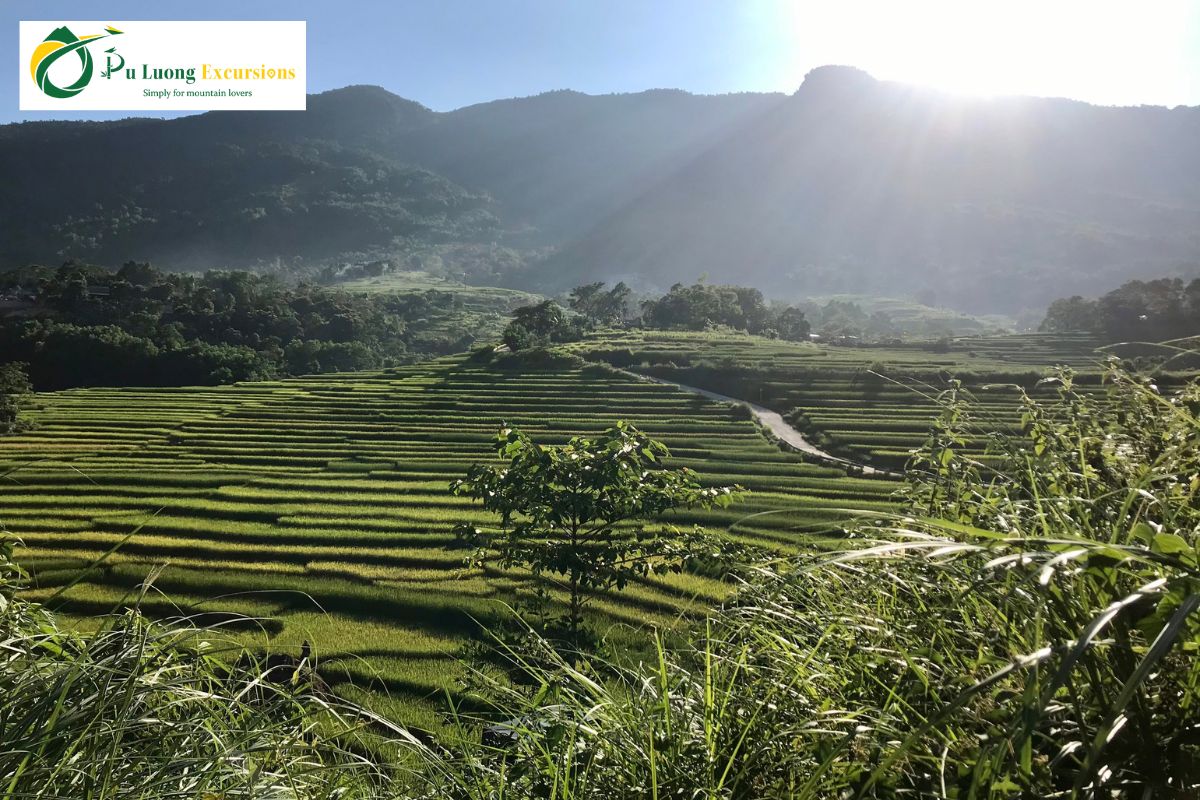
You have seen the photos: emerald steps curling around a limestone valley, with buffaloes walking through the morning mist. What the photos do not tell you is when the terraces actually turn gold, how far Pu Luong is from Hanoi, and how much walking is involved. This guide comes from our local guides, who walk these paths every week. You will find harvest months, distances, trekking difficulty, village etiquette and honest costs in USD and VND, so you can plan one smooth trip.
Walk the terraces with a local guide, without the planning stress
Our private Pu Luong rice terraces tour from Hanoi takes care of the details that usually slow down independent travelers. Your small-group or private trip includes a comfortable car transfer, an English-speaking guide born in the valley, a stilt-house or eco-lodge stay, home-cooked Thai and Muong meals, and a Cham Stream bamboo raft ride. We time every walk for the best light and the fewest people, so you reach Ban Don and the viewpoints while the valley is still quiet. You save hours of research and avoid the risk of poor accommodation.
See current Pu Luong tours and request your quote at puluongexcursions.com
When are the Pu Luong rice terraces most beautiful?
The terraces are most beautiful in two windows: mid-to-late June for the first golden crop, and mid-September to early October for the main harvest. May and early June bring mirror-like flooded fields. Expect shifts of one to two weeks depending on altitude and rain.
Here is how the year looks on the ground:
| Period | What you will see | Weather | Our verdict |
|---|---|---|---|
| March–April | Fields being prepared and seedlings planted | Mild, 18–25°C, some drizzle | Good for quiet trekking |
| May–early June | Flooded, reflective paddies and bright green seedlings | Warm and humid, 24–32°C | Excellent for photography |
| Mid-to-late June | First golden crop and harvest | Hot, with afternoon showers | Excellent, but busy on weekends |
| July–August | Deep green, lush terraces | Hot, wet, 25–33°C | Beautiful, but expect rain and leeches |
| Mid-September–early October | Main golden harvest | Warm, drying out, 22–30°C | Best overall |
| November–February | Cut stubble and bare, straw-colored steps | Cool, 8–18°C, misty | Peaceful, with fewer visitors |
Field note from our guides: terraces at higher altitude, such as those near Pu Luong Peak, ripen later than the valley floor around Ban Don. If you travel in late September, we can adjust your route to follow the ripest fields.
See more: Pu Luong Nature Reserve: A Travel Guide
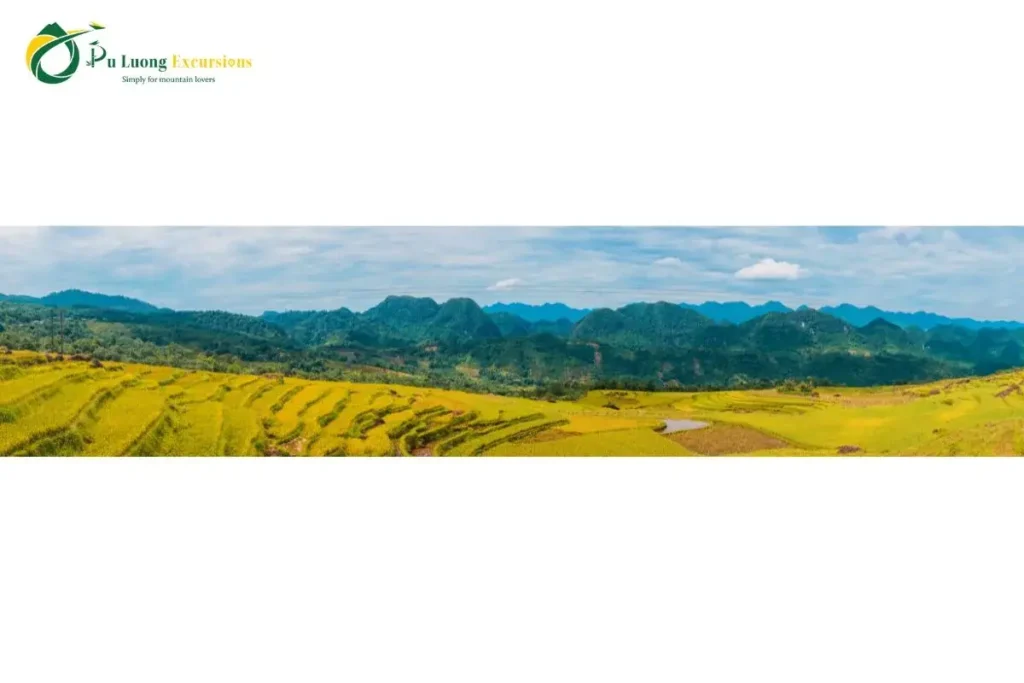
Pu Luong Rice Terraces
How far is Pu Luong from Hanoi, Ninh Binh and Mai Chau?
Pu Luong sits about 160 km from Hanoi, a drive of roughly 3.5 to 4.5 hours by private car. From Ninh Binh it is around 100 km and 2.5 to 3 hours, and from Mai Chau about 60 km and 1.5 to 2 hours. Public buses exist but require a motorbike or taxi change.
- Hanoi to Pu Luong: about 160 km, 3.5 to 4.5 hours, with a comfort stop on the way.
- Ninh Binh to Pu Luong: about 100 km, 2.5 to 3 hours, which makes an easy add-on after Trang An or Tam Coc.
- Mai Chau to Pu Luong: about 60 km, 1.5 to 2 hours, so the two pair well on one northern loop.
- Private car versus bus: a private car lets you leave at 7:30 a.m. and reach the villages before lunch, while public transport often adds 2 to 3 hours.
Where to see the best rice terraces in Pu Luong
The most photogenic terraces cluster around Ban Don, Hieu village, Kho Muong and the Eo Ken pass, all within a 30 to 45 minute drive of each other. Ban Don suits first-timers, while Pu Luong Peak at 1,700 m rewards strong hikers with panoramic views over the whole nature reserve.
| Location | Best for | Walking effort | Best months |
|---|---|---|---|
| Ban Don | Easy terrace walks and village life | Easy, 2–3 hours | June, September–October |
| Hieu Waterfall and Hieu village | Stream, waterfall and terraces together | Easy to moderate, 3–4 hours | June–October |
| Kho Muong and Kho Muong Cave | Big open terraces, cave stop | Moderate, 3–5 hours | September–October |
| Eo Ken viewpoint | Wide, sweeping panoramas | Easy, mostly by car | September–October |
| Pu Luong Peak (1,700 m) | Summit views and forest | Strenuous, 6–8 hours | October–April, in dry and clear weather |
Ban Don: the gentle introduction
Ban Don is a Thai village where terraces start right behind the stilt houses. Morning mist often hangs low over the valley until about 8:30 a.m., which makes it our favorite spot for sunrise walks and gentle first-day hikes.
Hieu Waterfall, Kho Muong Cave and Bat Cave
These stops break up a day on foot. Hieu Waterfall is cool and swimmable in the warm months, and Kho Muong Cave and Bat Cave add a short, easy exploration. Bring a headlamp, and keep in mind that cave floors can be slippery.
Cham Stream bamboo rafting
A slow bamboo raft ride on Cham Stream gives you a view of the terraces from water level, with no steep climbing. It is a good choice for families, older travelers, or anyone resting tired legs after a long trek.
See more: Pu Luong Travel Guide 2026
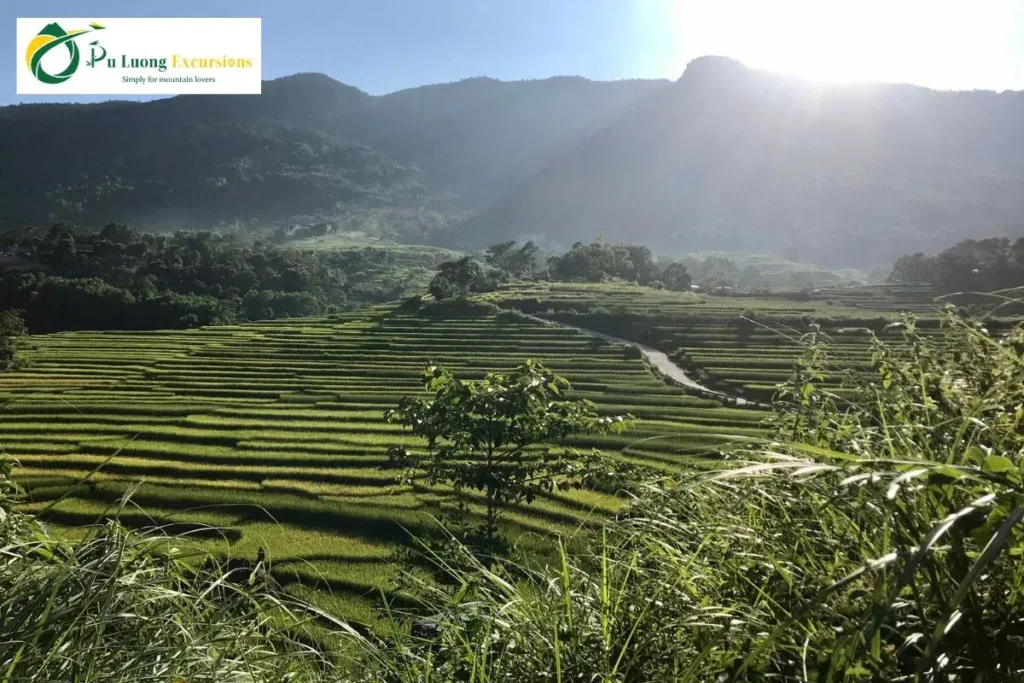
Rice season in Pu Luong
How hard is trekking through the Pu Luong rice terraces?
Most terrace walks are easy to moderate, covering 4 to 10 km over 2 to 5 hours on dirt paths and stone steps, with 100 to 300 m of climbing. Only the Pu Luong Peak trek is strenuous, requiring 6 to 8 hours and good fitness. Wear shoes with grip, as paths become slippery after rain.
What to bring and expect:
- Footwear: light trail shoes or boots with good tread, because flip-flops are not safe on wet paddy edges.
- Clothing: breathable layers, a rain jacket from May to September, and a warm layer from November to February.
- Sun and insects: a hat, sunscreen and repellent, plus leech socks in July and August.
- Water and snacks: at least 1 liter per person, though we supply water on guided trips.
- Fitness level: if you can walk 5 km on uneven ground, you can enjoy the standard routes.
Field note from our guides: many visitors underestimate the humidity rather than the distance. Start walks early, take a long lunch in a village, and finish before the afternoon showers.
What should you know about Thai and Muong villages?
The terraces are farmed mainly by Thai and Muong communities, who have shaped these valleys for generations with bamboo water wheels and stilt houses. Respect local customs by removing shoes before entering a stilt house, asking before photographing people, and never walking on planted paddy edges without your guide.
- Stilt houses: the family hearth is the heart of the home, so ask your guide before sitting or taking photos inside.
- Meals: expect sticky rice, grilled river fish, bamboo-tube dishes and local greens, and tell us about allergies in advance.
- Markets: Pho Doan Market is the local trading hub, and your guide can tell you which day gets the most activity.
- Tipping and gifts: small donations to a village fund are welcome, but we advise against handing out sweets or cash to children.
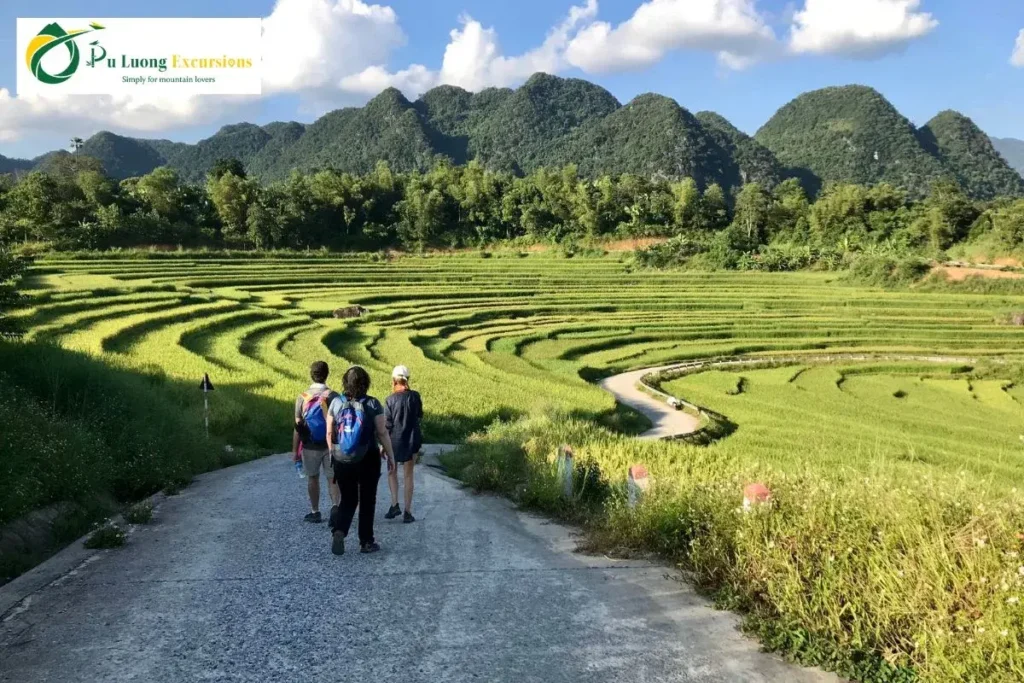
How the Thai People Farm Pu Luong Rice Terraces
Where should you stay near the rice terraces?
Choose a stilt-house homestay for cultural immersion at roughly 15 to 30 USD per person, or an eco-lodge overlooking the terraces from about 50 to 120 USD per room. For golden-harvest views, book rooms facing the paddies 6 to 8 weeks ahead, since September fills quickly.
| Stay type | Reference price | Comfort | Best for |
|---|---|---|---|
| Stilt-house homestay | 15–30 USD per person | Shared or simple private bathrooms, mattress on the floor with mosquito net | Culture lovers, budget travelers |
| Mid-range bungalow | 35–60 USD per room | Private bathroom, terrace view | Couples, first-timers |
| Eco-lodge or boutique resort | 50–120 USD per room | Pool or terrace views, western-style comfort | Families, honeymooners |
How much does a Pu Luong rice terraces trip cost?
A realistic budget for two days in Pu Luong is 120 to 250 USD per person (about 3 to 6.4 million VND) with private transport, a guide, a homestay and meals. Costs fall in a group and rise for eco-lodges, so confirm what is included.
| Item | Reference cost (USD) | Reference cost (VND) |
|---|---|---|
| Private car from Hanoi, round trip | 90–140 per vehicle | 2.3–3.6 million |
| English-speaking guide, per day | 25–40 | 640,000–1,020,000 |
| Homestay or eco-lodge, one night | 15–120 | 380,000–3.1 million |
| Meals, per day | 10–20 | 255,000–510,000 |
| Bamboo raft and entrance fees | 5–15 | 130,000–380,000 |
These are indicative ranges at about 25,500 VND per USD and vary by season, group size and operator. Ask for a written, itemized quote before you pay.
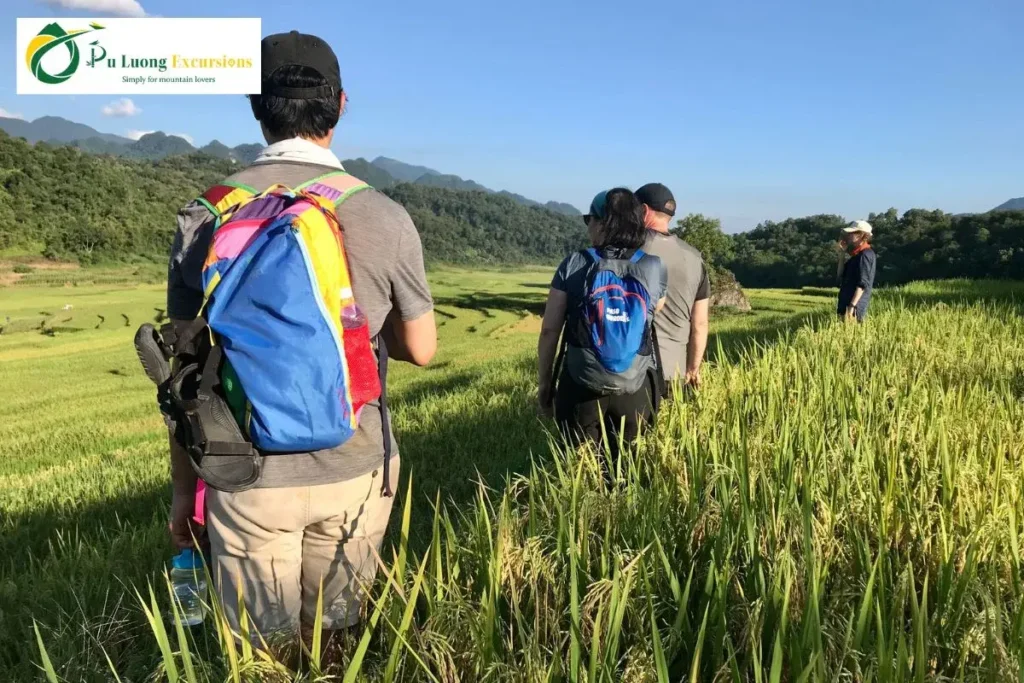
Best Places to See Pu Luong Rice Terraces
Which Pu Luong rice terraces tour should you choose?
For most visitors, a private 2-day 1-night terrace trek from Hanoi balances travel time and trekking: about 8 to 9 hours of driving in total, two guided walks, a homestay night and a Cham Stream bamboo raft ride. It avoids the rush and exhaustion of a day trip.
Here is how we suggest choosing:
- First-timers with 2 days: a Hanoi round-trip trek covering Ban Don, Hieu Waterfall and a village overnight.
- Travelers with 3 days: add Kho Muong Cave, Eo Ken and a slower pace, or combine with Mai Chau.
- Active hikers: add the Pu Luong Peak climb in the dry season.
- Families and older travelers: focus on flat valley walks, rafting and a comfortable eco-lodge.
- Coming from Ninh Binh: we can pick you up there and shorten the first drive.
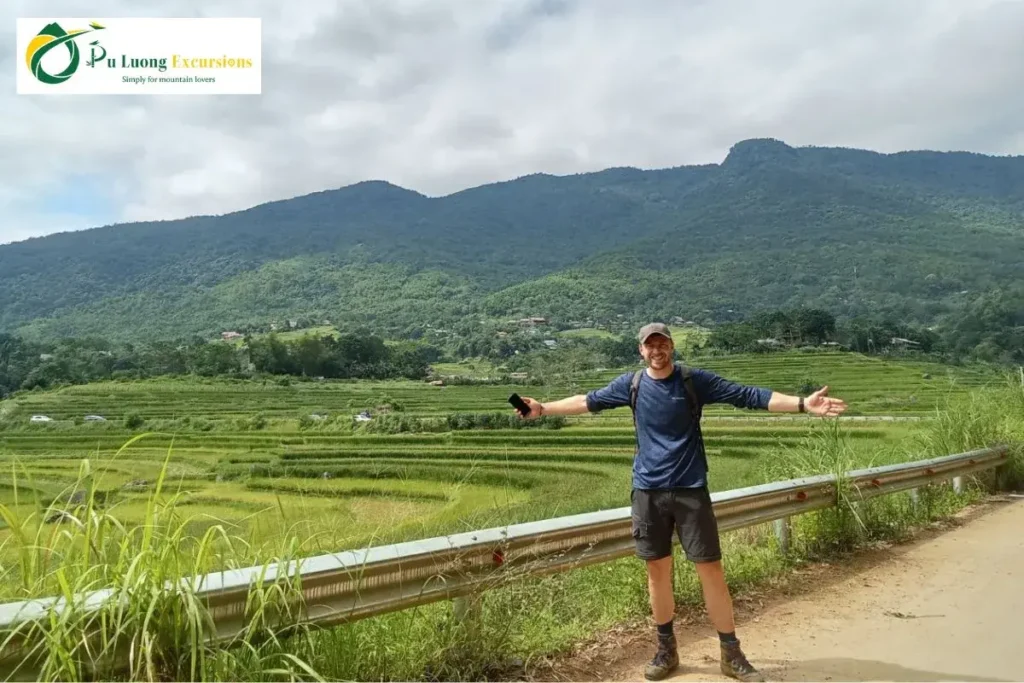
About Pu Luong Excursions – Your Guide to the Rice Terraces
Frequently asked questions
When are rice terraces most beautiful?
The terraces look their best in mid-to-late June and from mid-September to early October, when the rice turns gold before harvest. May and early June are ideal for flooded, reflective fields. Exact timing shifts by one to two weeks each year with rain and altitude.
Is two days enough to see the Pu Luong rice terraces?
Yes. Two days and one night is enough to walk Ban Don and nearby terraces, visit a waterfall or cave and raft on Cham Stream. A third day allows a slower pace and extra viewpoints such as Eo Ken.
Do I need to be very fit to trek in Pu Luong?
No. Standard terrace walks are easy to moderate, 4 to 10 km on dirt paths and steps. Only the Pu Luong Peak climb at 1,700 m is strenuous. Tell your guide your comfort level and we will adjust the route.
Can I visit Pu Luong from Ninh Binh?
Yes. Pu Luong is about 100 km and 2.5 to 3 hours from Ninh Binh by car. Many travelers combine Trang An or Tam Coc with a night in Pu Luong, and we can arrange a private transfer.
Get a personalized Pu Luong itinerary and quote today
Now you know when the terraces turn gold, how to reach them and what a fair price looks like. The next step is a plan built around your dates, fitness and budget. Tell our team when you arrive in Vietnam, and we will design a private route with the right season, stay and walking level, with no obligation. Send us a message on WhatsApp, use the contact form, or message our fanpage at puluongexcursions.com. Request a free consultation and you will receive a clear, itemized quote within the same day.
See more:
- Wildlife, caves and waterfalls in Pu Luong
- Thai and Muong culture in Pu Luong villages