



Most travellers who search for pu luong village culture want to meet real communities, not watch a staged show. That is the right instinct, and it works if you know which villages to visit, when to go and how to behave as a guest. This guide comes from years of guiding on these trails. It explains how Thai and Muong families live in Pu Luong, what a homestay costs and which etiquette earns you a warm welcome.
Experience Pu Luong village life with a local guide
Skip the guesswork. Our Pu Luong 2 days 1 night village and homestay experience is built around real community life, not tourist stops. A private car with an english-speaking driver collects you in Hanoi. Your local guide, who grew up in these valleys, introduces you to Thai and Muong families in Ban Don and nearby hamlets. You share a home-cooked dinner in a stilt house, walk quiet terrace paths away from the crowds and sleep in a family homestay or eco-lodge of your choice. Everything is arranged in advance, so you spend your time with people, not planning logistics.
Explore the Pu Luong village tour at puluongexcursions.com
What is village culture like in Pu Luong?
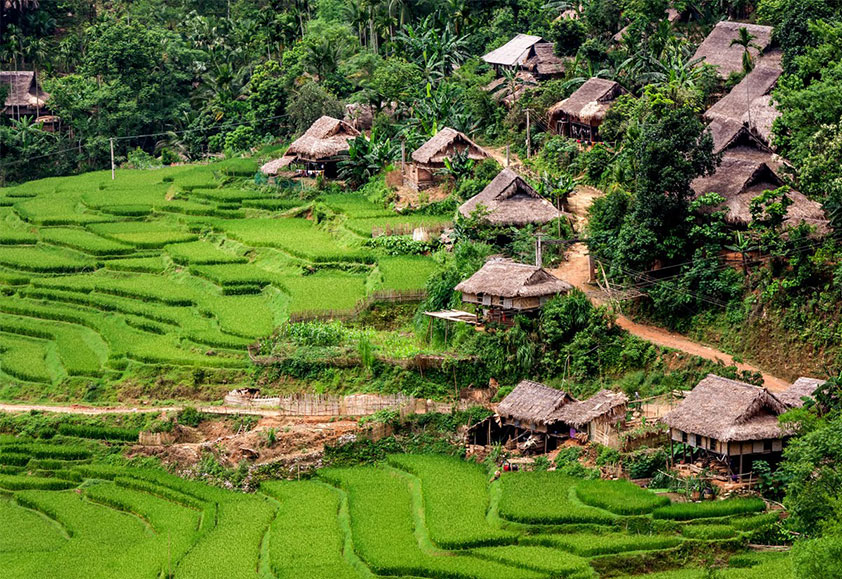
Pu Luong village culture is shaped by the Thai and Muong peoples, who have farmed these valleys for centuries. Expect stilt houses, terraced rice fields, wooden water wheels and family-run homestays in villages about 150 km, or roughly four hours, from Hanoi. Daily life follows the rice calendar, so what you see depends on the month.
Pu Luong Nature Reserve sits in Thanh Hoa province, next to Mai Chau. Because the terrain is steep and the roads are narrow, many villages still live much as they did a generation ago. Mornings start with smoke rising from kitchen hearths. Women carry baskets of rice seedlings and men repair irrigation channels. In the evening, families gather on the stilt-house veranda to eat.
See more: Pu Luong Nature Reserve: A Travel Guide

Ha Thai Village Lacquer product
Thai and Muong: what is the difference?
The two groups share valleys but not every tradition. Here is how they appear to a visitor:
| Feature | Thai villages | Muong villages |
|---|---|---|
| Typical house | Tall stilt house with a carved wooden frame | Stilt house, often lower and simpler |
| Clothing | Colourful brocade, black skirts, silver jewellery | Muted tones, woven belts |
| Famous food | Five-colour sticky rice, grilled river fish | Bamboo-tube rice, wild forest greens |
| Craft to see | Brocade weaving | Bamboo and rattan work |
| Typical villages | Ban Don and the area around Hieu Waterfall | Hamlets near Cham Stream |
Village borders overlap, and many families have intermarried. Ask your guide which group lives in each hamlet.
Which Pu Luong villages are worth visiting?
Ban Don is the best-known cultural stop, about 5 km from the main road, with over 30 stilt homes and a quiet pace. Hieu Waterfall, Kho Muong Cave and Cham Stream are all within 30 to 60 minutes of the villages. Most visitors need at least two days to see them well.
- Ban Don: the main Thai village for homestays, weaving and home-cooked dinners. Arrive by late afternoon to join the evening meal.
- Hieu Waterfall area: a short walk from the road. Swim in the pools, then meet farmers working the nearby paddies.
- Kho Muong Cave and Bat Cave: a pleasant half-day trek with local guides. Bring a headlamp and sturdy shoes.
- Cham Stream bamboo rafting: a gentle float past Muong hamlets. It suits families and anyone who wants a rest day from walking.
- Eo Ken viewpoint: a sunrise spot above terraces, with a hearty hill walk for early risers.
- Pho Doan Market: a local market where villagers trade vegetables, herbs and handmade goods. Check with your guide for the market days.
- Pu Luong Peak (1,700 m): a full-day, demanding trek for fit hikers who want wide views over the reserve.
How can you visit a village respectfully?
Visit a village by following four basic rules: remove your shoes at the door, dress modestly, ask before photographing people and accept food or drink when offered. These habits, practised by our guides for over ten years, show respect and often lead to invitations that no itinerary can promise.
Some details matter more than visitors expect:
- Shoes: take them off before entering any stilt house, and step over the threshold rather than on it.
- Altars: never touch the family altar or point your feet toward it.
- Photos: always ask first, especially with children and elderly villagers. A smile and a gesture usually works.
- Rice wine: if a host offers communal rice wine, a small sip is polite. You may decline kindly.
- Gifts: bring fruit, tea or school supplies for the host family instead of handing money or sweets to children.
- Quiet hours: keep noise low after about 9 pm. Villagers rise early to work the fields.
What is the best time to visit Pu Luong for village life and rice terraces?
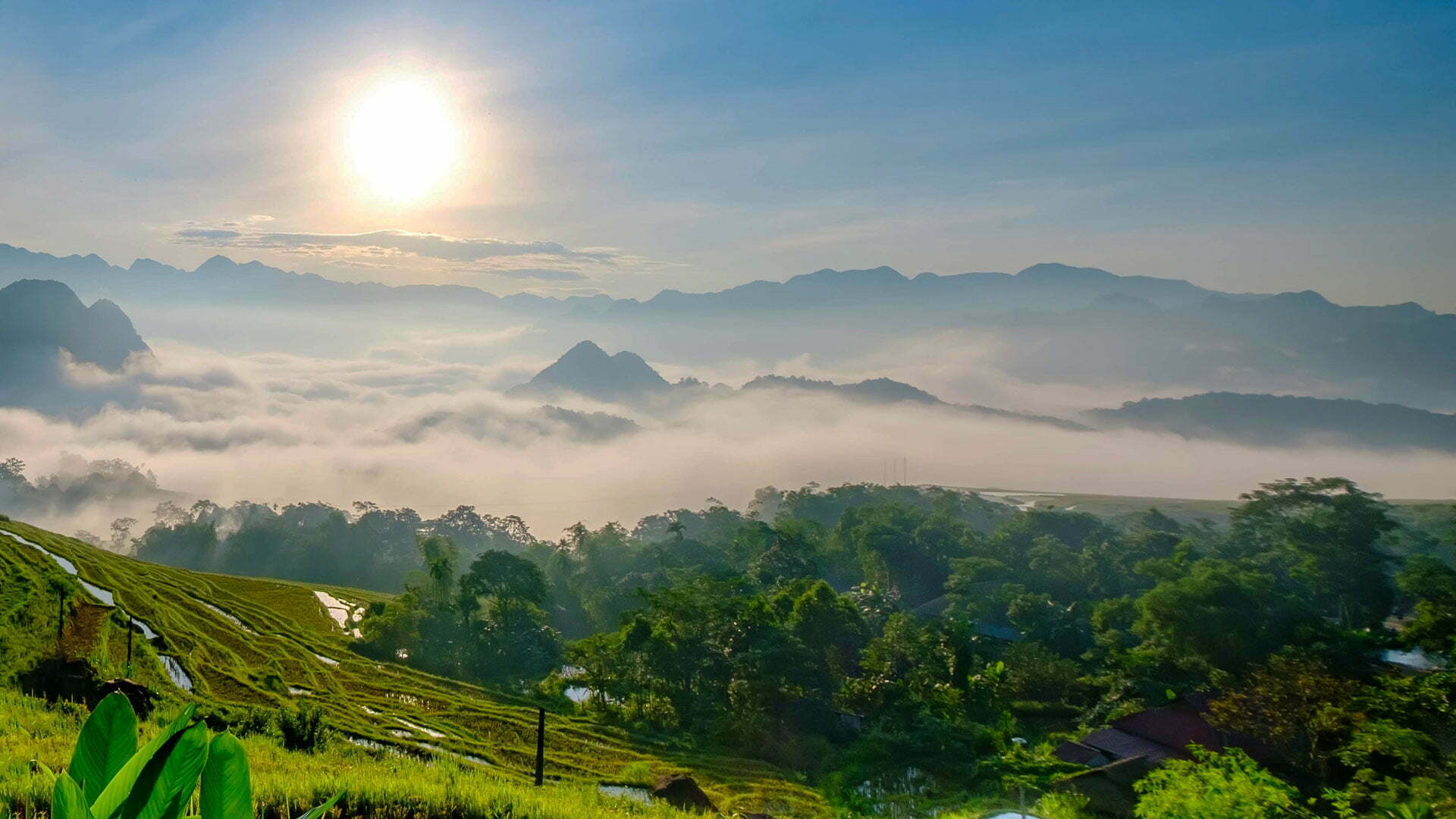
The best months are late May to June and mid-September to early October, when terraces turn golden and villages are busy with harvest. April and November are quieter, with clear skies. Summer brings green fields and heavy rain. Winter, from December to February, can be cold and misty in the hills.
| Period | What you will see | Notes |
|---|---|---|
| March to April | Fresh green seedlings, mild weather | Fewer visitors |
| Late May to June | First golden harvest | Warm, book early |
| July to August | Lush green terraces | Rain is common |
| Mid-September to early October | Second golden harvest | Peak season, book ahead |
| November to February | Quiet valleys, cooler air | Bring warm layers |
How do you get to Pu Luong from Hanoi, Ninh Binh and Mai Chau?
Pu Luong is about 150 km from Hanoi, a drive of three and a half to four and a half hours. From Ninh Binh it takes around three hours, and from Mai Chau about 1.5 hours. A private car is the simplest option because public buses do not reach the villages.
- From Hanoi: private car or limousine van, with a comfortable stop for coffee on the way.
- From Ninh Binh: private transfer through country roads, often combined with a Trang An or Tam Coc visit.
- From Mai Chau: a short scenic drive, ideal if you are linking the two valleys.
- Final stretch: the last few kilometres are narrow and winding, so we recommend an experienced local driver.
How much does a village stay in Pu Luong cost?
A village homestay in Pu Luong usually costs about USD 15 to 30 per person per night, around 400,000 to 750,000 VND, with dinner and breakfast often included. Eco-lodges cost more, roughly USD 60 to 120 per room. Prices rise in harvest months, so confirm before you travel.
| Option | Typical price per night | What is included |
|---|---|---|
| Family homestay | USD 15 to 30 per person | Mattress on the floor, shared bathroom, meals |
| Mid-range eco-lodge | USD 60 to 120 per room | Private room, terrace view, breakfast |
| Private car from Hanoi | Around USD 120 to 180 round trip | Fuel, driver, tolls |
These are indicative figures. Your final quote depends on the season, group size and the lodge you pick.
A simple 2-day village itinerary
- Day 1: pick-up in Hanoi, drive to Pu Luong, lunch in a local home, terrace walk to Ban Don, dinner with your host family.
- Day 2: sunrise at Eo Ken, Hieu Waterfall, optional Cham Stream bamboo rafting, return to Hanoi by late afternoon.
Frequently asked questions
Can I stay in a homestay?
Yes. Homestays are the best way to experience Pu Luong village culture. You sleep in a stilt house on a mattress with a mosquito net, share a bathroom with the family and eat home-cooked meals. Facilities are basic but clean. For more privacy, choose an eco-lodge with an en-suite room.
Do I need to be fit to visit the villages?
No. Most village walks are easy to moderate, with uneven but short paths. Pu Luong Peak at 1,700 m is the one demanding trek and needs good fitness. Tell your guide your comfort level, and we adjust the route.
Is it safe to visit Pu Luong villages as a solo traveller?
Yes. Villages are welcoming and crime is very low. The main risks are slippery paths in the rain and mobile signal gaps in the hills. A local guide makes the trip safer and far more rewarding.
Do villagers speak English?
Very few do. Most speak Thai, Muong or Vietnamese. A bilingual guide translates, explains customs and helps you join conversations, which is why we recommend going with a local guide.
Plan your Pu Luong village stay with a local expert
Now you know what village life in Pu Luong looks like, the next step is choosing a route that fits your dates, budget and energy. Tell us when you arrive and how many days you have, and our local team will design a personal itinerary with a trusted homestay or eco-lodge. You receive a clear quote in USD or VND, usually within the same day, with no obligation. Send us a message through puluongexcursions.com, WhatsApp or our Facebook page. Free advice from people who live here is one message away.
Get your free Pu Luong itinerary and quote today
See more:
-
- Pu Luong rice terraces: best villages and viewpoints
- Wildlife, caves and waterfalls in Pu Luong