


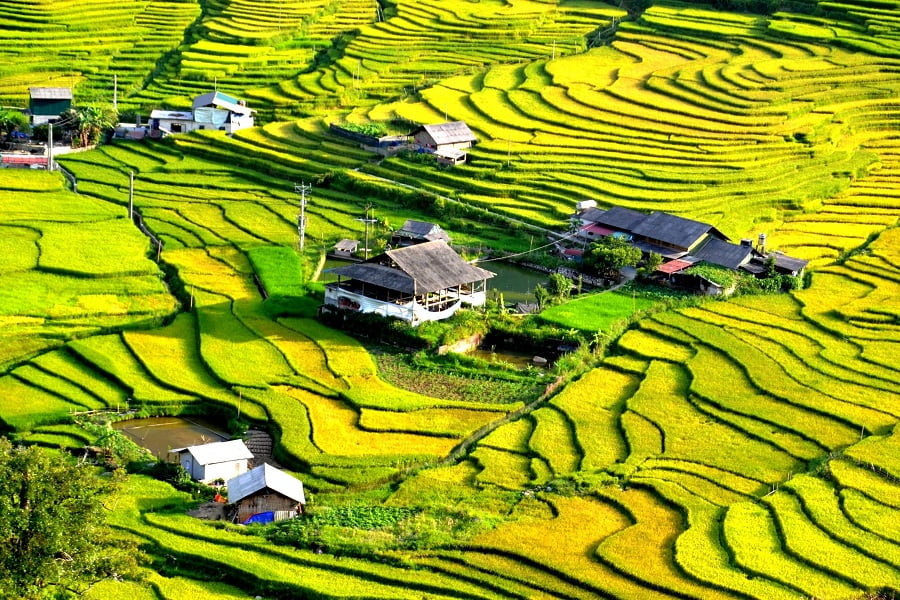
If you are dreaming of emerald-green rice waves carved into the mountains of Northern Vietnam, you are in the right place. A Sapa rice field walk is more than just a hike; it’s a journey into the heart of a lifestyle that has remained unchanged for centuries. It’s about meeting the Hmong, Dao, and Tay people, hearing the laughter of children playing by the streams, and seeing the incredible harmony between nature and human hands.
In this guide, we want to show you how to experience Sapa like a local—with honest advice from a team that truly loves these hills..
When Is the Best Time for a Sapa Rice Field Walk?
Before you lace up your boots, you need to know that the scenery changes completely depending on when you visit. The rice fields are not green all year round!
The Green Season (June to Early August)
This is when Sapa is at its most vibrant. The young rice plants are growing fast, and the entire Muong Hoa Valley looks like it’s covered in a thick, green carpet. It’s warm, and yes, it rains sometimes, but the mist moving through the green valleys is magical.
The Golden Season (Late August to September)
This is the “bucket list” moment. The rice turns a brilliant golden yellow, signaling that it’s time for harvest. The air is crisp, and the sight of gold-drenched mountains is something you will never forget. This is the peak time for a Sapa rice field walk.
The Watering Season (April to May)
Before the green, there is the water. Farmers flood the terraces to prepare for planting. The fields turn into giant mirrors reflecting the blue sky and white clouds. It’s a photographer’s dream.
Sapa Rice Field
Essential Routes for Your Trek
Sapa has many paths, from easy strolls to challenging climbs. Here are my favorite routes for a true Sapa rice field walk experience:
The Classic: Y Linh Ho – Lao Chai – Ta Van
This is the most popular route for a reason. You start by walking down from Sapa town into the Muong Hoa Valley.
- What to expect: You’ll walk right through the middle of the terraces. You’ll see Black Hmong villages and end up in Ta Van, home to the Giay people.
- Difficulty: Moderate. Some slippery slopes if it rains.
The Quiet Path: Ma Tra – Ta Phin
If you want to escape the crowds, head north. This area is home to the Red Dao people, famous for their bright red headscarves and herbal baths.
- What to expect: Ancient monasteries, corn fields, and beautiful, quiet rice terraces.
- Difficulty: Easy to Moderate.
The High View: Ban Khoang – Ta Giang Phinh
This is for those who want to see the “roof” of the valley. It’s further away and much more rugged.
What to expect: Traditional wooden houses and massive, wide-open views of the mountains that few tourists ever see.
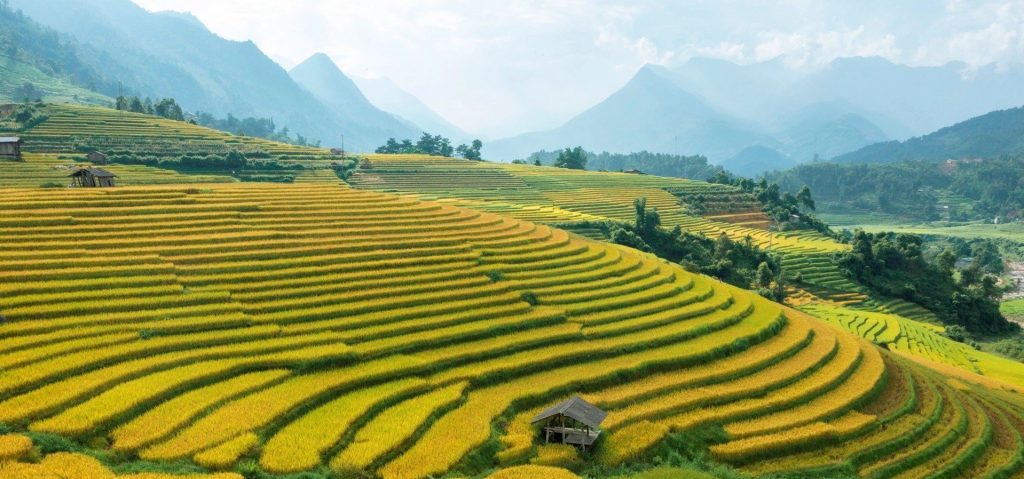
Sapa rice field walk
What to Bring on Your Journey
You don’t need professional climbing gear, but a little preparation goes a long way:
- Good Shoes: You don’t necessarily need heavy boots, but sneakers with a good grip are a must. The mud in Sapa is like soap when it’s wet!
- Rain Poncho: The weather changes in five minutes. Be ready.
- Water and Snacks: While there are small shops in villages, it’s always good to have your own supply.
- Small Cash: To buy a handmade brocade bag or a drink from a local lady. It’s a great way to support the community.
Respecting the Local Culture
When you are on your Sapa rice field walk, remember that these fields are people’s livelihoods.
- Stay on the path: Avoid stepping directly on the rice plants.
- Ask before photos: Most locals are happy to have their photo taken, but it’s polite to ask first. A smile goes a long way!
- Support local: Buying a small souvenir or eating at a village homestay makes a huge difference to the families living there.
Beyond the Fields: What Makes Sapa Special?
The rice is the star of the show, but the soul of Sapa is its people. During your walk, you will likely be joined by local Hmong women. They are incredible hikers (often doing the trails in plastic sandals!) and are very friendly. They might show you the way or help you cross a slippery stream.
Don’t be afraid to chat with them. Even if there is a language barrier, you can learn a lot about their culture—how they dye their clothes with indigo or how they manage the water flow for the entire mountain.
Discover Northern Vietnam with Pu Luong Excursions
If you loved the idea of the Sapa rice field walk, you will fall in height with the rest of Northern Vietnam. At Pu Luong Excursions, we specialize in taking you off the beaten path. While Sapa is famous, Pu Luong is our “hidden gem”—often described as Sapa was 20 years ago.
We are a fully licensed travel company dedicated to providing Northern Vietnam’s finest countryside tours. Whether you are looking for:
- Authentic Trekking: Deep dives into jungles and rice terraces.
- Cultural Immersion: Staying in traditional stilt houses with local ethnic families.
- Eco-Resorts: Finding peace in high-quality, sustainable lodges in the heart of nature.
- Expert Local Guides: Our team knows every trail in Pù Luông and beyond.
From the rugged mountains of Sapa to the serene valleys of Pù Luông, Thanh Hóa, we ensure your trip is safe, respectful, and unforgettable. Let us show you the real Vietnam, one step at a time.
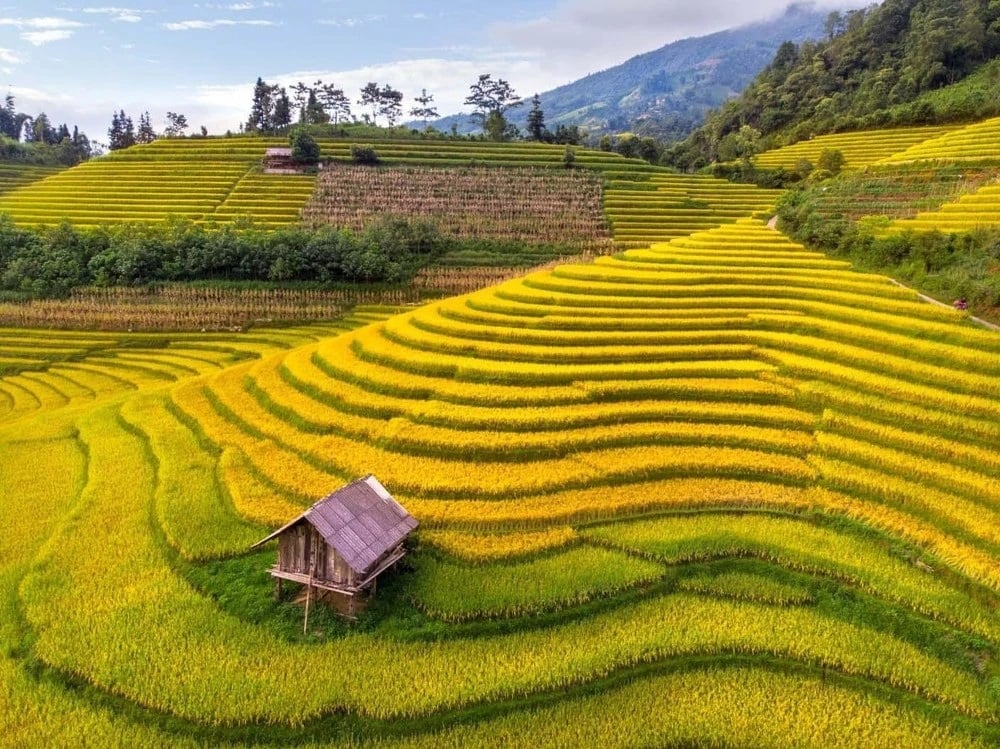
Discover Northern Vietnam with Pu Luong Excursions
A Sapa rice field walk is an experience that stays in your heart long after the mud has washed off your shoes. It teaches you about patience, hard work, and the incredible beauty of a simple life.
Whether you go for one day or a whole week, take your time. Stop to look at the view. Say “Xin Chao” to the farmers. Breathe in the mountain air. This is the magic of Vietnam.