


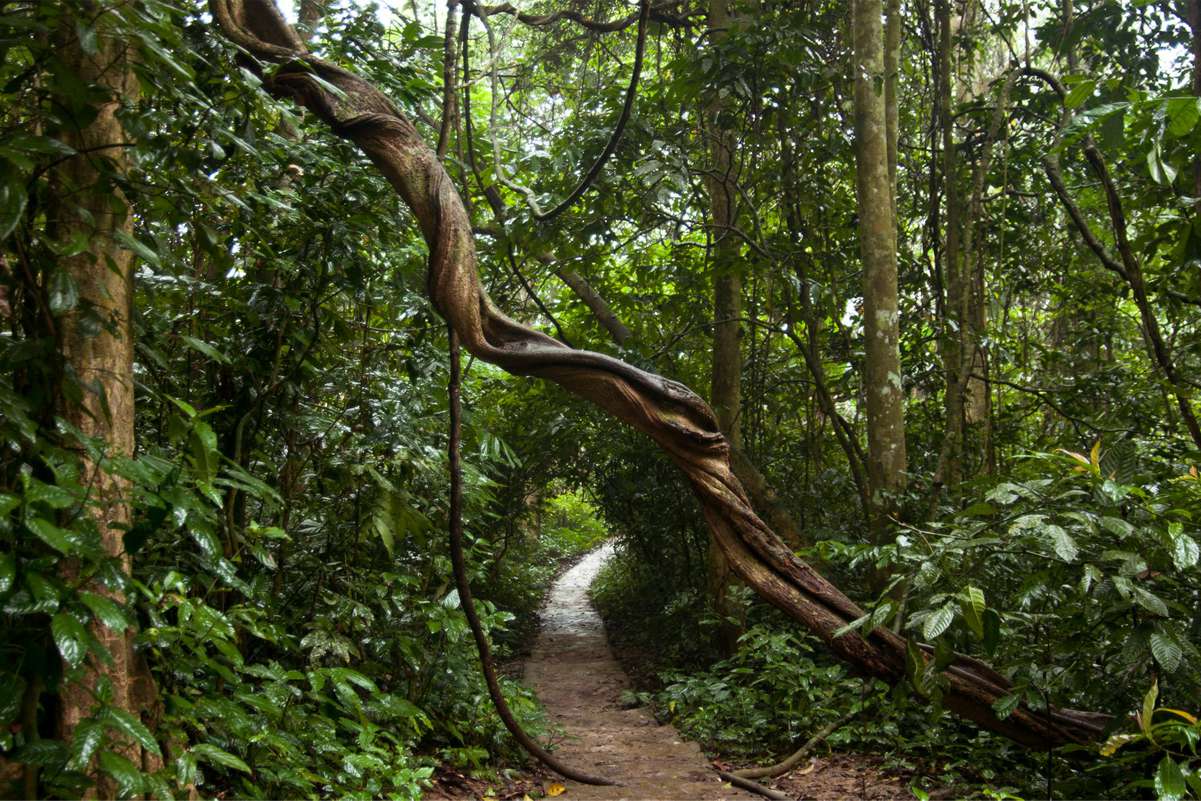
Vietnam is home to some of Southeast Asia’s most important ecosystems — and two of the best sit within a few hours of each other in the country’s north. A Cuc Phuong Pu Luong biodiversity tour combines Vietnam’s oldest national park with one of its most pristine nature reserves, giving nature lovers an experience that goes well beyond the typical highland trek.
Cuc Phuong offers ancient forest, endangered primates, rare butterflies and one of Asia’s most important wildlife rescue centres. Pu Luong adds a different dimension: rice terrace landscapes managed by ethnic minority communities for generations, subtropical jungle, endemic bird species, and trails that see almost no other visitors.
Together, they make one of the most complete nature trips available in northern Vietnam. This guide covers what each place offers, how they compare, and how to plan a Cuc Phuong Pu Luong biodiversity tour that makes the most of both.
Why Combine Cuc Phuong and Pu Luong on One Tour?
Most visitors to Cuc Phuong spend one or two nights and move on. Most visitors to Pu Luong do the same. Very few combine both — which is an oversight, because the two destinations complement each other almost perfectly.
Cuc Phuong is a forest ecologist’s destination. It is dense, layered, scientifically documented, and home to conservation projects that have been running for decades. The experience here is more structured: visitor centres, guided forest walks, wildlife spotting with expert naturalists, and the remarkable rescue centres where you can see endangered species up close.
Pu Luong is an immersive ecotourism destination. The biodiversity is real and significant, but the experience is woven into the landscape rather than presented at specific sites. You see it while trekking through bamboo forest, while sitting by a stream, while walking through village paddy fields at dawn. Wildlife encounters here tend to be unplanned and all the better for it.
A Cuc Phuong Pu Luong biodiversity tour gives you both: the depth of knowledge and conservation context that Cuc Phuong provides, followed by the free-range immersion that Pu Luong delivers. The two days you spend at each reinforce each other in a way that makes the overall understanding of Vietnam’s ecosystems much richer.
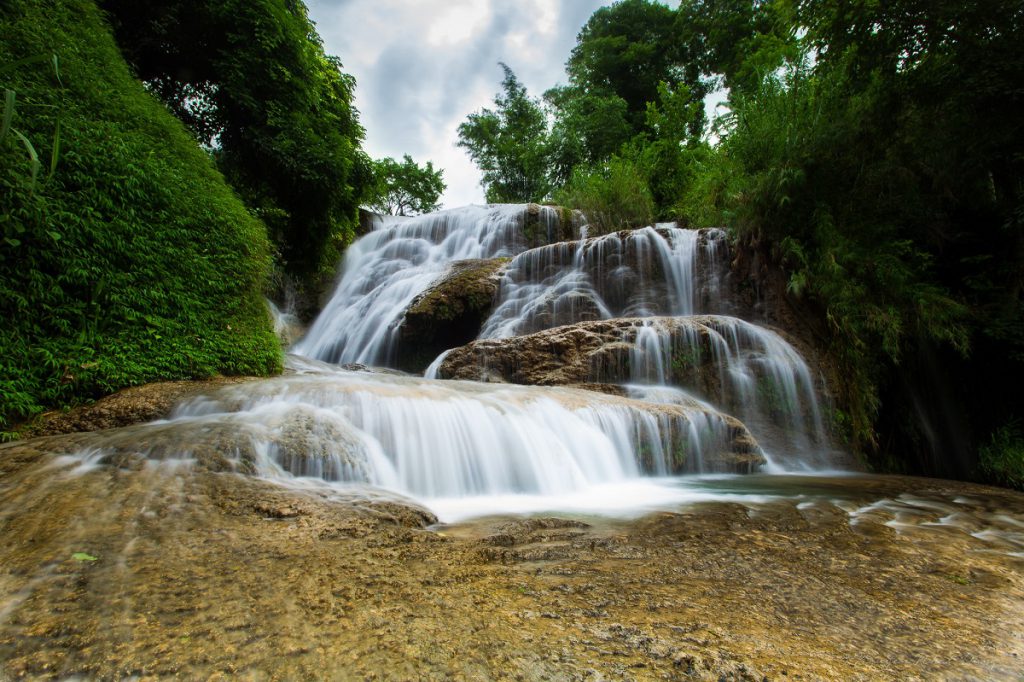
Cuc Phuong and Pu Luong
Cuc Phuong National Park: Vietnam’s Oldest and Most Diverse Forest
Established in 1962, Cuc Phuong is Vietnam’s first and oldest national park. It covers around 22,000 hectares of lowland tropical forest in Ninh Binh province, sitting on a limestone karst plateau that has been continuously forested for millions of years. That geological continuity is part of what makes it so biologically rich.
Wildlife and Biodiversity Highlights
Cuc Phuong’s species numbers are genuinely impressive. The park is home to over 2,000 plant species, 135 mammal species, more than 300 bird species, and hundreds of reptile and butterfly species. Several of these are found nowhere else on Earth.
The mammals are the headline act. Cuc Phuong is one of the last strongholds in Vietnam for the Delacour’s langur — a critically endangered primate with striking black and white markings found only in northern Vietnam’s limestone forests. The park also supports populations of clouded leopards, civets, pangolins and several species of deer, though most are nocturnal and sightings require patience and luck.
For birdwatchers, Cuc Phuong is exceptional. Early mornings in the forest core bring a chorus of species including the bar-bellied pitta, grey-headed fish eagle, mountain imperial pigeon, and a range of warblers and flycatchers that draw serious birders from across the world.
The butterfly population is extraordinary. Over 280 species have been recorded, and the ancient tree groves inside the park — some with trunks measuring several metres across — host microhabitats that support species found nowhere else in the region.
What to Do at Cuc Phuong
A visit to Cuc Phuong typically spans one to two nights and focuses on a combination of:
- Primate Rescue Centre: Home to dozens of rescued langurs, gibbons and lorises being rehabilitated for release. The centre also runs education programmes on primate conservation and the illegal wildlife trade.
- Endangered Turtle Conservation Centre: One of the most important turtle rescue facilities in Southeast Asia, housing over a dozen species including the critically endangered Bourret’s box turtle.
- Ancient Forest trail: A walk through primary forest to a 1,000-year-old tree, one of the largest in Vietnam. The trail takes around two hours and passes through some of the most undisturbed canopy in the country.
- Cave systems: The park contains several caves with prehistoric artefacts and dramatic limestone formations, reachable on guided day hikes.
- Night walks: Guided night treks are one of the most memorable experiences at Cuc Phuong. With a torch and a good guide, you will encounter civets, slow lorises, giant millipedes, stick insects, and tree frogs that are entirely invisible during the day.
The park has its own accommodation inside the forest, ranging from basic guesthouses to comfortable bungalows surrounded by trees. Staying inside the park is strongly recommended — the early morning and evening hours, when you are already in the forest, are when the best wildlife activity happens.
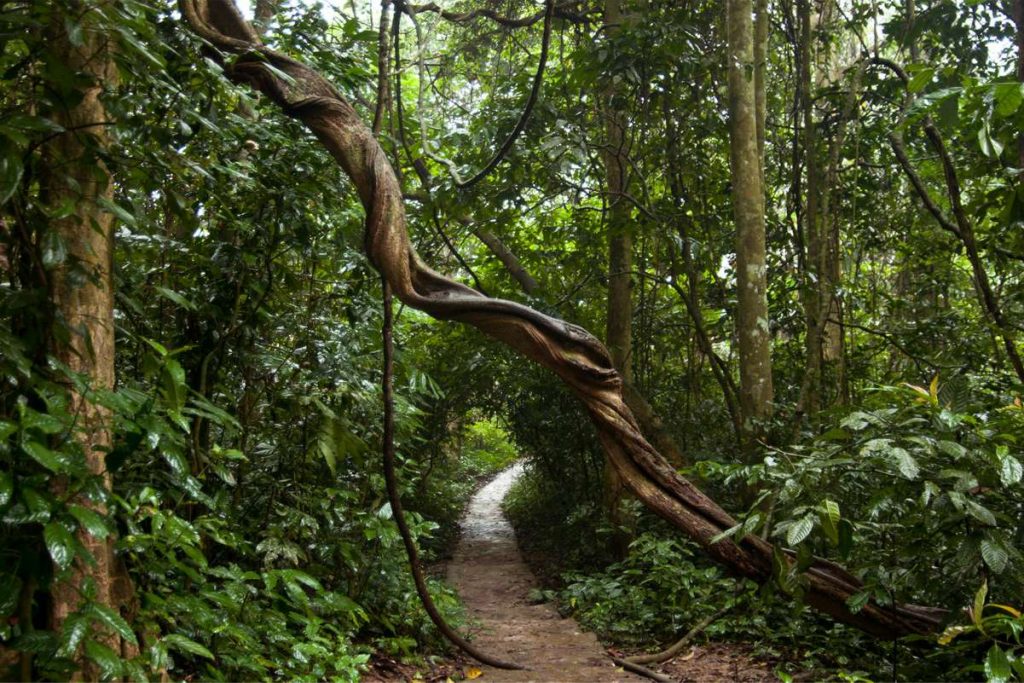
Cuc Phuong National Park
See more: Explore the Mu Cang Chai, Pu Luong & Mai Chau Combo
Pu Luong Nature Reserve: Where Biodiversity Meets Living Culture
Pu Luong Nature Reserve in Thanh Hoa province covers over 17,000 hectares and sits at the southern end of the same limestone mountain chain that Cuc Phuong occupies further north. The two reserves share geological DNA, which partly explains why the biodiversity at Pu Luong is significant despite being less well-documented than its older neighbour.
Flora, Fauna and Forest Life in Pu Luong
Pu Luong’s forest is subtropical rather than purely tropical — the elevation range from valley floor to limestone ridges creates a layered ecosystem that supports a wide range of habitats within a relatively small area.
The bird life is excellent. Pu Luong has recorded over 130 bird species, including the red-collared woodpecker, silver pheasant, crested serpent eagle and several species of laughingthrush that are characteristic of the northern highlands. Birdwatching at dawn on the paddy trails — when mist still sits in the valley and the calls carry far — is one of the quieter highlights of a stay here.
Mammals in Pu Luong are harder to spot but present in healthy numbers. The limestone forest supports populations of macaques, several civet species, muntjac deer, and — according to local guides — occasional sightings of golden cats on the higher ridgelines. The streams and rivers running through the reserve hold freshwater turtles, otters and a range of endemic fish species that have adapted to the karst water chemistry.
The plant life is what strikes most visitors first. The bamboo groves covering the lower slopes are among the densest in northern Vietnam, and the transition from cultivated rice terrace to secondary forest to primary limestone forest happens within minutes on the trail. Orchids, ferns and mosses cover the older rock faces in the interior of the reserve.
What makes Pu Luong different from Cuc Phuong is the integration of human habitation with the natural environment. The Thai and Muong communities living inside the reserve have shaped the landscape over centuries through their farming practices — the rice terraces, the irrigation channels, the managed bamboo groves. The biodiversity here exists alongside people rather than separately from them, which gives the ecotourism experience a cultural dimension that purely wilderness destinations cannot offer.
What to Do at Pu Luong
For visitors on a biodiversity-focused tour, Pu Luong offers:
- Guided jungle treks: Half-day and full-day routes through secondary and primary forest with local guides who know the trails and the wildlife. The cliff viewpoint trek climbs through dense forest to a limestone ridge with panoramic views of the entire reserve.
- Birdwatching walks: Early morning walks along the paddy trails and forest edges, when bird activity is highest. Best arranged with a guide who knows the key species and their territories.
- Night walks: Similar in concept to Cuc Phuong’s night treks, but wilder — no lighting infrastructure, smaller groups, and a different species list. Civets, flying squirrels and various frog species are the most commonly encountered.
- Stream and river walks: The waterways running through the reserve are important biodiversity corridors. Walking along them gives access to freshwater species, kingfishers, and the dense riparian vegetation that many species depend on.
- Village and cultural immersion: Spending time in the Thai and Muong villages inside the reserve provides context for the human-nature relationship that defines Pu Luong’s ecosystem. A local guide can explain how traditional farming practices have maintained biodiversity across generations.
- Off-road jungle bike rides: For those who want to cover more ground, guided bike routes follow forest trails that would take days to walk.
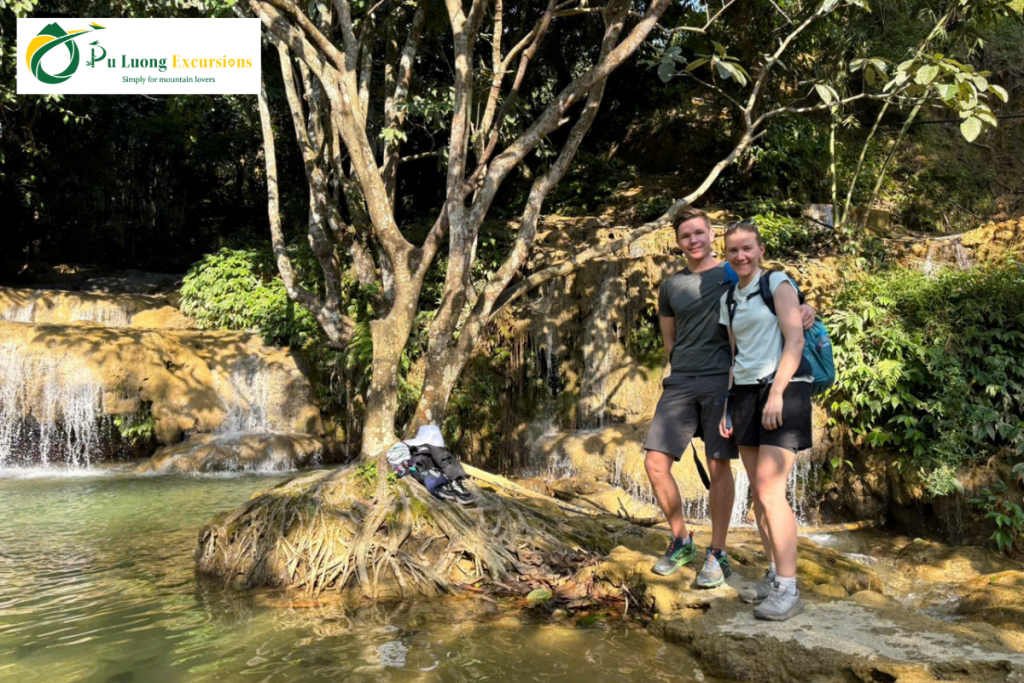
Pu Luong Nature Reserve
Suggested Itinerary for a Cuc Phuong–Pu Luong Biodiversity Tour
This 6 to 7-day itinerary moves logically between both reserves without backtracking. Both are accessible from Hanoi, and the travel route between them is straightforward.
Day 1 — Hanoi
Arrive in Hanoi. Rest and prepare for the nature trip ahead. The Old Quarter is good for stocking up on any gear you need — light hiking boots, a rain layer, a head torch for night walks.
Days 2–3 — Cuc Phuong National Park (2 nights)
Morning transfer from Hanoi to Cuc Phuong — around 2.5 to 3 hours by private car. Check in at the park accommodation, then visit the Primate Rescue Centre and Turtle Conservation Centre in the afternoon. Day 2 evening: guided night walk in the forest. Day 3: full-day Ancient Forest trail and cave exploration, followed by early afternoon departure toward Pu Luong.
Days 4–6 — Pu Luong Nature Reserve (2–3 nights)
Cuc Phuong to Pu Luong takes approximately 2 to 2.5 hours by private transfer — a short and easy connecting leg. Arrive by late afternoon and settle into your eco-lodge or village homestay. Day 5: dawn birdwatching walk along paddy trails, then a full-day jungle trek to the cliff viewpoint. Day 6: off-road jungle bike ride or stream walk in the morning, followed by a village visit in the afternoon. Evening: optional night walk with local guide.
Day 7 — Return to Hanoi
Morning transfer from Pu Luong to Hanoi takes around 3.5 to 4 hours. Arrival in Hanoi by early afternoon.
This itinerary can be extended by one or two nights at either reserve for a deeper experience. Adding a night at Cuc Phuong allows for a second day of forest exploration and more wildlife activity. Adding a night at Pu Luong creates space for the longer ridge treks and a more relaxed pace overall.
Best Time to Do the Cuc Phuong Pu Luong Biodiversity Tour
Both reserves have their own seasonal rhythms, and the best timing depends on your priorities.
October to November is the top pick for combining both destinations. At Pu Luong, temperatures are a stable 25°C with clear blue skies every day and the terraces in golden harvest. At Cuc Phuong, the dry season brings good forest visibility and active wildlife. Bird migration adds species diversity to both sites during this window.
March to May is the second-best option. Cuc Phuong’s butterfly season peaks in March and April — some years bring extraordinary numbers of species to the forest clearings. At Pu Luong, the terraces refill with water in spring and temperatures climb to around 25°C in the day, sometimes dropping to 15°C at night. Weather can be changeable, so pack a light rain jacket.
May to September brings heat and humidity, particularly in June at Pu Luong. Cuc Phuong’s forest is dense and lush. Wildlife at both reserves is active but the trails are more demanding in the heat. Evening storms at Pu Luong — best watched from your bungalow balcony — are a genuine spectacle during this season, and the mountain altitude keeps nights cooler than the lowlands.
December to March is the quiet season. Cuc Phuong is cooler and easier to hike in. At Pu Luong, cold nights and morning mist create a stillness that many nature-focused travellers actually prefer. Sunny days in winter at Pu Luong are excellent for long trekking, and the reserve is at its emptiest.
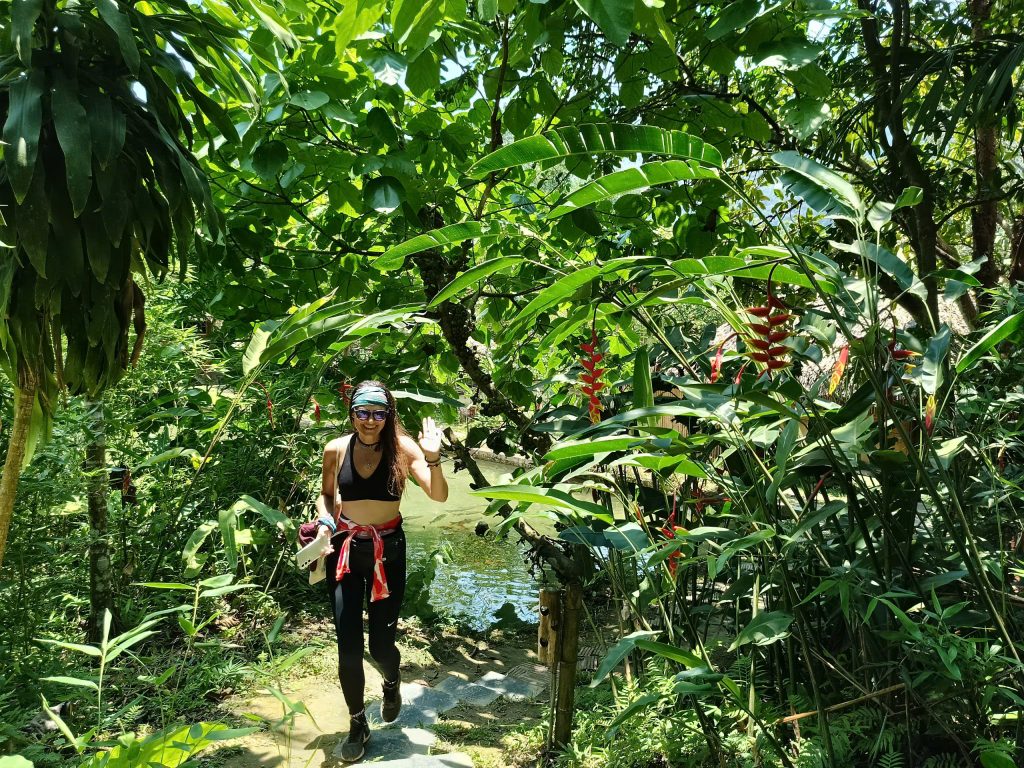
Best Time to Do the Cuc Phuong Pu Luong Biodiversity Tour
Book the Pu Luong with Pu Luong Excursions
For the Pu Luong section of your biodiversity tour, Pu Luong Excursions is the specialist operator on the ground.
Pu Luong Excursions is a licensed tour operator based inside Pu Luong Nature Reserve. The team has deep local knowledge of the reserve’s trails, wildlife hotspots and community partners — the kind of knowledge that only comes from years of working in a single ecosystem. For nature-focused visitors, this makes a meaningful difference to what you see and learn during your stay.
Services available for the Pu Luong leg of your biodiversity tour include:
- Guided jungle treks with local naturalist guides who know the forest species, bird calls and wildlife trails
- Birdwatching walks tailored to your interests and time available — from dawn paddy walks to full-day forest birding routes
- Night walks on forest trails with expert local guides, focused on nocturnal mammals, reptiles and amphibians
- Off-road jungle bike and motorbike tours covering terrain that is not accessible on foot in a single day
- Eco-lodge and village homestay accommodation carefully selected for minimal environmental impact and community benefit
- Transfers from Cuc Phuong or Hanoi that connect seamlessly with your broader itinerary
- Multi-day ecotourism packages combining accommodation, guided activities and meals, designed for nature-focused travellers
Group sizes are kept small — a maximum of 9 guests per trip — to reduce impact on the ecosystem and ensure a quality experience for every visitor.
A Cuc Phuong Pu Luong biodiversity tour is not a typical highland trip. It is a nature journey with genuine depth — one that takes you from ancient primary forest and primate conservation centres to subtropical jungle trails, rice terrace valleys and living ethnic minority culture.
Cuc Phuong gives you the science and the wildlife encounters. Pu Luong gives you the immersion and the quiet. Together, they offer something that is rare in modern travel: a trip that changes how you see a landscape, not just what you see in it.
If you are ready to explore the Pu Luong end of this journey, get in touch with the team at Pu Luong Excursions. They will help you design the right itinerary, connect the logistics between both reserves, and make sure your time in Pu Luong is led by people who know it inside out.