


If you ask most travellers which northern Vietnam rice terrace destination to visit, they will name one of three: Mu Cang Chai, Pu Luong, or Mai Chau. What fewer people realise is that all three sit within reach of each other — and that combining them into a single trip gives you something no single destination can offer on its own.
The Mu Cang Chai, Pu Luong and Mai Chau combo has become one of the most rewarding routes through northern Vietnam’s highlands. Each place is different in character, landscape and pace. Together, they tell a fuller story of what rural Vietnam actually looks like — from the steep drama of the far northwest to the calm valleys closer to Hanoi.
This guide breaks down what each destination offers, how they compare, and how to put together an itinerary that does all three justice.
Why Combine All Three Instead of Picking Just One?
The short answer: because each one fills a gap the others leave.
Mu Cang Chai hits hardest on first impact. The terraces here are the most dramatic in Vietnam — steep, sweeping, and almost unbelievably photogenic during harvest season. But it is a long way from Hanoi, the infrastructure is more basic, and most visitors find that two or three days is enough.
Mai Chau is the most accessible of the three. It is easy to reach from Hanoi, very comfortable for families and first-time visitors, and the valley floor has a gentle, welcoming energy. But it is also the most developed, and some travellers find it a little too smooth around the edges.
Pu Luong sits between them — geographically and in character. It is quieter than Mai Chau but more accessible than Mu Cang Chai. The trekking is genuinely good, the villages are less visited, and the overall feeling is of a place that has not quite been found by the mainstream yet.
Put all three together on one trip and you get the full spectrum: raw drama, cultural warmth, and natural quiet. You also avoid the trap of building an entire northern Vietnam trip around a single landscape that starts to look the same after a couple of days.
Mu Cang Chai: The Most Dramatic Rice Terraces in Vietnam
Mu Cang Chai is a district in Yen Bai province, roughly 280 km northwest of Hanoi. It sits at elevations between 1,000 and 1,800 metres, and the terraced fields here cover entire mountainsides in layers that feel almost architectural in their precision.
What Makes Mu Cang Chai Special
The scale is what sets Mu Cang Chai apart. The terraces at La Pan Tan, Che Cu Nha and De Xu Phinh are among the largest contiguous terrace systems in Southeast Asia. When the light is right — early morning in October, when the rice is golden — the effect is overwhelming in the best possible way.
The local Hmong communities have farmed these slopes for generations. Unlike some highland destinations where ethnic culture has become something of a performance for tourists, Mu Cang Chai still has the feeling of catching something real. The markets, the textiles, the food — it all connects to daily life rather than existing purely for visitors.
The road to get there is part of the experience. The Khau Pha Pass, one of Vietnam’s “four great passes,” rises to over 1,200 metres and delivers views that rival anything at the destination itself. If you are self-driving or on a motorbike, plan to arrive via this route rather than the flatter alternatives.
Best Time to Visit Mu Cang Chai
Mu Cang Chai has two peak windows:
- September to early October: The terraces turn gold as harvest approaches. This is the most famous window and the most visited. Book accommodation well in advance.
- May to June: The terraces fill with water for the new planting season and become mirrors reflecting the sky. Less crowded than autumn and equally beautiful in its own way.
Outside these windows, the terraces are green and less visually dramatic, but the town is quieter and easier to move around.
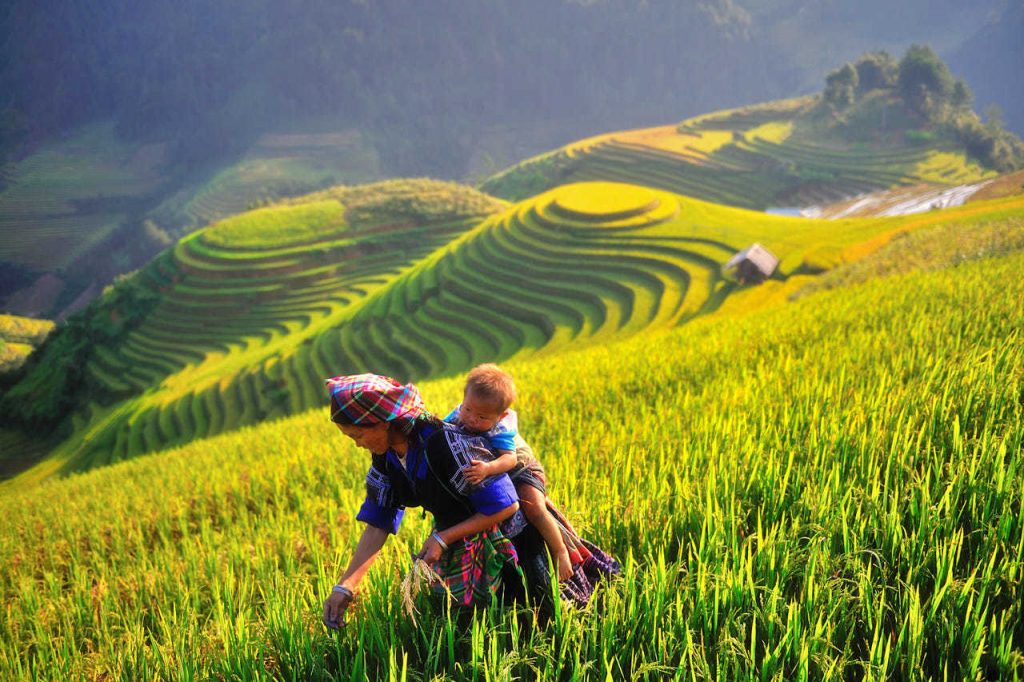
Mu Cang Chai
Mai Chau: The Easy Valley with a Warm Welcome
Mai Chau sits in Hoa Binh province, about 140 km southwest of Hanoi — close enough for a weekend trip, far enough to feel like a proper escape. The valley here is wide and flat, ringed by limestone hills, and the pace is noticeably slower than the capital.
What Makes Mai Chau Special
Mai Chau is home primarily to the White Thai ethnic minority group, and their culture shapes everything about the visitor experience here. Meals are eaten sitting on the floor of a traditional stilt house. Local rice wine comes out after dinner. The woven textiles — made on hand looms using natural dyes — are among the best craft souvenirs in northern Vietnam.
The terrain is gentler than either Mu Cang Chai or Pu Luong. Cycling through the valley on flat roads between villages is one of the most enjoyable activities, and it requires no particular fitness level. Day hikes to nearby hilltop viewpoints are easy and well-marked.
For families travelling with children, or for visitors who want comfort and ease alongside cultural experience, Mai Chau is the best entry point of the three. There is a good range of accommodation, reliable food options, and nothing that feels logistically difficult.
Best Time to Visit Mai Chau
Mai Chau is a year-round destination, but the best conditions fall between:
- October to April: Cooler and drier. The valley is at its most comfortable for cycling and walking. Rice is planted in spring, harvested in early autumn.
- Avoid peak Vietnamese holidays: The valley gets crowded during Tet (Lunar New Year) and national holidays. If you are visiting from overseas, the timing rarely overlaps — but worth checking.
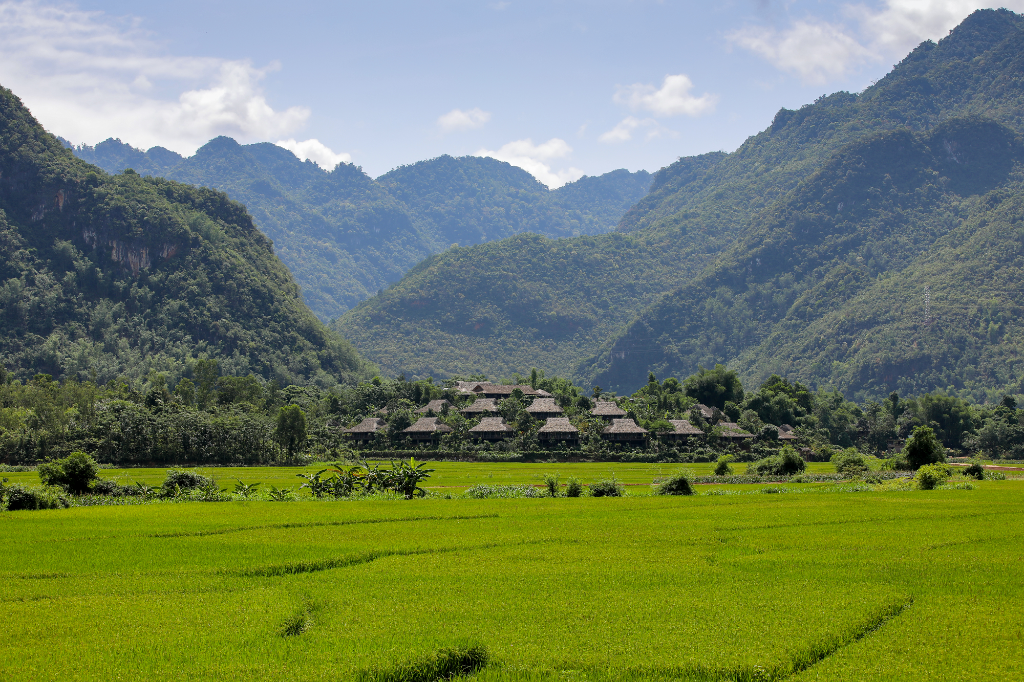
Mai Chau
Pu Luong: The Hidden One That Ties It All Together
Pu Luong Nature Reserve covers more than 17,000 hectares in Thanh Hoa province, sitting between Mai Chau and the coast. It is the least well-known of the three destinations outside Vietnam, which is precisely what makes it worth including in this combo.
What Makes Pu Luong Special
Where Mu Cang Chai impresses with scale and Mai Chau impresses with accessibility, Pu Luong impresses with depth. The reserve contains rice terraces, bamboo forest, limestone karst, traditional Thai and Muong villages, waterfalls, and some of the best trekking trails in the northwest — all in a single valley that most visitors have entirely to themselves.
The trails here are genuinely varied. A half-day morning walk through paddy fields and villages gives you a ground-level look at daily life that you cannot get from a viewpoint or a road. The full-day cliff viewpoint trek climbs through jungle to a limestone ridge with panoramic views across the entire valley. Off-road jungle bike rides follow trails that see almost no other tourists.
Group sizes are kept small — typically no more than 9 guests per guided trip — which means the experience feels personal rather than managed.
There is also something about the sound of Pu Luong that is hard to describe until you have been there. The water running through the irrigation channels, the birds in the forest canopy, the absence of traffic noise — it creates a kind of quiet that most travellers are not used to and find they do not want to leave.
Best Time to Visit Pu Luong
Pu Luong’s seasons are distinct and each one offers something different:
October and November are the best months overall. Temperatures are a comfortable 25°C, the sky stays blue every day, and the terraces are golden with the harvest. If you are visiting for the first time and want the full visual impact, time your Pu Luong stay in this window.
March and April bring warmer days around 25°C, though temperatures can dip to 15°C unexpectedly. The terraces fill with water for the new planting cycle and look spectacular at dawn. Weather is changeable — sun one day, mist the next — but a light raincoat handles everything.
May through September, the days are hot and mostly sunny, with June being the warmest due to higher humidity. Mountain storms in the evenings are a genuine highlight — powerful, spectacular, best watched from the balcony of your bungalow with something cold to drink. The mountain altitude keeps nights noticeably cooler than the cities below.
December through March is the quiet season. Nights are cold, mornings often misty. When the sun appears, the reserve is beautiful and almost entirely empty. Good for travellers who prefer solitude to scenery.
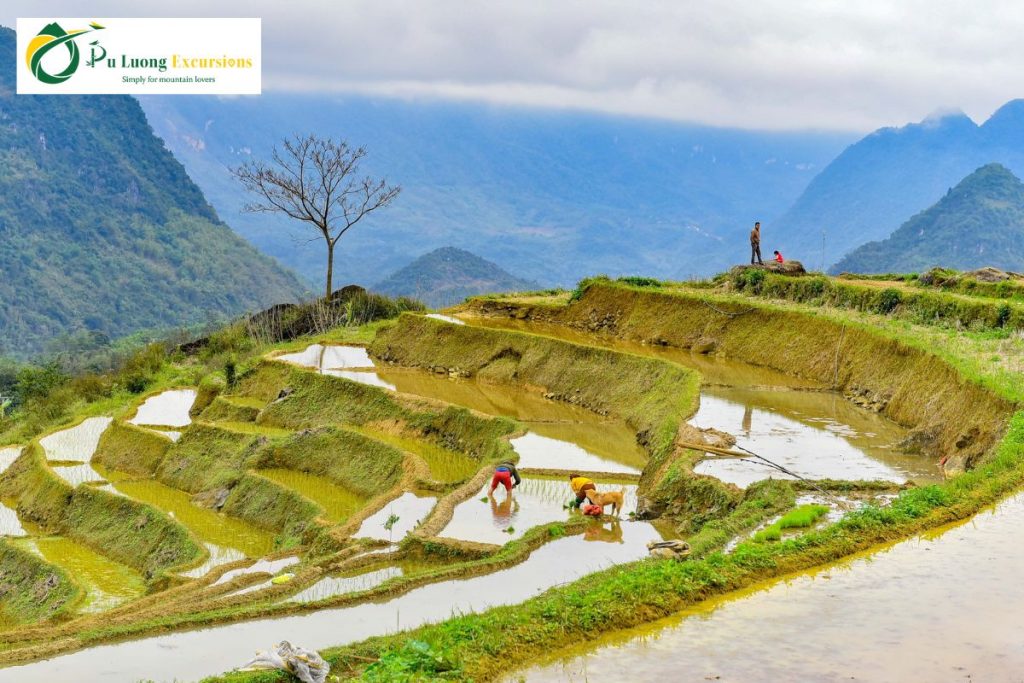
Pu Luong
See more: Hanoi to Ha Giang to Pu Luong Circuit Adventure
How the Three Destinations Compare Side by Side
Here is a quick honest comparison to help you decide how much time to give each place:
| Mu Cang Chai | Mai Chau | Pu Luong | |
| Distance from Hanoi | ~280 km (5–6 hrs) | ~140 km (3 hrs) | ~160 km (3.5–4 hrs) |
| Landscape style | Steep dramatic terraces | Flat open valley | Terraces + jungle + forest |
| Trekking quality | Moderate | Easy | Moderate to challenging |
| Crowd level | High in peak season | High year-round | Low |
| Cultural immersion | Hmong villages | White Thai homestays | Thai and Muong villages |
| Best for | Photography, big scenery | Families, first-timers | Trekkers, quiet seekers |
| Recommended stay | 2–3 nights | 1–2 nights | 2–3 nights |
No single destination is objectively better. They complement each other. The ideal combo trip visits all three and lets each one do what it does best.
Suggested Itinerary for the Mu Cang Chai–Pu Luong–Mai Chau Combo
This 9-day itinerary covers all three destinations with enough time at each to actually settle in. You can compress it to 7 days by trimming one night at either Mu Cang Chai or Pu Luong.
Day 1 — Hanoi
Arrive, check in, eat well. The Old Quarter has some of the best street food in Vietnam and a good place to adjust before the highlands begin.
Days 2–4 — Mu Cang Chai (2 nights)
Take an early morning bus or private car from Hanoi to Mu Cang Chai — around 5–6 hours depending on traffic. Arrive in the afternoon and head straight to the La Pan Tan viewpoint for your first look at the terraces. Day 3: full day exploring the terrace areas and local villages. Morning light is worth waking up for. Day 4: slow morning, then travel south.
Day 5 — Travel day: Mu Cang Chai to Pu Luong
This leg requires either a private transfer or a combination of local buses via Hoa Binh. A private car transfer (around 4–5 hours) is the most comfortable option and keeps the journey manageable. Arrive in Pu Luong by afternoon and check into your eco-lodge or homestay.
Days 5–7 — Pu Luong Nature Reserve (2–3 nights)
Day 6: morning village walk through Ban Hieu or Thanh Xuan. Afternoon: waterfall walk and rest. Day 7: full-day cliff viewpoint trek or off-road jungle bike ride, depending on energy and preference. Day 8 morning: a final sunrise over the terraces from your accommodation, then transfer to Mai Chau.
Days 8–9 — Mai Chau (1–2 nights)
Mai Chau is only about 40 km from Pu Luong — an easy 1 to 1.5-hour drive. Check into a stilt house homestay, rent bicycles and spend the afternoon cycling through the valley. Evening: dinner with your host family. Day 9: morning market or textile workshop visit before returning to Hanoi (around 3 hours).
This route runs northwest to southeast, which means you never backtrack. Hanoi → Mu Cang Chai → Pu Luong → Mai Chau → Hanoi is a genuine loop.
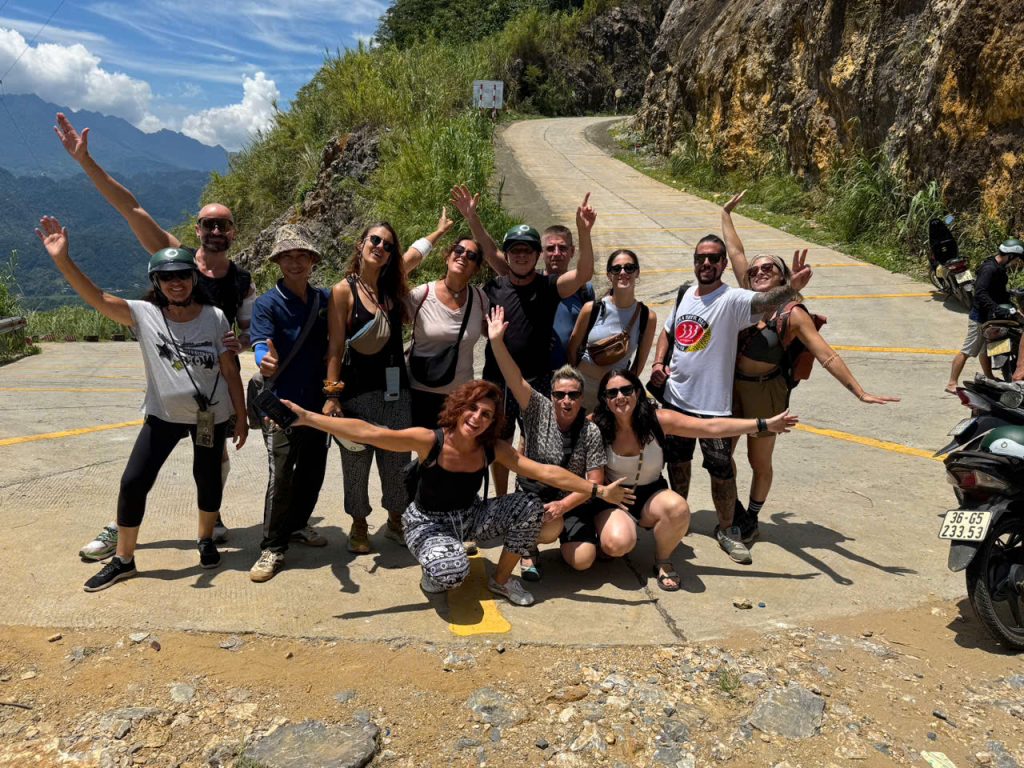
Suggested Itinerary for the Mu Cang Chai–Pu Luong–Mai Chau Combo
Explore the Pu Luong Leg with Pu Luong Excursions
For the Pu Luong section of this combo trip, Pu Luong Excursions handles everything — so you can arrive and focus entirely on the experience rather than the logistics.
Pu Luong Excursions is a licensed tour operator based inside Pu Luong Nature Reserve. The team specialises in northern Vietnam’s finest countryside tours, combining ethnic cultural encounters, trekking, jungle rides and eco-friendly accommodation in a way that benefits the local communities and keeps the environment intact.
Services available for the Pu Luong leg of your combo trip include:
- Guided trekking: Half-day paddy walks, full-day cliff viewpoint treks, and multi-day routes through the reserve with local guides who know every trail
- Jungle bike and motorbike tours: Off-road routes through secondary forest and along paddy trails, covering terrain that is not reachable on foot in a day
- Accommodation booking: A curated selection of eco-lodge bungalows with valley views and traditional village homestays — from comfort-focused to fully immersive
- Transfers from Hanoi or Mai Chau: Door-to-door transfers that connect seamlessly with the other legs of your circuit
- Package tours: 2D1N and 3D2N packages from Hanoi that include transfer, accommodation and guided activities, ideal for travellers who want the Pu Luong experience without planning every detail
Group sizes are kept small — maximum 9 guests — ensuring a personal experience that larger operators cannot offer.
The Mu Cang Chai, Pu Luong and Mai Chau combo is not the easiest trip to organise — it involves multiple legs and some creative logistics between destinations. But it is one of the most rewarding routes in northern Vietnam for exactly that reason.
You see three versions of highland Vietnam that feel genuinely different from each other. Mu Cang Chai gives you the big visual moment. Mai Chau gives you the cultural warmth. Pu Luong gives you the quiet that makes everything else feel possible to process.
If you are planning this route and want local support for the Pu Luong section, reach out to Pu Luong Excursions. The team will help you connect the pieces — transfers, accommodation, guided activities — and make sure the middle leg of your combo trip is the one you remember longest.