


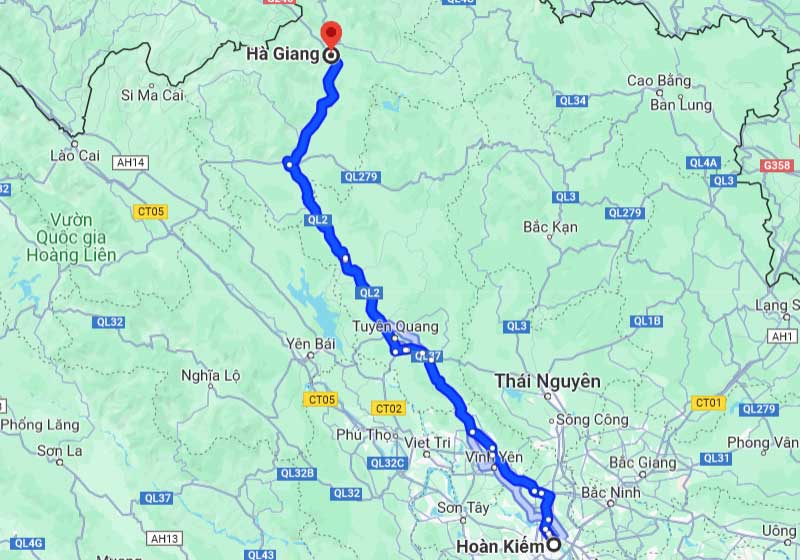
Most travellers who visit northern Vietnam pick one destination and go deep. But there is a loop that connects three very different worlds — Hanoi’s energy, Ha Giang’s dramatic karst mountains, and Pu Luong’s quiet rice valleys — and it is one of the best road trips in Southeast Asia.
The Hanoi to Ha Giang to Pu Luong circuit gives you the full range of what northern Vietnam has to offer: raw mountain scenery, ethnic minority villages, working rice terraces, jungle trails and local food — all without doubling back on the same road. You start and end near Hanoi, but everything in between feels a long way from the tourist trail.
This guide covers the full circuit: how to travel each leg, what to do along the way, and how to fit it all into 7 to 10 days.
Why Do This Circuit Instead of Just One Destination?
Ha Giang and Pu Luong are both popular in their own right — but most travellers visit one or the other, not both. That is a missed opportunity.
Ha Giang sits in Vietnam’s far north, bordering China. It is famous for the Dong Van Karst Plateau — a UNESCO Global Geopark — and the Ma Pi Leng Pass, a jaw-dropping stretch of mountain road that regularly appears on lists of the world’s most scenic drives. The landscape here is dramatic and rugged, built from limestone peaks that rise sharply above deep river valleys.
Pu Luong sits further south in Thanh Hoa province, and the contrast could not be more striking. Where Ha Giang is angular and bold, Pu Luong is soft and layered — terraced rice paddies, bamboo forests, streams running through the valley floor, and small villages that move at their own pace. It is the kind of place that slows you down without asking you to.
Combining them into a single loop means you get the dramatic mountain scenery of Ha Giang and the lush, cultural immersion of Pu Luong — with Hanoi as your starting and ending point. You are not repeating landscapes; you are building a journey that changes as you travel.
Hanoi to Ha Giang: Where the Circuit Begins
Getting from Hanoi to Ha Giang
Ha Giang is roughly 300 km north of Hanoi. Most travellers get there one of two ways:
- Overnight sleeper bus: The most popular option for budget travellers. Several operators run nightly buses from My Dinh Bus Station in Hanoi, arriving in Ha Giang city early morning. Journey time is around 6–7 hours.
- Private car or minivan: More comfortable and flexible. Takes around 5–6 hours depending on traffic leaving Hanoi. Good option if you are travelling in a small group.
- Self-drive motorbike: For experienced riders who want full freedom. The road north from Hanoi to Ha Giang is well-maintained and straightforward before the mountain roads begin.
Ha Giang city itself is a transit point rather than a destination. Most travellers pick up a motorbike here (rental or self-drive) and head straight into the loop.
What to Do in Ha Giang
The Ha Giang Loop is the main draw — a circular mountain road of roughly 350 km that takes most travellers 3 to 4 days to complete comfortably. Key stops include:
- Quan Ba (Heaven’s Gate): The first major viewpoint after leaving Ha Giang city. Two round hills rise out of the valley — locals call them the Fairy Bosom — and the view from the pass above them is a good preview of what is ahead.
- Dong Van Old Quarter: A small town with French colonial architecture, surrounded by karst peaks. The Saturday market here brings in Hmong, Dao and Tay traders from surrounding villages.
- Ma Pi Leng Pass: The highest and most dramatic section of the loop. The road hugs a cliff face above the Nho Que River, with views down into one of Vietnam’s deepest gorges. This is the moment most Ha Giang visitors remember longest.
- Meo Vac: A small town at the far end of the loop, known for its Sunday market and the gorge views from nearby viewpoints.
- Lung Cu Flag Tower: Vietnam’s northernmost point, perched on a hilltop with views into China. Worth the climb up for the sense of being at the very edge of the country.
Allow at least 3 nights in Ha Giang to cover the loop without rushing. Four nights gives you time to stop, walk, and actually talk to people along the way.
Hanoi to Ha Giang
Ha Giang to Pu Luong: Connecting Two Hidden Gems
Route Options and Travel Time
This is the leg most travellers have the least information about, and it is the one that makes the circuit work as a loop rather than just a return trip to Hanoi.
There is no single direct bus route from Ha Giang to Pu Luong. The most practical options are:
Option 1 — Via Hanoi (most common): Return from Ha Giang to Hanoi by sleeper bus overnight, then take a morning transfer to Pu Luong the next day. Total travel time is around 12–14 hours across two days, but you get a night in Hanoi to rest, repack and eat well before the second leg.
Option 2 — Direct private transfer: Some tour operators can arrange a direct private car from Ha Giang to Pu Luong, travelling south through Hoa Binh province. This takes around 7–9 hours depending on the specific route and is significantly more expensive, but keeps the journey continuous and avoids doubling back to Hanoi.
Option 3 — Self-drive motorbike: For riders doing the whole circuit on two wheels, a southward route through Son La and Hoa Binh is possible. This is a 2-day ride through beautiful but less-travelled mountain roads. Not recommended without strong navigation skills and experience on Vietnamese mountain roads.
For most travellers, Option 1 — overnight bus back to Hanoi, one night’s rest, then morning transfer to Pu Luong — is the practical choice. It also gives you a chance to reconnect with Hanoi briefly before the final leg.
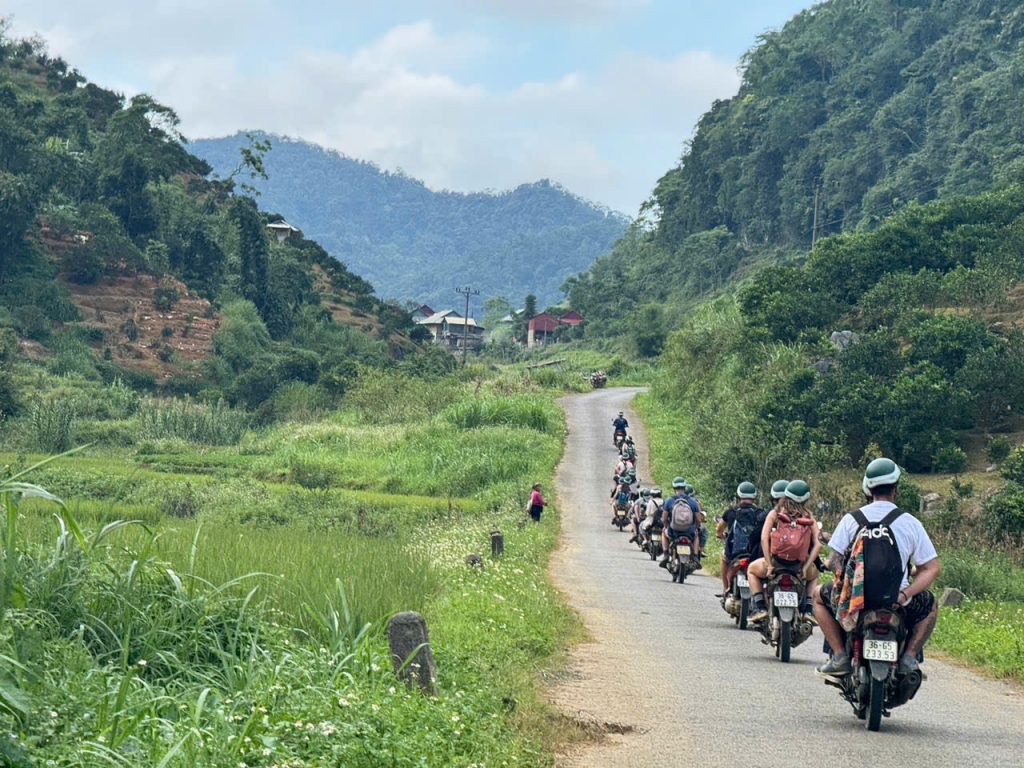
Ha Giang to Pu Luong
Pu Luong Nature Reserve: The Perfect End to the Circuit
Arriving in Pu Luong after Ha Giang feels like stepping from one world into another. The jagged limestone drama of the north gives way to something quieter and greener — a valley that moves slowly and rewards patience.
Pu Luong Nature Reserve covers more than 17,000 hectares of subtropical forest, rice terraces and ethnic minority villages in Thanh Hoa province, about 160 km southwest of Hanoi. The communities here — primarily Thai and Muong people — have farmed this valley for generations, and the landscape reflects that long relationship between people and land.
What to Do in Pu Luong
Pu Luong is not a destination for big sightseeing checklists. It rewards slow travel — walking, eating, sitting, and looking. That said, there is plenty to do:
- Trekking: The reserve has a range of trail options, from easy half-day walks through paddy fields and villages to full-day treks up to cliff viewpoints above the valley. The cliff viewpoint trek is the signature hike — a moderate climb through jungle that opens to panoramic views of the entire valley.
- Village walks: The villages of Ban Hieu, Thanh Xuan and Kho Muong are easy to reach on foot and offer a real look at daily life — stilts houses, vegetable gardens, women weaving fabric, water buffalo in the fields.
- Jungle bike rides: Off-road cycling through secondary forest and along narrow paddy trails is one of the most enjoyable ways to cover distance in the reserve without rushing.
- Waterfall visits: Several waterfalls are reachable by short walks from the main trail network. After Ha Giang’s dry karst landscape, the water here feels especially welcome.
- Doing very little: This is underrated. A veranda, a view of the terraces, a pot of tea, and a book is a legitimate way to spend a morning in Pu Luong — and many travellers say it is the part of the circuit they remember most fondly.
Best Time to Visit Pu Luong on This Circuit
The timing of your circuit affects what you see in Pu Luong more than anywhere else on the loop, because the rice terraces change dramatically with the seasons.
October and November are the best months. Temperatures are stable around 25°C, the sky is clear every day, and the terraces are in full harvest gold. If your travel dates are flexible, plan the circuit to land in Pu Luong during this window.
March and April offer a different kind of beauty — the terraces fill with water for the new planting season and become reflective at dawn. Temperatures are around 25°C in the day, sometimes dropping to 15°C. Weather can change quickly, so pack a light rain layer.
May through September, days are hot and mostly sunny. June is the warmest month with higher humidity. Evenings can bring spectacular mountain storms that are genuinely impressive to watch from the balcony of your bungalow — think natural lightning show above the valley. The mountain altitude keeps nights cooler than the cities.
December through March is cooler, particularly at night. Fog is common in the mornings and light rain is possible. When the sun comes out, the reserve is beautifully quiet and the trails are less busy than in peak season.
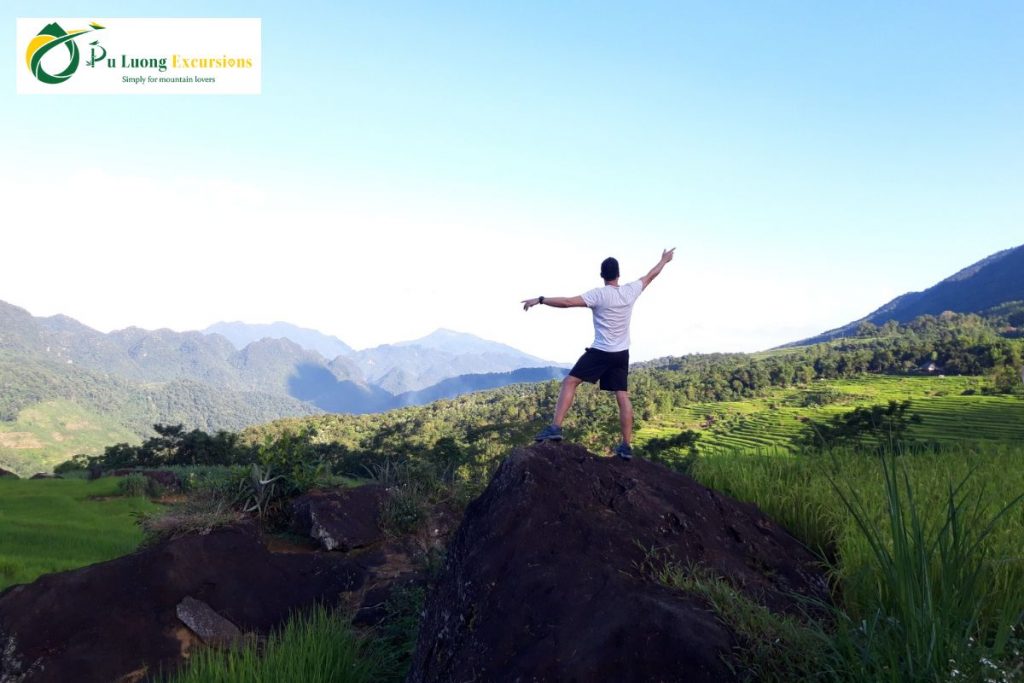
Pu Luong Nature Reserve
See more: Pu Luong Mountain Meditation Retreat
Suggested Itinerary: 7 to 10 Days
Here is a practical framework for the Hanoi to Ha Giang to Pu Luong circuit. Adjust based on your pace and interests.
Day 1 — Hanoi
Arrive in Hanoi. Rest, explore the Old Quarter, eat well. Take the overnight bus to Ha Giang in the evening.
Days 2–5 — Ha Giang Loop (3–4 nights)
Pick up your motorbike in Ha Giang city and begin the loop. Suggested order: Ha Giang → Quan Ba → Yen Minh → Dong Van → Meo Vac → return to Ha Giang. Spend time at Ma Pi Leng Pass, Dong Van market and Lung Cu if timing allows.
Day 6 — Travel day: Ha Giang back to Hanoi
Return by overnight sleeper bus, arriving in Hanoi early morning.
Day 7 — Hanoi rest day
One night in Hanoi. Shower, repack, eat a proper meal. This buffer day matters — it makes the second leg of the circuit feel like a fresh start rather than a continuation of the same exhausting journey.
Days 8–10 — Pu Luong Nature Reserve (2–3 nights)
Morning transfer from Hanoi to Pu Luong (approximately 3.5–4 hours). Check into your eco-lodge or homestay, and immediately slow down. Use your days for trekking, village walks, and jungle rides. On your final morning, transfer back to Hanoi for onward travel.
Three nights in Pu Luong is the minimum that does the place justice. Two nights works if your schedule is tight, but you will leave wishing you had stayed longer.
Plan Your Hanoi–Ha Giang–Pu Luong Circuit with Pu Luong Excursions
If you want to do the Pu Luong leg of this circuit properly — with a knowledgeable local guide, good accommodation and no logistics headaches — Pu Luong Excursions is the right partner.
Pu Luong Excursions is a licensed tour operator based in Pu Luong Nature Reserve, specialising in northern Vietnam’s finest countryside tours. The team offers trekking experiences, jungle rides, cultural village walks, and a full range of accommodation options — from traditional village homestays to eco-lodge bungalows with valley views.
Whether you want a guided day trek to the cliff viewpoint, a multi-day package that includes accommodation and transfers from Hanoi, or just advice on the best trails for your fitness level and interests — the team knows this reserve better than anyone.
Tours and packages offered by Pu Luong Excursions include:
- Half-day and full-day guided treks through the reserve and up to the cliff viewpoint
- Jungle bike and motorbike tours on off-road trails through secondary forest
- 2D1N and 3D2N package tours from Hanoi, including transfer, accommodation and guided activities
- Longer northern Vietnam loop tours combining Pu Luong with Ninh Binh, Ha Long Bay or other destinations
- Eco-lodge and homestay bookings at carefully selected properties inside the reserve
Pu Luong Excursions keeps group sizes small — typically a maximum of 9 guests per trip — to ensure a personal experience and to minimise impact on the communities and environment you are visiting.
The Hanoi to Ha Giang to Pu Luong circuit is one of the most complete road trips northern Vietnam has to offer. You get two landscapes that could not be more different — the raw drama of the far north and the quiet depth of Pu Luong’s valley — connected by roads that are interesting to travel in their own right.
Ha Giang will take your breath away. Pu Luong will give it back slowly, over a few quiet mornings with a view of the terraces and nothing in particular to do.
If you are planning the Pu Luong end of this circuit and want local expertise, get in touch with the team at Pu Luong Excursions. They will help you figure out the right itinerary, the right accommodation and the right trails for what you are looking for — and they have been doing it long enough to know what makes the difference between a good trip and one you never forget.