


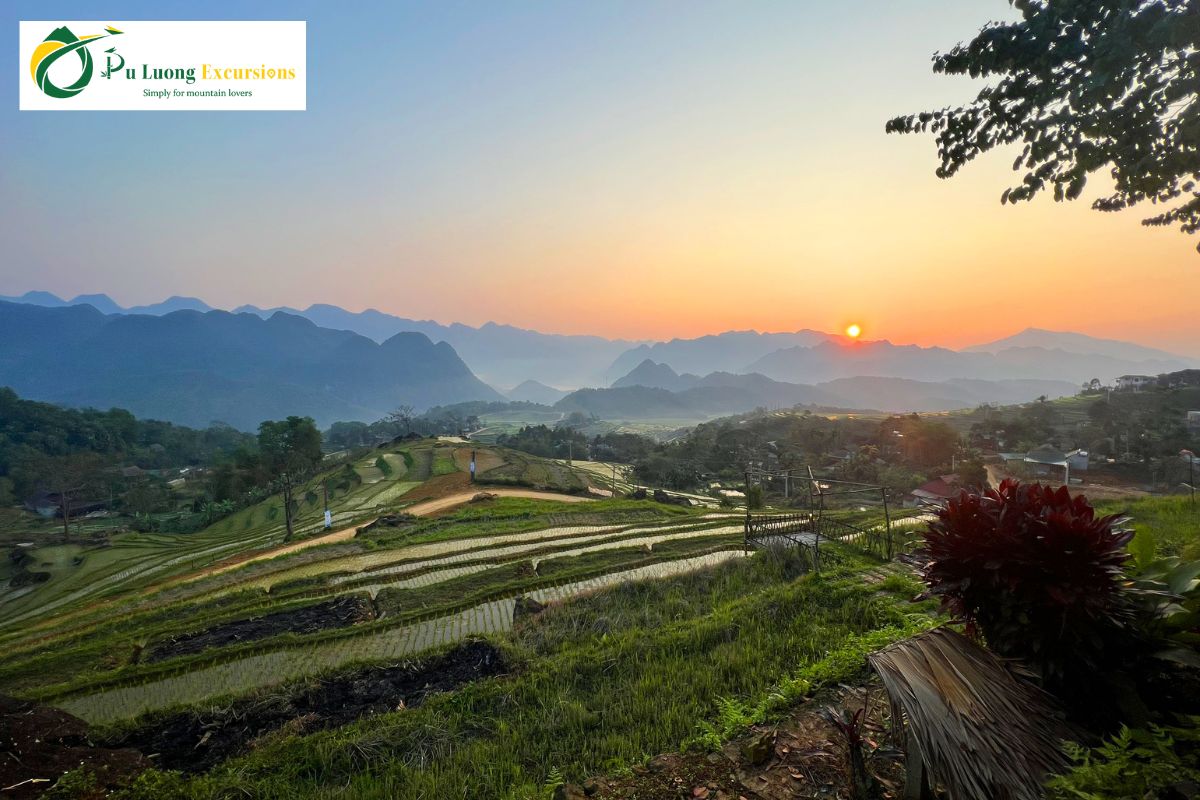
Burnout now affects an estimated 77% of professionals globally — and a growing number of them are skipping the spa weekend and heading instead to somewhere that demands nothing of them except to be present. The Pu Luong mountain meditation retreat experience is quietly becoming one of Southeast Asia’s most compelling answers to that need: a genuine wilderness immersion inside a protected nature reserve in northern Vietnam, where the mountains create natural silence, the rhythm of rice farming replaces the ping of notifications, and restoration happens without effort.
This isn’t a structured retreat centre with a programme booklet and a bell schedule. Pu Luong offers something rarer — an environment so inherently restorative that the retreat is the place itself. Here is everything you need to know to plan yours.
Why Pu Luong Is the Perfect Setting for a Meditation Retreat
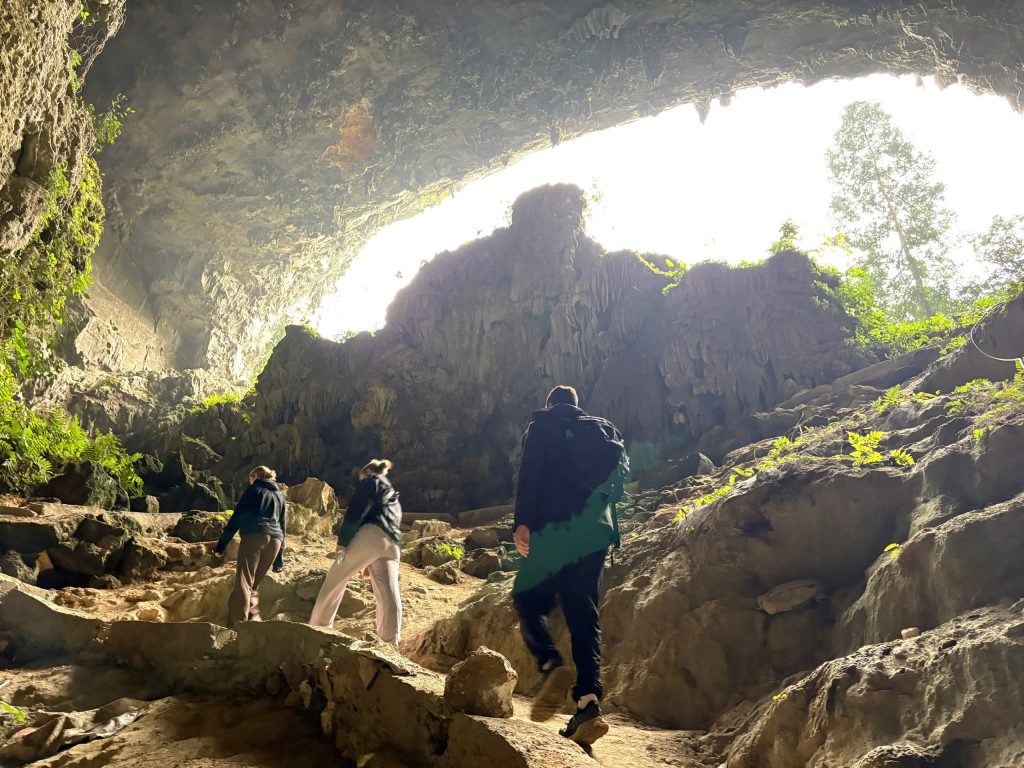
Pu Luong Nature Reserve covers more than 17,000 hectares of subtropical mountain forest in Thanh Hoa province, 160 km southwest of Hanoi. It is home to limestone karst ridges, terraced rice paddies managed by Thai and Muong communities for centuries, dense bamboo forest, and waterfalls that appear without warning around trail bends. There are no casinos, no nightlife strips, no souvenir markets. The loudest sound most mornings is birdsong and the movement of water through irrigation channels.
The science of nature and stress recovery
Research in environmental psychology consistently shows that immersion in natural settings reduces cortisol levels, lowers heart rate, and improves attention restoration — the ability of the mind to recover from directed cognitive effort. A 2019 study published in Frontiers in Psychology found that just 20–30 minutes spent in nature produced measurable reductions in stress biomarkers. In an environment like Pu Luong, where that exposure is sustained over days rather than minutes, the cumulative effect on mental clarity and emotional regulation is significant.
The mountain altitude (ranging from 400 to 1,000 metres across the reserve) adds another dimension: cooler air, lower humidity compared to Vietnam’s coastal cities, and an atmospheric quality that many visitors describe as physically lighter. First-time visitors often report sleeping more deeply within the first night than they have in months.
What sets Pu Luong apart from Bali or Chiang Mai
The established wellness retreat circuits in Bali and northern Thailand are well-developed for good reason — but they carry the weight of their own popularity. Ubud’s meditation centres now operate alongside traffic jams and influencer-dense rice terrace cafés. The retreat experience has, for many travellers, become indistinguishable from a curated content shoot.
Pu Luong has not reached that point. Visitor numbers are genuinely low, development within the reserve is controlled, and the local communities whose villages you walk through are living the rhythms they have always lived. The stillness you find here is not manufactured for tourists — it simply exists. That authenticity changes the quality of the inner experience in ways that are difficult to articulate but easy to feel.
Why Pu Luong Is the Perfect Setting for a Meditation Retrea
What a Pu Luong Mountain Meditation Retreat Actually Looks Like
A Pu Luong meditation retreat is not a fixed product with a brochure — it is a practice you build around the landscape. The environment provides the conditions; you bring the intention. That said, the shape of days here naturally supports contemplative depth.
A typical day in the mountains
Most visitors staying in the reserve for wellness purposes settle into a rhythm that looks something like this:
- 5:30–6:30 am: Wake before sunrise. Morning mist still fills the valley. Sit on the veranda of your bungalow or stilt house with tea and watch the light arrive. This hour alone is worth the journey.
- 6:30–8:00 am: Walk. The paddy trails that thread between villages and rice terraces are flat, unhurried, and surrounded by the sound of water. Many visitors use this as a moving meditation — breath synchronised with footfall, attention on the landscape rather than the mind.
- 8:00–9:00 am: Breakfast, typically local: sticky rice, steamed vegetables, fresh herbs, eggs from the village. Simple food eaten slowly.
- 9:00 am–12:00 pm: Unstructured time. Read, write, sit, or join a guided trek into the forest. The absence of a schedule is the point.
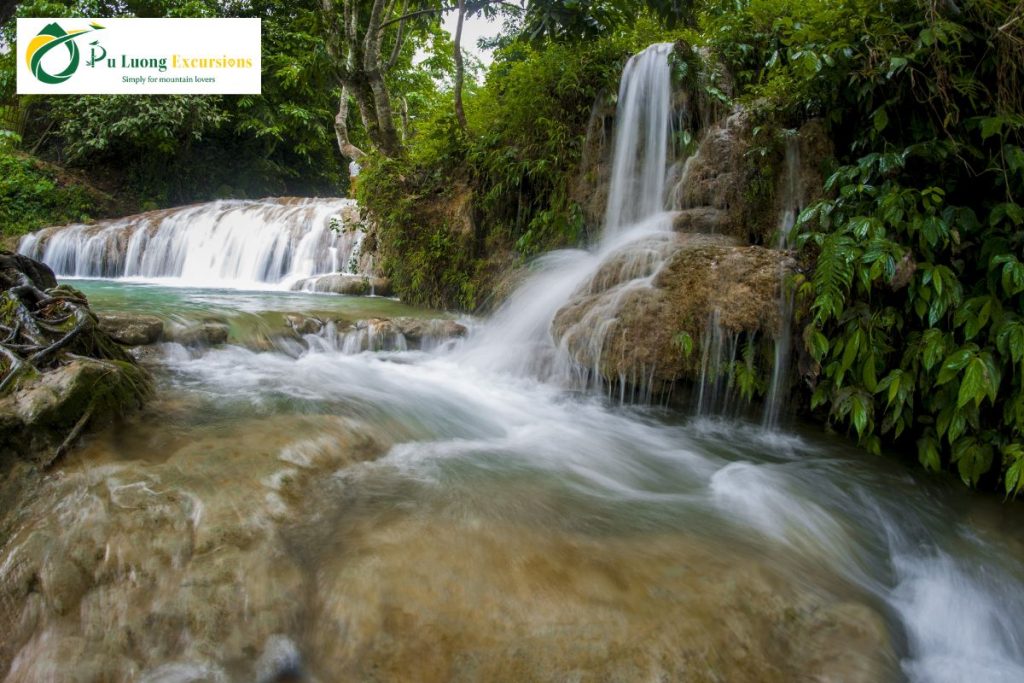
- Afternoon: Rest during the warmest hours. A swim in the stream near Ban Hieu village if the season allows. Late afternoon walks as the light goes golden on the terraces.
- Evening: Communal dinner, often shared with local hosts. Early sleep — the darkness in Pu Luong is complete, and the body follows it willingly.
Meditation styles suited to the Pu Luong environment
The natural environment here lends itself to specific practices more than others:
Vipassana-style sitting works exceptionally well in the mornings, when the air is cool and sound is minimal. A cushion on a veranda facing the valley is as good a meditation seat as any formal centre.
Walking meditation is perhaps the most natural fit — the trail network around the reserve provides the ideal surface for slow, conscious movement through a landscape that rewards attention.
Breathwork and pranayama benefit from the mountain air quality and the altitude. Many practitioners report a heightened sensitivity to breath in this environment.
Journalling and contemplative writing find natural fuel in the pace of life here. When there is nothing to do and nowhere to be, what surfaces onto the page is often surprising.
What a Pu Luong Mountain Meditation Retreat Actually Looks Like
See more: Pu Luong Cliff Viewpoint Trek: The Complete Hiker’s Guide
The Healing Power of the Pu Luong Mountain Landscape
Mountains have served as retreat destinations across spiritual traditions for millennia — from the hermits of the Himalayas to the forest monasteries of Southeast Asian Buddhism. There is something in the verticality of mountain landscapes that naturally orients human attention upward and inward simultaneously. Pu Luong carries that quality.
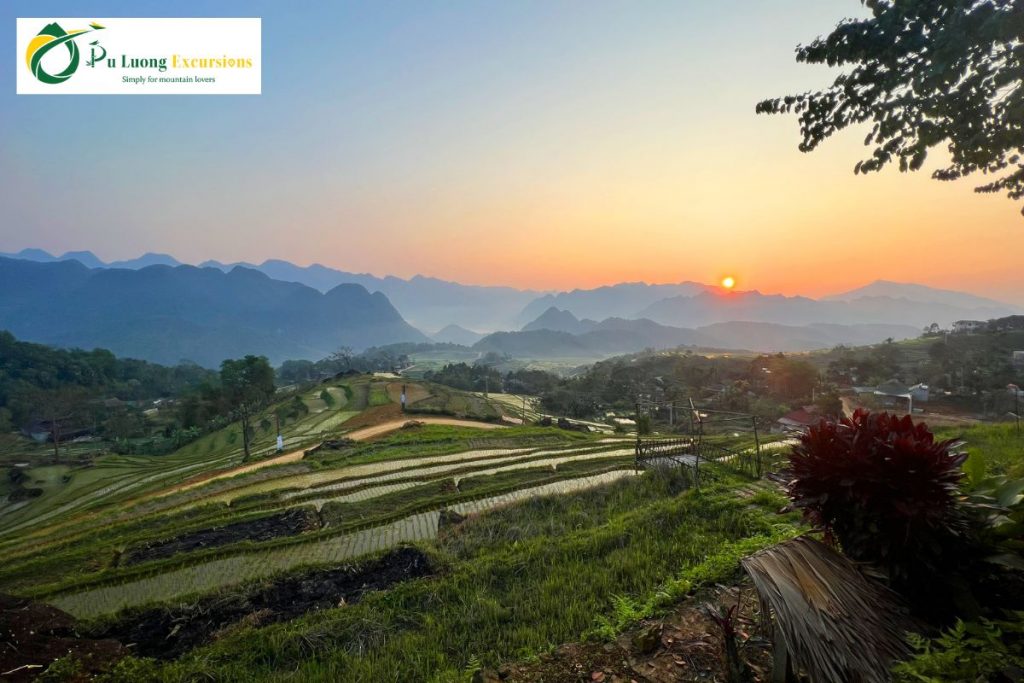
The rice terraces add a temporal dimension that is uniquely grounding. Unlike a beach or a forest, which remain visually static across seasons, the terraces are in constant transformation: flooded and reflective in early spring, brilliantly green through summer, gold and amber during harvest in October and November, bare and resting through winter. Spending time here connects the visitor to cycles larger than their own — a perspective that many find more valuable than any structured programme.
The local communities — primarily Thai and Muong ethnic minority groups — live with a relationship to land, time, and community that stands in quiet contrast to the urban environments most wellness travellers are escaping. This contrast, experienced through proximity rather than observation, tends to provoke genuine reflection about pace, priority, and what daily life could look like differently.
The Healing Power of the Pu Luong Mountain Landscape
How to Plan Your Pu Luong Wellness Retreat: Practical Guide
Best time to visit for a meditation retreat
Each season in Pu Luong carries a distinct atmosphere — and each one supports a different quality of inner experience.
October and November are the most compelling months for a meditation retreat. The sky is reliably blue every single day, temperatures hold steady around 25°C, and the rice terraces shift into their harvest gold. The landscape is at its most visually alive, yet the air carries a clarity and stillness that makes extended sitting practice feel almost effortless. If you have the flexibility to choose, this is the window to prioritise.
March and April offer a gentler, more unpredictable energy. Daytime temperatures reach around 25°C — warm enough for long morning walks between villages — though cooler dips to 15°C can arrive without warning. The weather changes frequently: you might get a week of clear skies followed by several days of soft mist and rain. For retreat purposes, this variability is not a problem — it is part of the practice. Learning to sit with what the mountain gives you, sun or fog, is its own form of contemplative work. A light raincoat handles everything else.
December through March brings cold nights and the possibility of morning fog and light rain that softens the landscape into something more austere and inward. Sunny days do appear regularly, and when they do, long treks through the reserve in cool, crisp air are deeply restorative. This is the season for those who find sparse, quiet landscapes more conducive to stillness than vibrant ones.
May through September, the days are predominantly sunny and warm — particularly June, when humidity peaks. What makes this season unexpectedly suited to retreat is the evenings: spectacular mountain storms light up the sky at night, best watched from the balcony of your bungalow or the terrace of your lodge. There is something genuinely meditative about sitting with a storm you cannot control, arriving and passing on its own schedule. The mountain altitude ensures nights remain cooler, making sleep deep and the early mornings — before the heat builds — the ideal time for sitting practice or slow walks through the paddies.
Where to stay
Accommodation options within the reserve range from traditional wooden homestays inside ethnic minority villages to eco-lodge bungalows perched above the valley:
- Eco-lodge bungalows (such as those at Puluong Natura or Pu Luong Eco Garden): Private, elevated, with unobstructed valley views. Best for solo retreaters or couples who want space and stillness.
- Village homestays: Deeper immersion in local life. You eat with the family, sleep in a traditional stilt house, and wake to the sounds of village morning. Best for those seeking cultural connection alongside their retreat.
- Boutique resort options (such as Pu Luong EcoLuxe): More structured comfort with spa facilities, suitable for those who want a softer landing into the retreat experience.
For a meditation-focused stay, minimum 3 nights is recommended — the first day tends to be decompression, the second is when the mind genuinely quietens, and the depth of the experience comes in the days that follow.
Who Should Consider a Pu Luong Mountain Meditation Retreat?
Not every wellness destination fits every seeker. Pu Luong is particularly well-suited for:
Burnout recovery: Professionals who have pushed past depletion and need environments that ask nothing of them. The absence of stimulation here is the medicine.
Creative recharge: Writers, designers, and thinkers who find that their best ideas come when they stop trying to generate them. The unhurried rhythm of the reserve creates the conditions for creative insight to surface naturally.
Transition periods: People moving between life chapters — leaving a job, ending a relationship, entering a new decade — who need space to sit with change rather than rush through it.
Experienced meditators: Those with an established practice who want to deepen it in an environment that naturally supports long sits, walking practice, and extended silence.
First-time retreaters: Those who are drawn to the idea of a retreat but find formal retreat centres intimidating. Pu Luong offers the benefits of retreat without the rigidity of rules — you can ease into stillness at your own pace.
Pu Luong is less suited for travellers seeking structured programmes with certified teachers, group retreat dynamics, or specific lineage-based practice (Vipassana, Zen, etc.). For those needs, dedicated retreat centres elsewhere are a better fit. What Pu Luong offers instead is rarer: an environment that does the work of a retreat without any of the architecture of one.
A Pu Luong mountain meditation retreat does not require you to sign up for anything, follow any rules, or perform wellness for an audience. It requires only that you arrive, put down what you are carrying, and let the mountains do what mountains have always done for people who come to them with open hands.
The terraces will shift colour. The mist will lift and return. The village will go about its ancient rhythms completely indifferent to your inner work — which is precisely the point. In that indifference is a kind of freedom that is very hard to find anywhere else.
If you are ready to experience it, start by exploring guided retreat itineraries and accommodation options in Pu Luong — and give yourself more days than you think you need.