


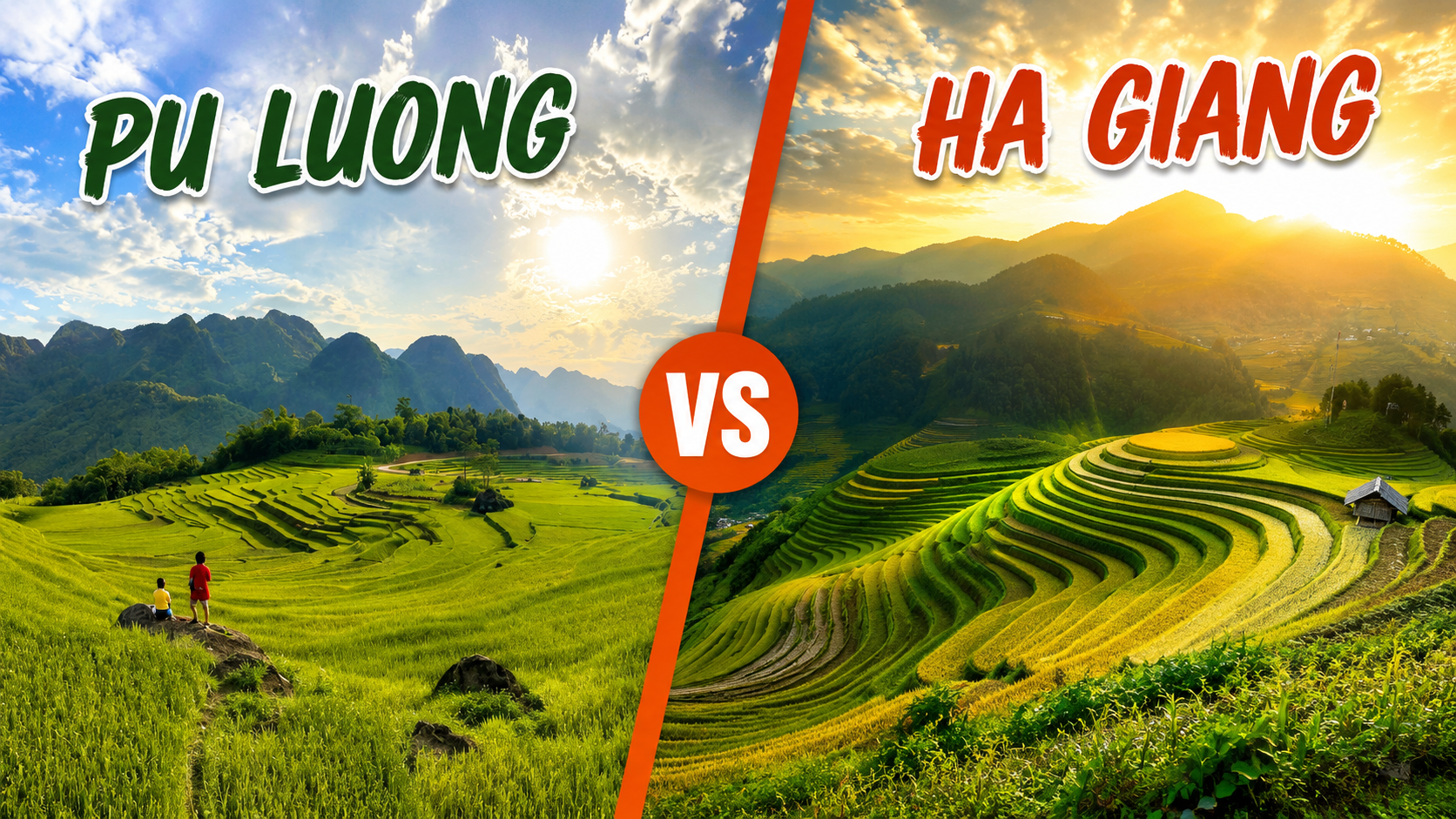
When travelers think of Northern Vietnam, visions of dramatic limestone peaks, endless green valleys, and winding roads wrapped in mist instantly come to mind. It is a region that begs to be explored on foot, away from the noise of modern cities. However, choosing exactly where to lace up your hiking boots can be a beautiful dilemma.
Two of the most incredible yet completely different destinations for a walking holiday are Ha Giang—the wild, rocky frontier at the edge of the Chinese border—and Pu Luong—a peaceful, tropical nature reserve hidden away in the hills of Thanh Hoa province.
At Pu Luong Excursions, we live and breathe the paths less traveled. We spend our days guiding travelers through Northern Vietnam’s finest countryside tours, sharing our love for ethnic culture, remote trekking paths, and wild jungle rides. We know that every hiker looks for something different. Whether you want an epic, adrenaline-pumping mountain challenge or a gentle, culturally immersive escape into nature, this honest guide comparing Ha Giang vs Pu Luong trekking will help you choose the journey that speaks directly to your soul.
Understanding Ha Giang and Pu Luong Before Comparing Trekking Experiences
Before choosing between the two destinations, it helps to understand how different they actually are.
Ha Giang sits in Vietnam’s far north near the border with China. The region is known for massive limestone mountains, deep valleys, ethnic minority communities, and famous motorbike routes. Ha Giang often attracts travelers seeking adventure and remote landscapes. Tourism is growing but many areas still feel wild and isolated.
Meanwhile, Pu Luong Nature Reserve offers another side of Northern Vietnam. Instead of towering mountain passes and long roads, Pu Luong focuses more on forests, rice terraces, villages, waterfalls, and slower trekking experiences. The atmosphere feels calmer, and journeys often center around walking, nature, and local culture.
Because of these differences, comparing Ha Giang and Pu Luong is less like comparing two trekking routes and more like comparing two travel philosophies.
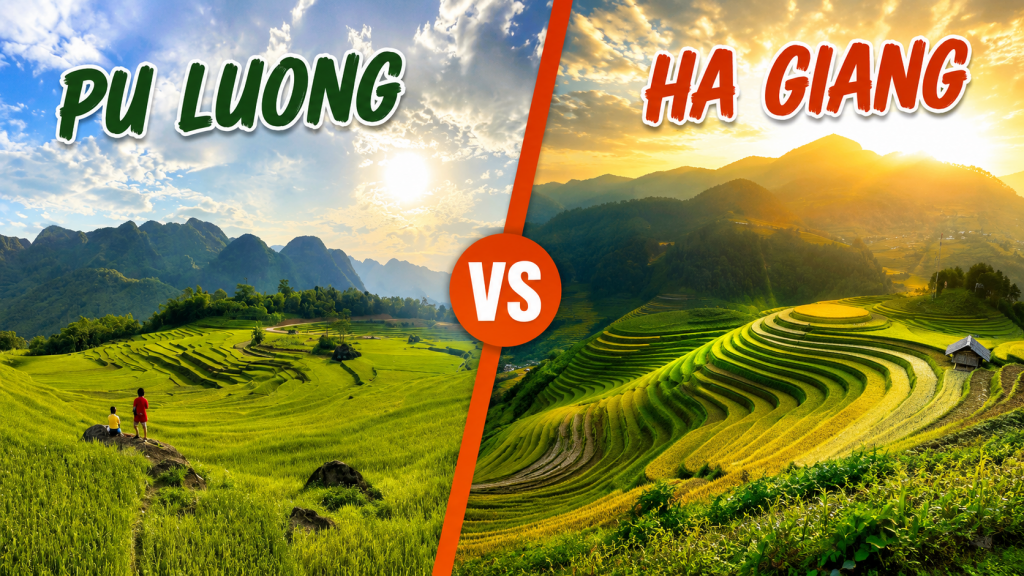
Ha Giang and Pu Luong
The Landscape: Epic Rocky Frontiers vs. Lush Tropical Valleys
The contrast in landscapes between Ha Giang and Pu Luong is like comparing two completely different chapters of a nature storybook. The geology, the climate, and the overall visual drama change completely as you move between these two regions.
Ha Giang
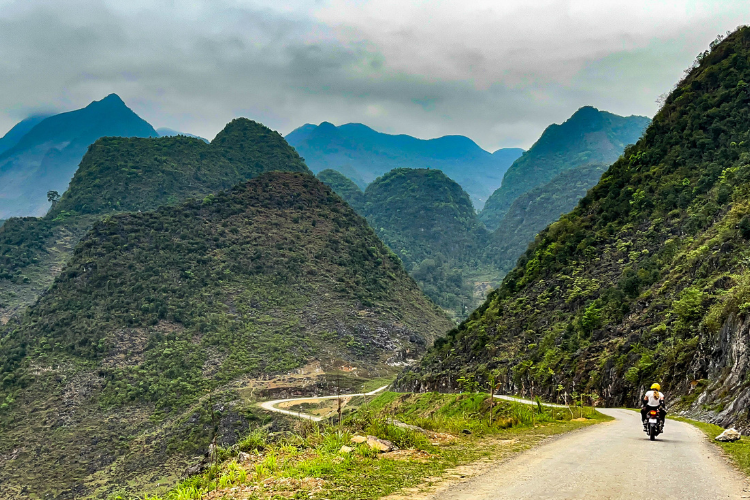
Ha Giang is located at the northernmost point of Vietnam. It is world-famous for the Dong Van Karst Plateau, a UNESCO Global Geopark. When you stand in Ha Giang, the landscape feels raw, immense, and almost otherworldly.
The terrain is dominated by towering, dark limestone peaks that shoot straight out of the earth like giant teeth. The valleys are deep and jagged, carved out over millions of years by rushing rivers like the Nho Que. Tree growth is sparse on the high rocky slopes; instead, you see corn stalks growing impossibly out of tiny pockets of soil among the stones. The weather here can be harsh and unpredictable—crisp and cold in the winter months, with thick mountain mists that roll over the famous Ma Pi Leng Pass, hiding and revealing epic canyons in a matter of minutes. Hiking here makes you feel small against the sheer scale of the planet.
Ha Giang
Pu Luong
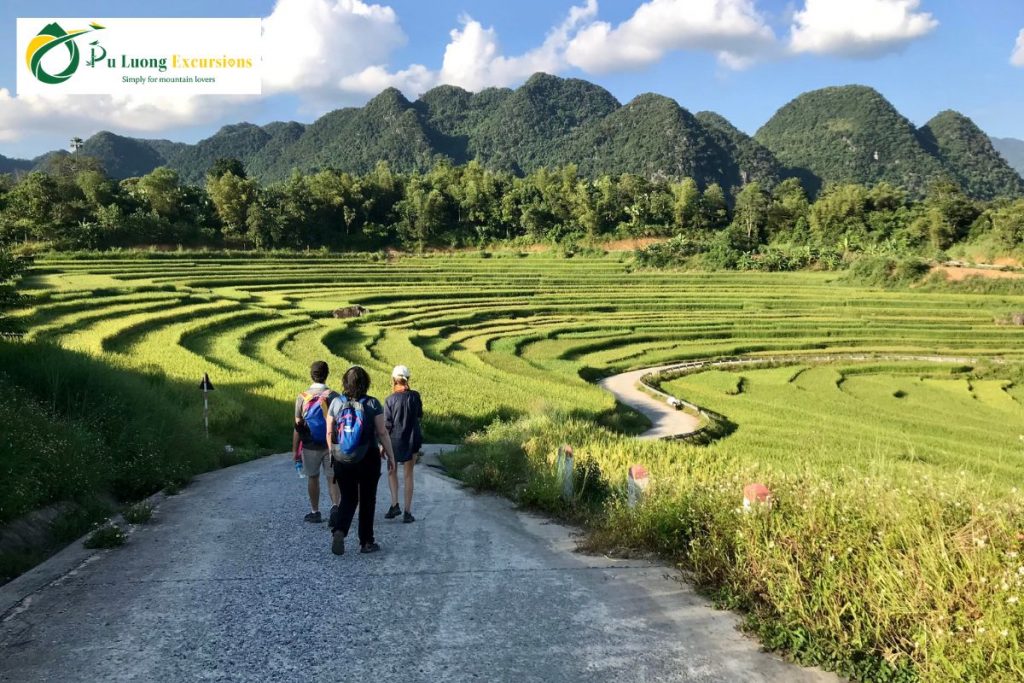
Further south, nestled safely away from the extreme northern border, lies Pu Luong Nature Reserve. If Ha Giang is made of dramatic stone, Pu Luong is painted entirely in shades of deep green and warm gold.
Pu Luong is a tropical paradise where limestone cliffs still exist, but they are completely wrapped in dense, ancient primary forests and jungles. Beneath these forested peaks lie hidden, rolling valleys terraced with spectacular rice fields. Instead of raw stone paths, walking here brings you alongside slow-moving rivers, hidden waterfalls, and old bamboo water wheels that gently splash water into local irrigation systems. The air is warmer, more tropical, and filled with the gentle sounds of rushing streams and birdsong. It feels cozy, sheltered, and incredibly peaceful—a true sanctuary away from the modern world.
Pu Luong
See more: Sapa vs Pu Luong Trek: Best Trekking Choice
The Rice Fields: Ha Giang’s Seasonal Wonders vs. Pu Luong’s Double Blessing
If your main dream is to walk through the iconic rice terraces of Vietnam, understanding the agricultural differences between a ha giang vs Pu Luong trekking trip is very important.
The Rice Fields of Ha Giang
Most of the main Ha Giang loop is famous for its raw stone peaks and corn fields growing out of rocks. However, Ha Giang does have world-class rice terraces, located mostly in the remote area of Hoang Su Phi.
- The Catch: Ha Giang only has one rice crop per year because of the high altitude and cold mountain winter.
- The Timing: The fields are filled with water around May (the mirror season) and turn a magnificent, blazing golden yellow only once a year, from September to early October. If you miss this short autumn window, the fields will be empty or muddy.
The Rice Fields of Pu Luong
Down in the warmer valleys of Pu Luong, the climate allows for a very special agricultural rhythm: two rice harvests every single year. This means your chances of seeing beautiful green or golden fields are doubled.
- May to June (First Harvest): The valleys transform into a bright yellow sea as the first crop of the year ripens.
- September to Early October (Second Harvest): Just like Ha Giang, Pu Luong turns completely golden again for the autumn harvest.
- The In-Between Months: From mid-April to May, and again in August, the young rice blankets the valley floor in a vibrant, intense green. In March and July, the terraces are filled with water, turning into giant mirrors that reflect the dramatic tropical sky.
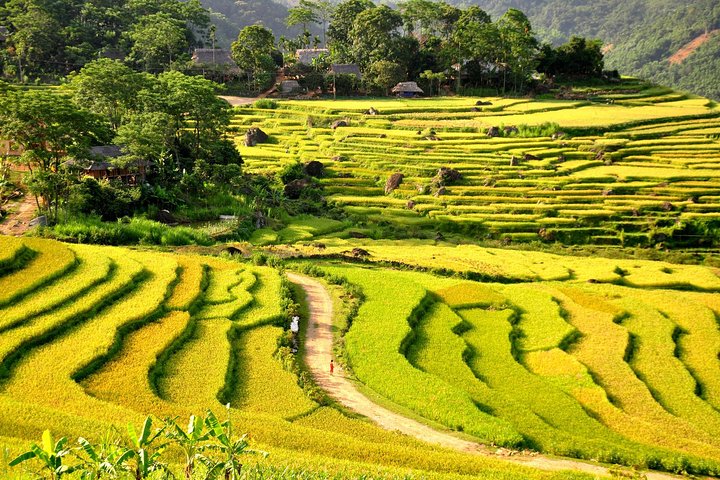
The Rice Fields
Where to Sleep: Rustic Village Homestays vs. Valley Eco-Resorts
After a satisfying day of exploring the trails, finding the right place to rest your head is essential. Both destinations offer immersive accommodation experiences, but they cater to very different preferences.
Accommodations in Ha Giang
The accommodation options during a Ha Giang trek focus heavily on authentic, simple living. While the main towns like Dong Van or Meo Vac have basic hotels, the best way to experience a trek here is by staying in village homestays.
These homestays are usually traditional earth-walled homes (nhà trình tường) built by the Hmong or wooden homes built by the Tay people. They are rustic and simple. You will typically sleep on a comfortable mattress on a shared wooden floor, protected by a mosquito net. The facilities are basic, but the warmth of the family more than makes up for it. In the evening, you will sit around a low table or an open fire pit, enjoying a massive spread of home-cooked dishes—stir-fried wild vegetables, local pork, and fresh tofu—while sharing rounds of “happy water” (local corn wine) with your hosts.
Accommodations in Pu Luong
Pu Luong offers a beautiful balance between rustic authenticity and absolute comfort. The nature reserve has intentionally avoided large-scale concrete hotels, focusing instead on sustainable tourism that blends into the environment.
- Boutique Eco-Resorts: Pu Luong has become famous across Southeast Asia for its stunning, small-scale eco-lodges and resorts. Built on hilltops using natural wood, bamboo, and stone, these lodges offer comfortable private bungalows with private balconies looking out over the rice terraces. Many feature gorgeous infinity pools that seem to spill directly into the green valleys below—the perfect place to relax your muscles after a long day of hiking.
- Traditional Stilt Homestays: If you want to stay close to the ground, you can sleep in an authentic White Thai stilt house in villages like Ban Don, Ban Hieu, or Ban Kho Muong. You get the same communal warmth and delicious family dinners as in Ha Giang, but within the airy, breezy architecture of a valley stilt house.
Crowds and Accessibility
How easy is it to get to these destinations, and how many other travelers will you meet along the way?
The Journey to Ha Giang
Ha Giang is located far to the north, about a 6-to-7-hour drive from Hanoi just to reach Ha Giang city. From there, you must travel deeper into the mountains along winding, narrow roads to reach the trekking starting points. Because of the famous “Ha Giang Loop,” the main roads can be busy with columns of travelers on motorbikes. However, once you step off the tarmac and onto the actual trekking trails that lead into the high villages, the crowds disappear completely, leaving you alone with the grand stone mountains.
The Journey to Pu Luong
Pu Luong is incredibly accessible, making it an ideal choice for travelers who want an escape into nature without spending days on a bus. Located around 150 kilometers southwest of Hanoi, it takes only about a 4-hour comfortable drive to reach the heart of the reserve.
Because it is a protected nature reserve without a massive highway running through it, Pu Luong has remained blissfully quiet. There are no large tourist crowds, no lines of motorbikes, and no loud nightlife. It is a destination designed for slow travel, quiet walks, and peaceful contemplation.
Ha Giang vs Pu Luong Trekking: The Final Verdict
Every traveler has a different dream for their journey through Vietnam. When choosing between a ha giang vs Pu Luong trekking trip, look closely at what kind of energy you want to bring to your vacation.
Choose Ha Giang if:
- You are craving a raw, epic adventure in one of the most dramatic mountain landscapes in Asia.
- You are physically fit and look forward to the challenge of steep, rocky paths and high mountain elevations.
- You want to see the unique lifestyle of highland tribes living among the stone plateau.
- You don’t mind long travel times and basic, rustic homestay conditions.
Choose Pu Luong if:
- You want to escape the stresses of modern life and relax in a quiet, peaceful tropical paradise.
- You prefer varied, gentle-to-moderate trails that take you through jungles, waterfalls, and local villages.
- You want to see beautiful rice terraces and traditional bamboo water wheels at a slow, restful pace.
- You love the idea of ending your day of hiking with a cold drink by an infinity pool in a beautiful eco-resort.
- You want a destination that is easy to reach from Hanoi, giving you more time on the trail and less time on the road.
Explore the Hidden Trails with Pu Luong Excursions
No matter which path you choose to follow, the beauty of Northern Vietnam’s countryside will stay with you long after your holiday ends. There is something truly magical about turning off your phone, leaving the paved roads behind, and letting your own two feet carry you into a world of mountains, forests, and smiling local faces.
If you are ready to experience the true heartbeat of the Vietnamese countryside, Pu Luong Excursions is ready to welcome you. We are a fully licensed travel company dedicated to organizing Northern Vietnam’s finest countryside tours. We don’t believe in rushed, crowded sightseeing. Instead, we focus on authentic travel experiences packed with rich ethnic culture, breathtaking trekking paths, and unforgettable jungle rides.
Explore the Hidden Trails with Pu Luong Excursions
From booking the perfect local homestay or luxury eco-resort to providing passionate local guides who know every secret path through the mountains, we take care of every detail so you can focus entirely on the journey. Let us show you the incredible warmth, beauty, and peace of our homeland.