


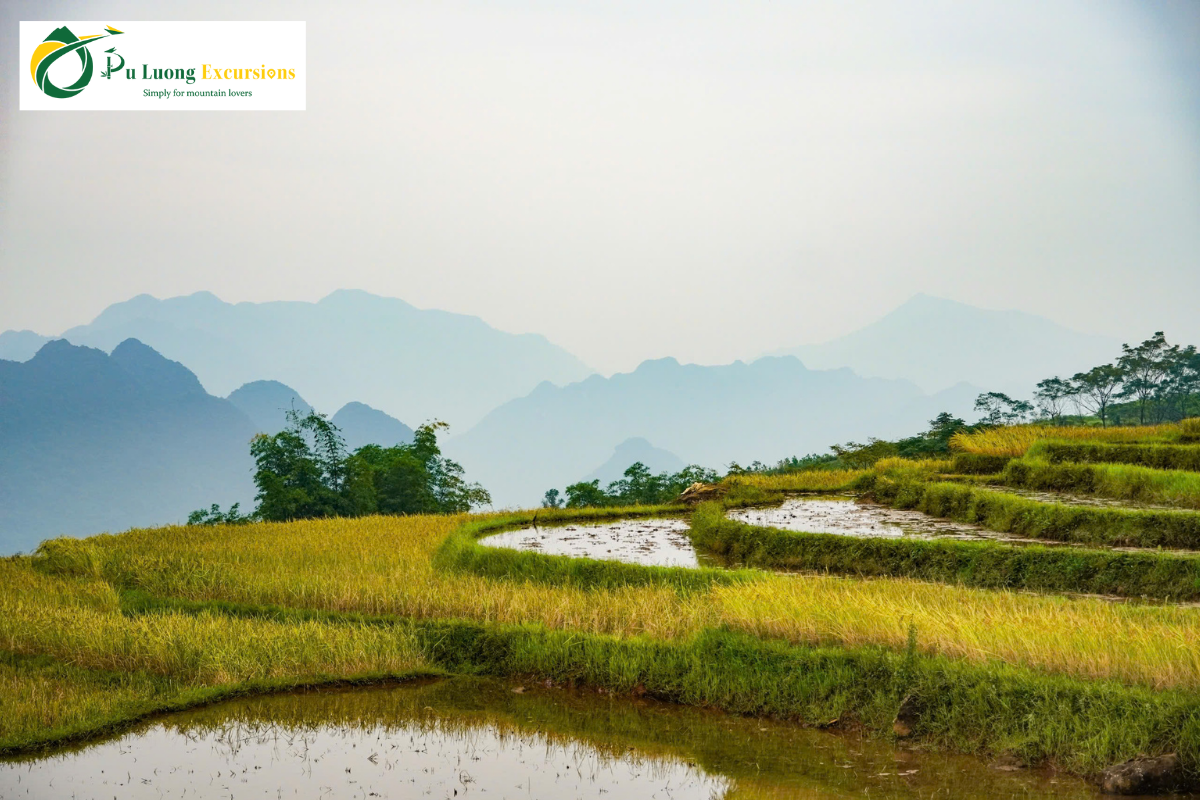
Ask anyone who has visited Pu Luong during the harvest season what it looked like and they will pause before answering. Not because it is hard to describe, but because the description always falls a little short of what it actually felt like to stand in the middle of it.
The Pu Luong harvest season golden fields are exactly what the name suggests: rice terraces that have turned from green to deep yellow-gold as the grain ripens, spread across the valley floor and climbing the hillsides in long, curving lines. Farmers in conical hats move through them from first light, cutting rice by hand the way their grandparents did. Water buffalo graze the edges. The whole valley smells faintly of cut grass and warm earth.
It is one of the most genuinely beautiful things you can see in northern Vietnam. And unlike some famous harvest destinations that have become overcrowded in recent years, Pu Luong remains a place where you can experience it at close range, in a real working landscape, without fighting through tour groups to get a photograph.
This guide covers when the harvest happens, what it looks like, and how to make the most of a trip timed around it.
What Happens During the Harvest Season in Pu Luong?
Harvest season in Pu Luong is not a single event. It is a period of concentrated activity that unfolds across the valley over several weeks, as each family’s fields reach peak ripeness and need to be cut before the grain begins to fall.
In the weeks leading up to the harvest, the rice paddies transition through a final stage of colour change — from the vivid green of active growth to a progressively deeper yellow as the water is drained from the terraces and the grain heads heavy with rice bend the stalks downward. By the time the fields are golden, they are dry enough to walk into and the stalks are brittle with ripeness.
The harvest itself is done by hand. Farmers work in rows across their terraces, cutting the rice stalks close to the base with small sickles, bundling the cut rice into sheaves, and laying them out to dry on the terrace bunds or carrying them back to the village on poles balanced across their shoulders. Threshing — separating the grain from the stalk — happens in the village, often by hand or using simple foot-pedal machines.
It is physically demanding work and it moves at a pace set entirely by the weather. A change in the forecast can push a family to start cutting early or wait a few days. The whole community is in motion during harvest weeks, and the energy of the valley reflects that.
the Harvest Season in Pu Luong
When to See the Golden Fields — Pu Luong’s Two Harvest Windows
One of Pu Luong’s most distinctive features is its two rice harvests per year — a result of the valley’s climate and the farming traditions of the Thai and Muong communities who have cultivated it for generations.
First Harvest — Mid-May to June
The first rice crop is planted between March and mid-April, when the terraces are flooded and the mirror effect of water reflecting the sky is at its most spectacular. By mid-May, the young rice has matured and the fields begin their colour change from green to gold. Harvest typically runs from mid-May through June, after which the fields enter a short fallow period before the second cycle begins.
The first harvest is warm and sometimes humid — June temperatures can be high, particularly later in the month. But the harvest activity is vivid and the golden fields against a summer sky make for striking scenery. The valley is also less crowded during this period than in the more famous October–November window, which suits travellers who prefer a quieter, more intimate experience.
Second Harvest — October to Early November
The second crop is planted in July, when the terraces are reflooded after the first harvest. By October, the rice has matured again and the fields turn golden for the second time in the year. This harvest window — running from October to early November — is widely regarded as the most beautiful time to visit Pu Luong.
The weather during October and November is as close to ideal as northern Vietnam gets: stable temperatures around 25°C, clear blue skies on most days, and the low-angle light of autumn that makes the golden terraces glow at sunrise and sunset. The combination of perfect weather, peak harvest activity, and the warm tones of the ripened rice in late afternoon light is what most Pu Luong photographs are taken during — and why this period books up faster than any other.
If you have flexibility in your travel dates and want the definitive Pu Luong golden field experience, October to early November is the window to aim for.
What to Do During the Pu Luong Harvest Season
Trek the Golden Terrace Trails
The most rewarding way to experience the golden fields is on foot, and a guided trek through the terraces during harvest season is unlike any other kind of walk in Vietnam.
The trails in Pu Luong run along the earthen bunds between paddies, up through village paths to higher viewpoints, and into the forest sections of the nature reserve above. During harvest season, the lower terrace trails are the most visually rich — walking at field level, surrounded by standing golden rice on both sides, with the mountains framing the view above.
Good local guides know which trails offer the best combination of scenery, farming activity, and viewpoint access at different times of day. An experienced guide will often suggest starting early to catch the morning light on the fields before the heat of the day builds, and timing the approach to a key viewpoint for late afternoon when the sun is low and the golden colour of the rice is at its most intense.
Watch and Join the Harvest
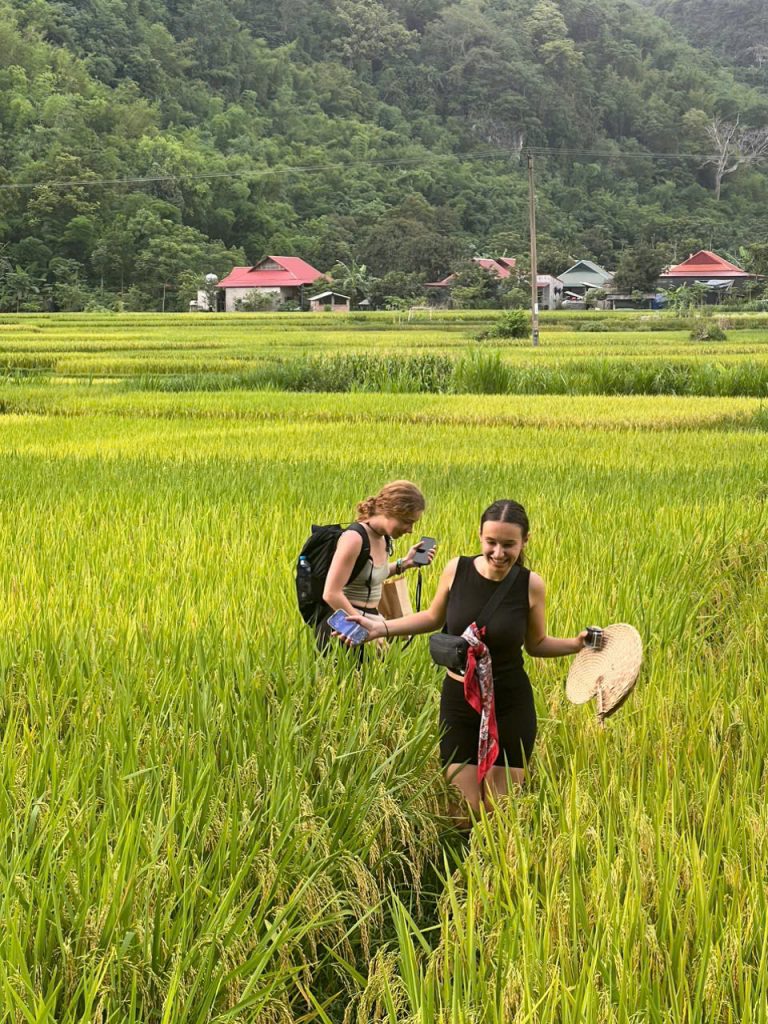
During the harvest weeks, the fields are full of people working. With your guide’s introduction, you can approach a family at work, watch how the cutting and bundling is done, and — if they welcome it — try your hand at harvesting a few stalks yourself.
This is not a performance. The families are working their own rice for their own livelihood, and the invitation to participate is a genuine one, offered on their terms. Most visitors who try rice cutting describe it as harder than it looks — the sickle requires a particular wrist action, the stalks are tougher than they appear, and keeping up with a farmer who has been doing this for decades is not realistic after five minutes. But the attempt is warmly received, and the experience of being in the field, knee-deep in golden rice, doing something real alongside the people who do it every day, is one of the things that stays with people long after the trip is over.
Stay in a Village Homestay During Harvest Time
A village homestay during harvest season puts you in the centre of the activity in the best possible way. Your host family is likely to be in the middle of their own harvest — waking early, working long hours, coming home tired and hungry in the evening.
Sharing that rhythm for a night or two gives the experience a texture that a day trip cannot provide. Breakfast is eaten before the family goes out to the fields. Dinner is when everyone comes back and talks about the day. The sticky rice served at meals is often from the family’s own harvest, dried and milled in the village. The conversations around the table — about how the crop has come in, whether the rain held off at the right time, what the price of rice is doing this year — are a window into a way of life that most international travellers have never been close to.
Photograph the Fields at Sunrise and Sunset
The Pu Luong harvest season golden fields are at their most photogenic in the low-angle light of early morning and late afternoon. The golden tones of the ripened rice deepen significantly when lit from the side, and the clear skies of October and November mean that sunrise and sunset colours can be vivid and long-lasting.
Several viewpoints above the main valley offer wide panoramic views across the terraces during harvest season. Your guide will know the best spots and the best timing to reach them. For photographers specifically, a route that catches both a sunrise viewpoint and a late-afternoon terrace walk on the same day is very achievable with a well-planned itinerary.
What to Do During the Pu Luong Harvest Season
See more: Pu Luong Rice Planting Season Trek: Best Time to Visit
How the Full Rice Calendar Looks in Pu Luong
Understanding the full year of the rice cycle helps you appreciate why the harvest season looks the way it does — and helps you decide which part of the calendar suits your trip best.
Pu Luong produces two rice crops per year, and the valley fields and mountain terraces often run on slightly different schedules, which means multiple stages of the cycle can be visible simultaneously:
- November to March: Fields rest and recover between cycles. Buffalo roam the fallow paddies. This quiet period also returns briefly in June, between the end of the first harvest and the start of the second planting.
- March to mid-April and July: The paddies are flooded for planting. The water surface reflects the sky — blue on clear days, gold and orange at sunrise and sunset. This is the mirror season, one of the most visually striking states of the Pu Luong landscape.
- Mid-April to mid-May and August to September: Rice is growing. The vivid green of young rice covers the terraces and, combined with the primary forest on the surrounding mountains, fills the entire valley with multiple layered shades of green.
- Mid-May to June and October to early November: Harvest season. The fields turn gold and farmers spread across the terraces with their sickles and conical hats. This is the golden period — the one most people travel to Pu Luong specifically to see.
Because the valley and mountain fields do not always align exactly, there are weeks during the transitional periods when you can see all of these stages in a single view: some fields still green, some freshly cut and bare, some at peak gold. This layered visual is specific to Pu Luong and impossible to replicate at destinations where only one crop is grown per year.
Pu Luong Excursions: Golden Season Treks and Village Stays
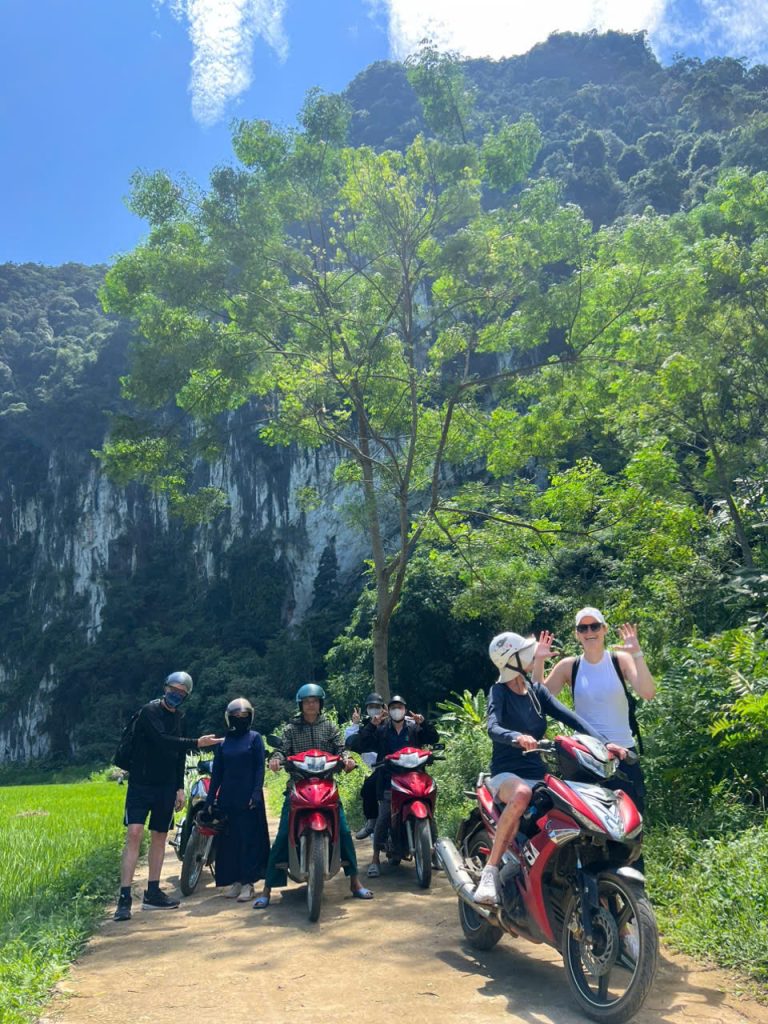
Pu Luong Excursions is a licensed tour operator based in Pu Luong Nature Reserve, Thanh Hoa. We have been running harvest season treks and village stays in this valley for years — and the golden fields of October and November are one of the experiences we are most frequently asked about and most proud to deliver.
Our local guides know the harvest calendar in detail. They know which villages are cutting early, which terraces are at peak colour on any given week, and which viewpoints offer the best sunrise and sunset light during the harvest period. This local knowledge is the difference between a good harvest trip and an exceptional one.
Pu Luong Excursions
Our harvest season programs include:
- 2-day / 1-night golden field trek — a focused harvest experience combining the best terrace trails, time in the fields with farming families, and one night in a village homestay
- 3-day / 2-night full harvest season package — covering the valley’s best golden field routes over two full trekking days, with two homestay nights and meals with local families throughout
- Photography harvest packages — itineraries specifically designed around the best light conditions, with early starts, viewpoint access, and guide knowledge of peak-colour locations
- Custom itineraries for couples, families, small groups, or solo travellers — built around your travel dates and what you most want to see and do
- Multi-destination harvest circuits combining Pu Luong with other northern Vietnam golden-season destinations for travellers with more time
All programs include local guide fees, homestay accommodation, and all meals during the trip. Transport from Hanoi is available as part of the booking.