


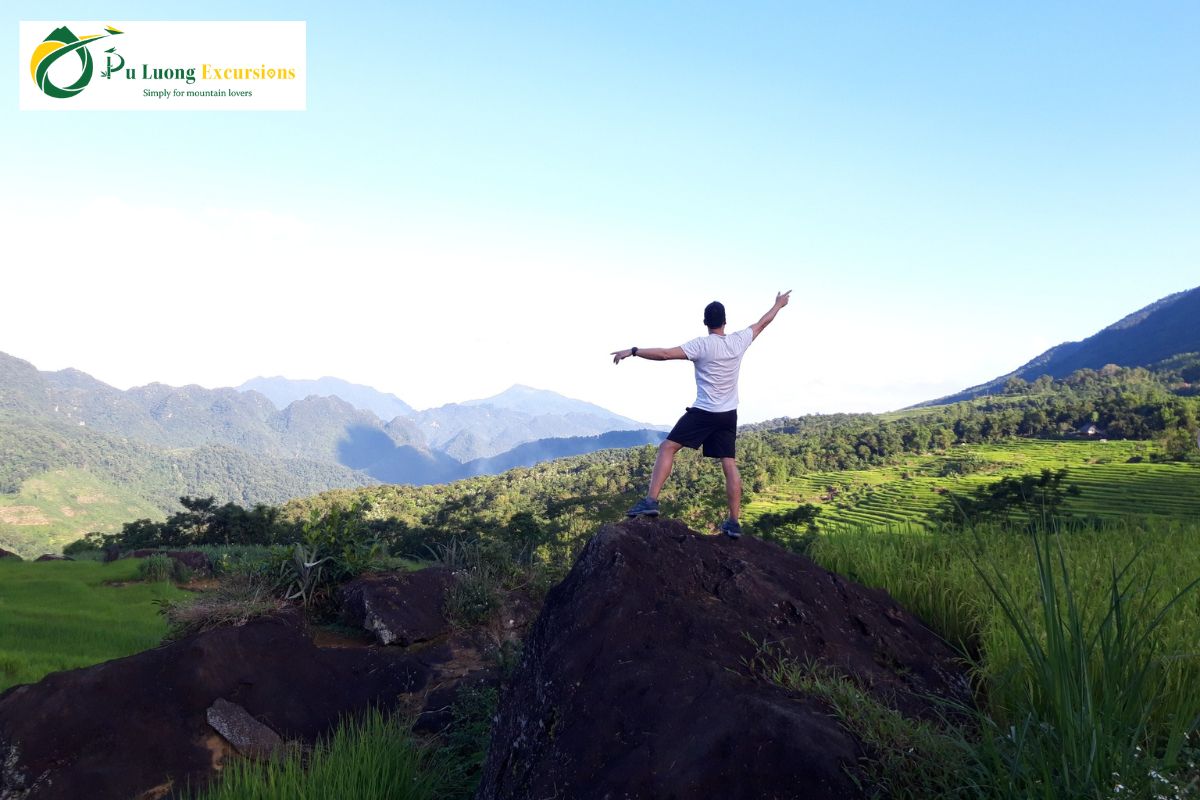
Pu Luong Nature Reserve in Thanh Hoa Province is one of northern Vietnam’s best-kept secrets. The valley is filled with terraced rice fields, bamboo forests, small rivers, and traditional villages where Thai and Muong families have lived for generations. It is the kind of place that feels genuinely off the beaten track — and that is exactly why it needs to be looked after.
Sustainable trekking in Pu Luong is not just a trend or a marketing label. It is the most practical way to enjoy this destination without damaging the things that make it worth visiting in the first place. When tourism is done well here, local families benefit, the forest stays intact, and future travelers get to experience the same valley that visitors enjoy today. When it is done poorly, the opposite happens.
This guide covers what sustainable trekking in Pu Luong actually means, how to put it into practice, and why it matters for both the environment and the local community.
What Makes Pu Luong Special — and Why It Needs Protection
The Landscape
Pu Luong Nature Reserve covers around 17,000 hectares of land in the Ba Thuoc and Quan Hoa districts of Thanh Hoa Province. The reserve sits in a long valley flanked by limestone karst ridges, with the Ma River running along one edge and smaller streams threading through the farmland below.
The terraced rice fields here are among the most dramatic in northern Vietnam. Cut into the hillsides over centuries by generations of farmers, they cascade down in wide, curved steps that fill with water during planting season and glow gold at harvest time. The forest above and between the villages is a mix of tropical and subtropical species, home to wildlife including langurs, civet cats, and hundreds of bird species.
This is a working landscape, not a national park preserved in aspic. The farmers still work the fields, the children still go to school along the same paths you trek on, and the village markets still operate on weekly cycles tied to local needs. That living quality is what makes trekking in Pu Luong feel different from visiting a sanitized tourist attraction.
The Communities
The two main ethnic groups in Pu Luong are the White Thai and the Muong people. Both communities have distinct traditions, languages, clothing, and ways of farming. Many families still live in traditional stilt houses built from wood and bamboo, raised off the ground to keep animals below and living space above.
Tourism has brought income to some families — through homestays, guiding, and selling local crafts and food. But it has also brought pressures: waste, noise, price inflation for land, and the gradual erosion of traditional ways of life that happens when outside money flows into a closed community. Sustainable trekking is partly about managing that flow so the benefits outweigh the costs.
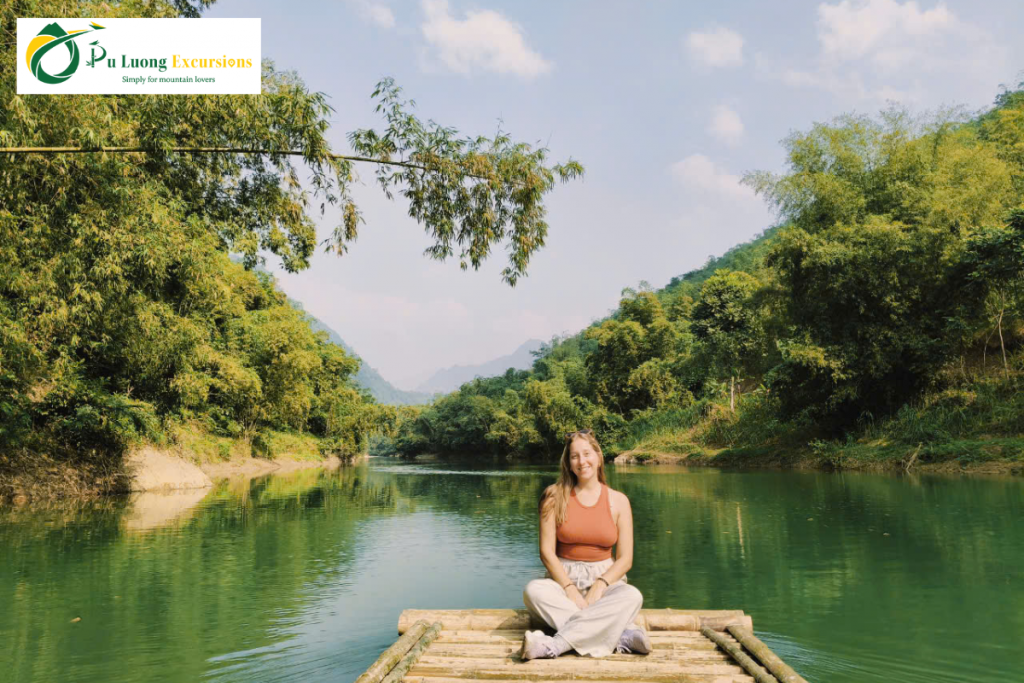
What Makes Pu Luong Special — and Why It Needs Protection
What Sustainable Trekking in Pu Luong Actually Means
Sustainability in trekking does not mean roughing it or giving up comfort. It means making choices that keep the destination healthy over time. Here is what that looks like in Pu Luong specifically.
Stay Local, Spend Local
One of the simplest and most effective things you can do is make sure your money stays in the local economy. Book a homestay with a Thai or Muong family rather than a resort owned by an outside investor. Eat the food that local households prepare rather than importing outside ingredients. Buy handicrafts directly from the maker at the village market rather than from a shop in Hanoi.
When you do this, your travel spending becomes a direct transfer to the people whose land you are walking through. That is the most sustainable economic model there is.
Use Local Guides
Hiring a local guide from Pu Luong itself rather than a city-based guide who travels with you from Hanoi or Ha Long is another straightforward way to support the community. Local guides know the trails, the safe river crossings, the seasons, and the unwritten rules of village life. They can introduce you to families, explain what you are seeing in the forest, and take you to places that no online map will show.
A good local guide also acts as a cultural bridge. Without one, you risk walking through a village as a stranger who stares and photographs without any real connection to the people there. With one, you become a guest.
Stick to Established Trails
Pu Luong has a network of trails developed over time by guides, villagers, and responsible tour operators. These paths are generally safe, well-marked, and designed to minimize impact on the forest and farmland. Going off-trail — especially through rice terraces or forest edges — can damage crops, disturb wildlife, and create erosion that worsens with every rain.
If you want to explore less-visited areas, do it with a guide who knows which routes are appropriate and which are not.
Carry Out What You Carry In
Waste management is one of the biggest practical challenges in Pu Luong. The local infrastructure for handling plastic waste, food packaging, and single-use items is limited. What gets dropped on a trail or left at a campsite tends to stay there, or ends up in the river.
The rule is simple: whatever you bring in, bring out. This applies to snack wrappers, water bottles, medicine packaging, batteries, and anything else. If possible, bring reusable containers and refill your water rather than buying new plastic bottles at every stop.
Some guesthouses and homestays in Pu Luong now provide filtered water for refilling, which is a sign of responsible practice. Ask about this when you book.
Respect Village Life and Privacy
Villages in Pu Luong are not tourist displays. The families who live there have daily routines, private spaces, and cultural practices that deserve respect. A few basic guidelines go a long way:
- Ask before taking photographs of people, especially inside homes or during ceremonies
- Dress modestly when walking through villages — cover shoulders and knees
- Do not enter a home without being invited in
- Keep noise low, especially in the early morning and evening
- Do not offer sweets or money to children, which creates habits that cause problems for the community over time
These are not complicated rules. They are just the same courtesies you would show if a group of strangers walked through your neighborhood with cameras.
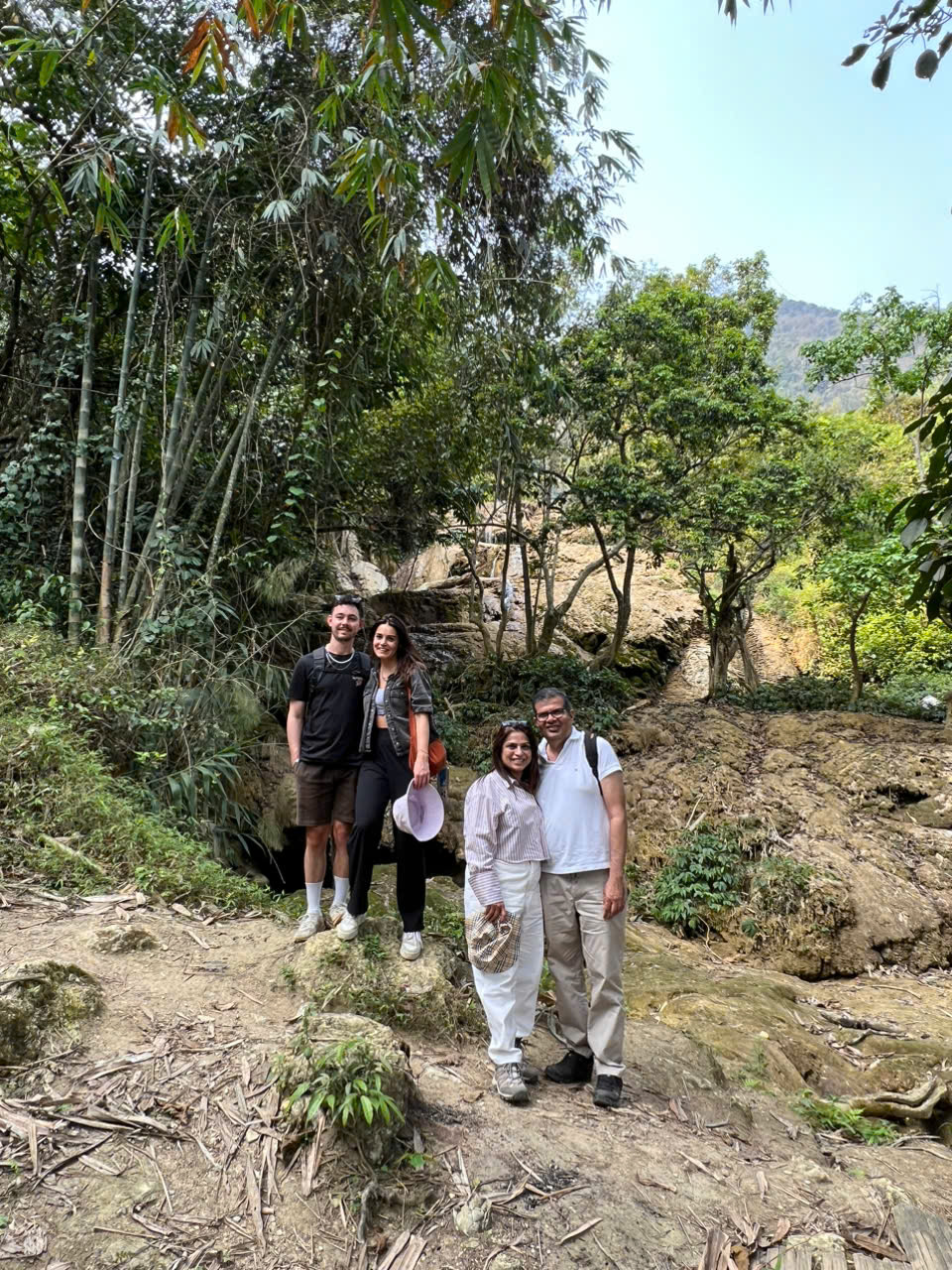
What Sustainable Trekking in Pu Luong Actually Means
See more: Phong Nha to Pu Luong Tour Expedition
The Best Sustainable Trekking Routes in Pu Luong
Valley Floor Walks
The easiest and most popular type of trekking in Pu Luong follows the valley floor between villages, crossing rice paddies, bamboo groves, and small streams. These walks are gentle enough for most fitness levels and give you close contact with the farming landscape and village life.
Route lengths vary from two to three hours for a short morning walk to a full day of six to eight hours between larger villages. Most include a lunch stop at a local house, which is often one of the highlights of the day.
Waterfall Hikes
Several waterfills are accessible from the main villages in Pu Luong, usually reached by a forest trail of one to two hours each way. The falls are modest in dry season but impressive during and after rain. The forest along these trails is dense and cool, with birds and insects audible throughout.
These hikes are best done in the morning when the light comes through the trees and temperatures are lower. Swimming is possible at some falls but check conditions with your guide first, especially after heavy rain when water levels can rise quickly.
Karst Ridge Trails
For more experienced trekkers, the ridgelines above the valley offer harder routes with bigger views. These trails climb through forest and emerge on limestone outcrops with sweeping panoramas across the entire valley. On a clear day, you can see the rice terraces spread out below in a way that makes the scale of the landscape obvious.
These routes require a full day, reasonable fitness, and a guide who knows the way. They are not well-marked and the terrain can be slippery after rain.
Multi-Day Village-to-Village Treks
The most immersive sustainable trekking experience in Pu Luong connects multiple villages over two or three days, with a homestay each night. This type of trek lets you see how the landscape and the community change from one end of the valley to the other, and gives you time to settle in rather than rushing between highlights.
Multi-day treks usually pass through both Thai and Muong villages, so you get a sense of how two distinct communities share the same valley with different traditions and approaches to farming and daily life.
The Best Sustainable Trekking Routes in Pu Luong
How Pu Luong Excursions Supports Sustainable Trekking in Pu Luong
At Pu Luong Excursions, sustainable trekking is not an add-on feature — it is the way we operate. As a licensed tour operator based in Pu Luong, we work directly with local guides, village families, and community leaders to build trips that benefit the people who live here.
Here is how we put sustainable trekking into practice on every trip:
We use local guides born and raised in Pu Luong. They know the trails, the culture, and the community. When you trek with us, your guide fee stays in the village.
We book homestays with Thai and Muong families who prepare traditional meals and share their homes. This is where a meaningful part of your tour cost goes — directly into local household incomes.
We design routes that follow established trails and avoid sensitive farming land or forest areas where footfall causes damage.
We brief all travelers on responsible behavior before each trek — what to photograph, how to behave in villages, how to handle waste, and what to do if something feels unclear.
We minimize plastic on our tours by providing refillable water at our base and encouraging travelers to bring their own containers.
Our tour services for sustainable trekking in Pu Luong include:
- Guided half-day and full-day village treks with local English-speaking guides
- Multi-day trekking packages with village-to-village routes and homestay accommodation
- Jungle hikes into the karst forest above the valley
- Eco-stays and comfortable guesthouses for those who prefer a private room with traditional surroundings
- Custom itineraries designed around your group size, fitness level, and interests
- Combined packages including transport from Hanoi, Ha Long, or Phong Nha
We are licensed by Vietnamese tourism authorities and have built long-term relationships with the communities in Pu Luong. Our goal is simple: to share this place with travelers in a way that keeps it worth sharing for the next generation.
Sustainable trekking in Pu Luong is not about giving up the things that make trekking enjoyable. The trails are still beautiful, the views are still breathtaking, and the homestay dinners are still some of the best meals you will eat in Vietnam. It is simply about doing it in a way that does not slowly destroy the destination.
Pu Luong is at a tipping point that many Vietnamese natural destinations have already passed. The number of visitors is growing. New guesthouses are being built. Roads are being improved. That development can go two ways — it can bring investment that respects the valley, or it can overwhelm the communities and landscapes that make Pu Luong worth visiting.
The choices that individual travelers make add up. Choosing a local homestay over an outside-owned resort, hiring a village guide, staying on the trail, picking up your rubbish — none of these things are difficult. Together, they make a real difference.
If you want to trek in Pu Luong the right way, Pu Luong Excursions is here to help you plan it. Get in touch and we will design a trip that works for you and for the community that calls this valley home.