

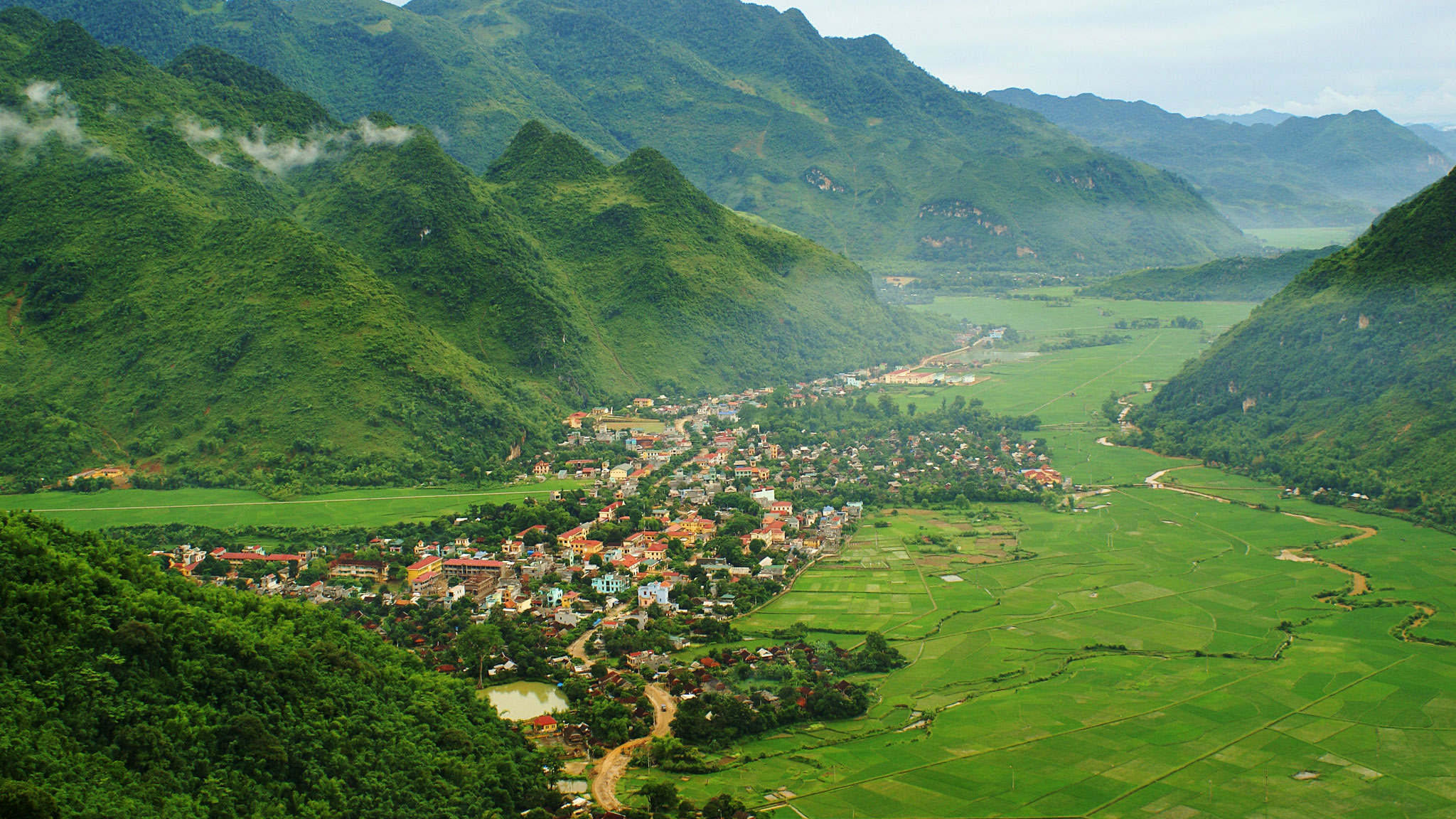

Trekking in Mai Chau is gentle work: flat paths between White Thai villages, rice fields on both sides and stilt houses at the end of each walk. It is not mountain trekking, and that is its strength for many travellers. This guide covers the village routes, the seasons and the difficulty, plus an honest note on when nearby Pu Luong is the better walking base.

Walk Mai Chau gently, then trek Pu Luong with a guide
Mai Chau walks are easy to arrange, but a combined valley route still needs the right order, transfers and walking days. Our team runs small groups of up to 9 guests across Mai Chau and Pu Luong, with local English-speaking guides and village stays in both valleys. Browse our pu luong tours to see routes that pair the two valleys, then ask us for a free plan. Tell us your fitness and your dates, and we will set gentle days in Mai Chau and stronger days in Pu Luong in the right order.
What kind of walking does Mai Chau offer?
Mai Chau trekking means valley floor walking rather than mountain climbs, since the paths run flat between villages across the rice fields. Most walkers cover the lanes between Ban Lac, Pom Coong and the neighbouring hamlets at an easy pace. The original post on this site notes that trekking is not the main activity here, and many visitors choose bicycles for the same lanes.
That honesty helps you plan. Come to Mai Chau for cultural walks, weaving villages and field views, not for summits. A half day or a full day of walking covers the valley well, and the stilt house stays sit close to the paths, so you can rest when you like.

Which village routes should you walk?
The village routes in Mai Chau link the White Thai hamlets across the valley floor, and you can walk them in short sections. Ban Lac and Pom Coong are the known bases, with stilt houses, weaving looms under the houses and food cooked for guests. Paths between the villages pass rice fields, small streams and garden plots.
Ask your stay to arrange a guide in the village, since a guide turns a lane walk into a cultural visit. You can also walk on your own between the main villages, since the lanes carry little traffic beyond the odd scooter or buffalo. Longer walks climb the low hills at the valley edge for a view back over the fields.

How hard is the walking in Mai Chau?
The walking in Mai Chau is easy for most travellers, since the main routes stay flat and the distances between villages are short. A typical village walk covers a few kilometres at a slow pace, with stops for weaving, tea and photos. Children and older walkers manage these routes well in the cool months.
The harder options climb out of the valley, toward Hang Kia and the hills on the road to Moc Chau. Those routes need a guide, an early start and a full day. If you want sustained climbs and ridge views, that is the point where Pu Luong, about an hour beyond Mai Chau, becomes the better base.

When is the walking season in Mai Chau?
The walking season in Mai Chau runs in two green windows, from April to June and from August to October, according to the original post. April to June gives lush green fields before the rains, with warm days. August to October gives the run to harvest, with golden fields in October and cooler air by the end.
Winter from December to February is dry but cold in the valley, with misty mornings. Summer rain in July makes the lanes muddy, though the fields stay green. For the finest walking weather, pick late September or October, when the harvest colour and the cool air arrive together.
| Months | What the valley gives | Walking note |
|---|---|---|
| April to June | Lush green rice, warm days | Good, with early starts in June |
| August to October | Golden fields by October, cooler air | The finest window |
| November to February | Dry, cold, misty mornings | Good with warm layers |
| July | Green fields, heavy rain | Muddy lanes, flexible plans |
How does Mai Chau compare with Pu Luong for walking?
Mai Chau and Pu Luong suit different walkers, and the fair answer is that Mai Chau is easier. Mai Chau gives flat cultural walks and a wide choice of stays in one open valley. Pu Luong gives steeper trails, terraced hills, waterfalls and quieter villages inside a nature reserve, with walks from 3 km to full day treks.
Read the Pu Luong Travel Guide for the reserve, and see the pu luong trekking routes for the harder days. Many travellers walk Mai Chau for a day, then base in Pu Luong for the real trekking. That order builds fitness and interest across the trip.
What should you pack for a Mai Chau walk?
Pack light for Mai Chau, since the walks are short and your stay is close to the paths. Comfortable walking shoes with grip suit the lanes, and a raincoat earns its place in the wet months. Carry water and a snack even on short walks, since the valley sun is strong by late morning.
Dress in layers you can remove as you warm up, since winter mornings start cold and the walking heats you fast. A guide on a longer route carries lunch and drinks as part of the day. Tell your stay about dietary needs when you book the walk, not at the table.
- Walking shoes with grip and a light raincoat
- Layers for cold mornings and warm middays
- Water, a snack and sun cover
- Small cash in VND for weaving and drinks in the villages
At a glance
Trekking in Mai Chau suits walkers who want flat cultural routes and village nights. The facts below come from the original post on this site.
- Duration: half day to 1 day covers the valley walks well
- Distance: Mai Chau about 3 to 4 hours from Hanoi via Thung Khe pass
- Difficulty: easy on the valley floor, moderate on the hill routes
- Group size: small groups of up to 9 guests on our combined valley tours
- Start and finish: Hanoi, or onward to Pu Luong in about an hour
- Season note: April to June and August to October for green and golden fields
Who this is not for
Mai Chau walking suits gentle travellers, but it does not suit every walker. The valley floor is flat, the stays are social and the famous routes are short.
- Walkers who want summits and ridge lines, since Mai Chau is a flat valley
- Travellers who want total quiet, since the main villages host many guests
- Anyone who plans hard trekking without a guide on the hill routes beyond the valley
- Visitors in July who cannot accept muddy lanes and rain delays
Our suggestion
For most walkers, pair one gentle day in Mai Chau with the stronger trails of Pu Luong. Exploring Countryside in Northern Vietnam, a 4 day 3 night small-group route in Mai Chau and Pu Luong Nature Reserve, costs from $309 per person (price checked 25 November 2026). A pu luong 3 days 2 nights stay alone suits travellers who want the harder walking without the flat valley day.
Frequently asked questions about walking in Mai Chau
Mai Chau walking raises the same few questions for most travellers, and the answers are short. The routes are gentle, the villages are close and the seasons are clear.
Which village is best to stay in?
Don village suits most travellers in Pu Luong, with the widest choice of homestays and lodges and easy walks to the nearest sights. Hieu village suits travellers who want the waterfall on their doorstep, while Kho Muong suits travellers who want total stillness. If you only stay one night in Pu Luong, choose Don.
Is Mai Chau trekking hard?
No. The main routes are flat village walks of a few kilometres, suited to most fitness levels. Hill routes toward Hang Kia are harder and need a guide and a full day.
Do you need a guide to walk in Mai Chau?
Not for the lanes between Ban Lac and Pom Coong, which are easy to follow. A guide adds cultural value and is needed for longer hill routes beyond the valley floor.
When are the rice fields at their finest in Mai Chau?
The fields are lush green from April to June and golden near the October harvest. Late September and October give the finest mix of colour and cool walking air.
Is Mai Chau or Pu Luong better for trekking?
Pu Luong is better for trekking, with steeper trails, terraces and waterfalls. Mai Chau is better for gentle cultural walks. Many travellers do both, with Mai Chau first.
Tell us your fitness and we will set the walking order
Mai Chau gives you gentle village days, while a few days in Pu Luong Nature Reserve give you the stronger trails, terraces and waterfalls nearby. Tell us your dates and what kind of trip you want, and we will help you plan with honesty. Contact us through https://puluongexcursions.com/, WhatsApp +84 975 432 588 or email tour@puluongexcursions.com for a free consultation and a same day quick quote. See photos and updates on our Facebook page, find us on Google Maps, and read traveller reviews on Tripadvisor.
Plan your trip with Pu Luong Excursions
- WhatsApp / phone (tours): +84 975 432 588
- Reservations: +84 966 939 026
- Email: tour@puluongexcursions.com
- Office: 13 Hang Muoi, Hoan Kiem, Hanoi, Vietnam
- Website: puluongexcursions.com
About Pu Luong Excursions Small-group treks, village stays and local-guided journeys in Pu Luong Nature Reserve, Northern Vietnam. A licensed international tour operator, walking these trails since 2016.